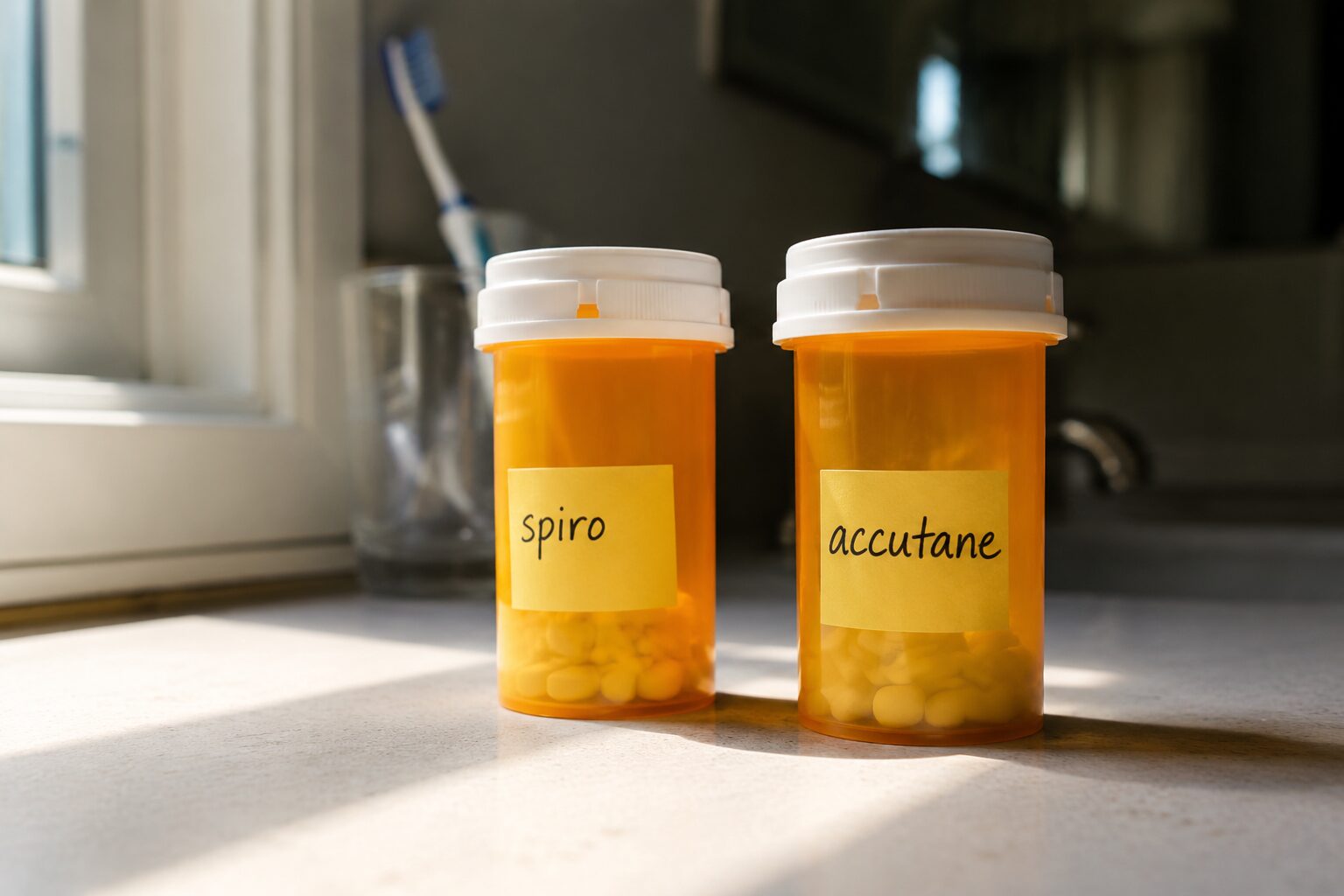
Spironolactone vs Accutane: Which Is Right for Your Acne?
Last updated: June 26, 2026
I’ve spent years watching women cycle through the same frustrating loop – topical retinoids, antibiotic rounds, benzoyl peroxide washes – only to end up back where they started. When OTC options stop working, two names come up almost every time: spironolactone and Accutane.
These drugs are not interchangeable. They work through completely different mechanisms, suit different acne patterns, and carry very different lifestyle commitments. Knowing the distinction before you walk into a dermatologist’s office means you can ask sharper questions and leave with a plan that actually fits your situation.
This article covers how each drug works, who qualifies, what monitoring looks like in practice, and the honest trade-offs – so you can go into that appointment prepared instead of overwhelmed.
Quick answer: Spironolactone suits women with hormonal, cycle-linked acne, while Accutane is the stronger option for severe, cystic, or treatment-resistant acne in any gender. Spironolactone requires long-term daily use; Accutane is a finite course that can produce permanent remission. A dermatologist determines the best fit based on acne severity, hormonal patterns, and individual health history.
How Each Drug Actually Fights Acne
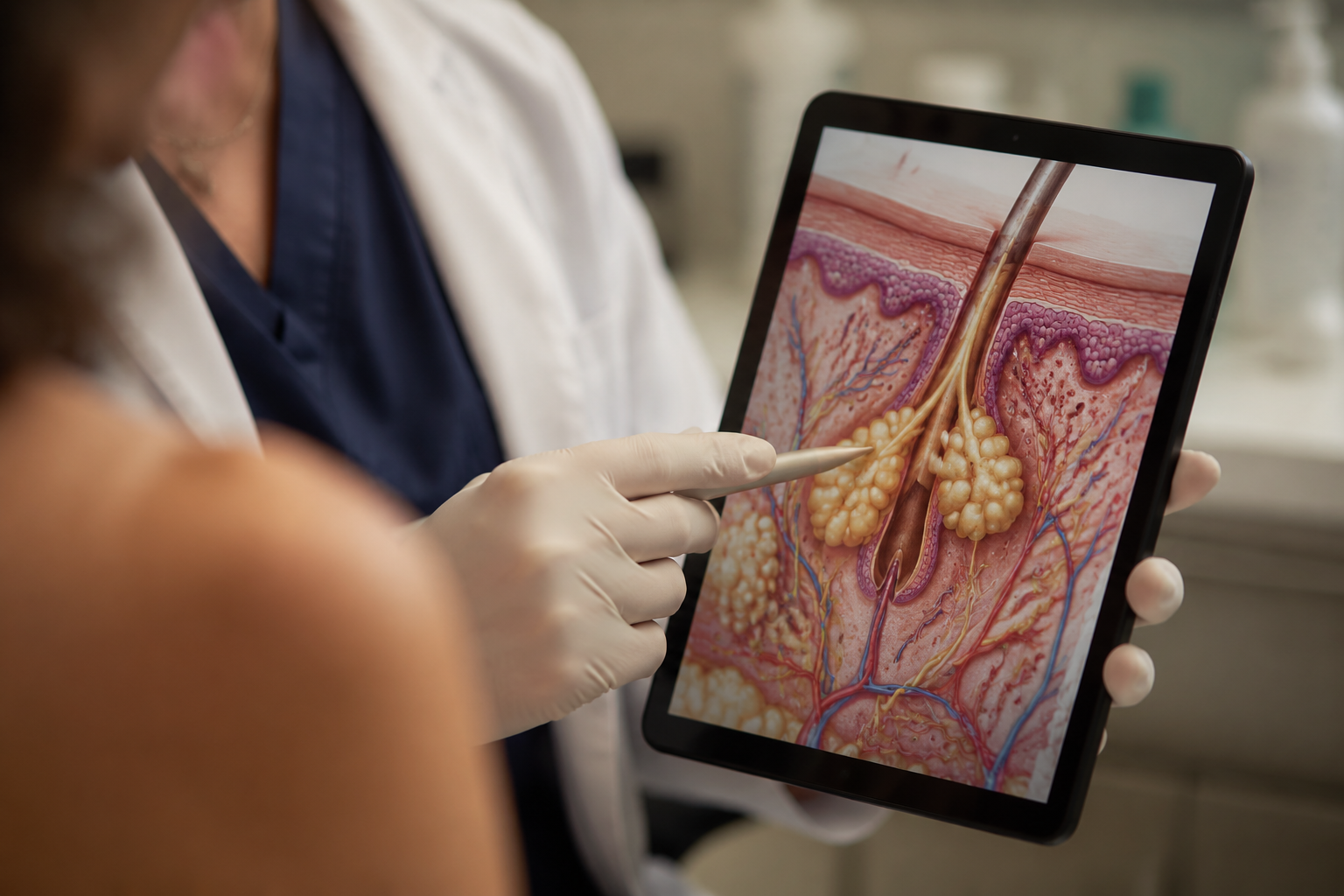
Spironolactone and Accutane each target a different root cause of acne, which is exactly why they’re suited to different patients. Understanding the mechanism isn’t just academic – it tells you whether your specific acne pattern is the right fit.
-
Spironolactone blocks androgen receptors in the skin – Androgens like testosterone signal your sebaceous glands to produce oil; spironolactone interrupts that signal, reducing sebum specifically in women whose acne tracks with hormonal shifts. It’s prescribed off-label for acne, meaning the FDA hasn’t approved it specifically for that use, though it’s widely used clinically.
-
Accutane (isotretinoin) physically shrinks the sebaceous glands themselves – A full course reduces sebum output by roughly 80%, and the glands don’t fully return to their original size, which is why many patients see long-term or permanent clearance after a single 4-6 month course.
-
Mechanism determines candidacy – If your breakouts cluster on the jawline and chin, worsen the week before your period, and calm down after, that’s a hormonal pattern that spironolactone is designed to address. Relentless oil production across the face, chest, and back – regardless of your cycle – points toward Accutane.
-
Neither drug is an antibiotic – They don’t target P. acnes bacteria directly. If bacterial overgrowth is driving your acne rather than excess sebum, a drug like doxycycline may be the more logical first step before either of these options comes into play. Check out the spironolactone for acne complete guide if you want the full picture on how spiro fits into a broader treatment plan.
-
Spiro works gradually; Accutane works structurally – Spironolactone typically takes 3-6 months to show meaningful improvement because it’s modulating a hormonal process. Accutane’s changes happen at the gland level and accumulate over a defined course, making its timeline more predictable.
-
Accutane is FDA-approved for severe nodular acne; spironolactone is not FDA-approved for acne at all – That regulatory gap matters for insurance coverage, prescribing patterns, and how your doctor frames the conversation.
-
Combining either drug with topicals is common – Many dermatologists layer spironolactone with tretinoin or a topical antibiotic during the ramp-up period. Accutane is typically used as a standalone because its systemic dryness makes most active topicals too irritating to tolerate.
Who Is Actually a Candidate for Each?
Your acne type, sex, medical history, and pregnancy plans determine which drug a dermatologist will consider – sometimes before you even ask. According to GoodRx’s clinical comparison, Accutane is FDA-approved for acne while spironolactone is used off-label, a distinction that shapes how doctors approach each prescription.
I find that the patients who benefit most from spironolactone are women with a clear hormonal pattern – they often already suspect the connection but don’t know there’s a drug that addresses it directly. The table below lays out the key candidacy factors side by side.
| Factor | Spironolactone | Accutane (Isotretinoin) |
|---|---|---|
| Who can take it | Females (standard clinical practice); not prescribed to males for acne due to anti-androgen effects | All sexes |
| Acne type | Hormonal, jawline/chin, cycle-related flares, mild-to-moderate | Severe nodular, cystic, truncal, or treatment-resistant acne |
| Prior treatment required | Often prescribed after topicals fail; not always required to try antibiotics first | Typically requires failure of at least one antibiotic course first |
| FDA approval for acne | No – off-label use | Yes – approved for severe recalcitrant nodular acne |
| Pregnancy | Contraindicated; teratogenic risk – use reliable contraception | Absolutely contraindicated; requires iPLEDGE enrollment including monthly pregnancy tests |
| Age considerations | Most commonly prescribed to women ages 18-45; less commonly used post-menopause | Used across age groups; adolescents and adults both qualify |
| Typical monthly cost (without insurance) | $20-$50 generic | $200-$500+ brand; generic isotretinoin often $100-$200 |
| Insurance coverage | Variable; off-label status can complicate coverage | More consistent coverage for qualifying severity |
Pregnancy plans are the biggest wildcard I see overlooked in these conversations. Both drugs carry teratogenic risk – meaning they can cause serious birth defects. Accutane’s iPLEDGE program requires two forms of contraception and a negative pregnancy test each month before your prescription is filled.
Spironolactone and birth control are often prescribed together for this exact reason – the combination addresses both the contraceptive requirement and the hormonal acne itself.
If you’re male, spironolactone is essentially off the table for acne. Its anti-androgen effects cause hormonal side effects in men that make it a non-starter clinically, which means Accutane is almost always the prescription-strength option when topicals and antibiotics have failed.
Side-by-Side: Monitoring, Commitments, and Lifestyle Impact

Living on either drug involves real logistical demands – not just taking a pill each morning. The monitoring requirements, lifestyle restrictions, and physical side effects are different enough that they genuinely factor into which drug makes sense for your life right now.
I always walk through these specifics before a patient commits, because the surprise factor is where adherence falls apart.
| Category | Spironolactone | Accutane (Isotretinoin) |
|---|---|---|
| Program enrollment | None required | iPLEDGE mandatory – monthly login, pregnancy tests, and pharmacist authorization before each fill |
| Lab work | Potassium levels early on (hyperkalemia risk); blood pressure checks; periodic metabolic panel | Monthly: CBC, lipid panel, liver enzymes, pregnancy test; grade 3+ triglyceride and hepatic abnormalities observed in cohort studies |
| Course length | Indefinite – most women take it daily long-term; stopping often means acne returns | Defined: typically 4-6 months at a weight-based dose (usually 0.5-1 mg/kg/day) |
| Dryness | Minimal; gradual hormonal adjustment period, some menstrual cycle changes | Significant – lips, skin, eyes, and nasal passages; most patients need prescription-strength lip balm and lubricating eye drops daily |
| Alcohol | No hard restriction, but spiro lowers blood pressure – alcohol can compound dizziness | Restriction recommended – both are processed by the liver; monthly labs flag any elevation |
| Blood donation | No restriction | Prohibited during treatment and for 30 days after |
| Mental health monitoring | Not formally required, though mood changes are worth tracking | Recommended – depression and mood changes are a documented concern; discuss baseline mental health history before starting |
| Sun sensitivity | Mild increase possible | Significant – skin thins during treatment; SPF 30+ daily is non-negotiable |
The purging phase on Accutane is real and often uncomfortable. Skin typically worsens during the first 4-8 weeks before it improves – a normal part of the process, but worth knowing ahead of time so you don’t stop the course early.
Spironolactone’s adjustment period is subtler. Expect 2-3 months before you see meaningful change, and some women notice irregular periods or spotting early on. Understanding how long spironolactone takes to work for acne helps set realistic expectations so you don’t abandon the drug before it’s had a fair trial.
What a Dermatologist Actually Recommends – And When
The decision framework I use comes down to two questions: Is there a clear hormonal driver? And how severe is the structural involvement?
A female patient with moderate hormonal acne who hasn’t tried spironolactone yet has a reasonable, lower-burden option available before escalating to isotretinoin. Skipping straight to Accutane in that profile means accepting iPLEDGE, significant dryness, and monthly labs when a daily pill with minimal monitoring might resolve the problem.
The escalation path matters too. I tell every spironolactone patient upfront: if we’re not seeing meaningful improvement by month 4-5, isotretinoin is the next conversation. Having that roadmap set from the start removes the anxiety of wondering what happens if it doesn’t work.
The Honest Trade-Off Neither Drug Wins Outright
No single drug is universally better. The right choice depends entirely on your acne pattern, sex, severity, and how much monitoring burden you can realistically manage. I’ve seen women thrive on spironolactone for years; I’ve also seen the same profile fail it and clear completely on Accutane.
Spironolactone Pros
- No iPLEDGE enrollment – simpler to access and refill
- Targets the hormonal root cause rather than just managing symptoms
- Minimal dryness; generally well-tolerated
- Can be combined with topical tretinoin or other treatments
- Low cost – generic runs $20-$50/month
Spironolactone Cons
- Females only in clinical practice
- Slower onset – typically 3-6 months to full effect
- Not FDA-approved for acne; off-label status can complicate insurance
- Acne often returns after stopping – may require indefinite use
- Requires contraception; contraindicated in pregnancy
Accutane Pros
- FDA-approved for severe nodular acne
- Potential for permanent or long-term remission after one course
- Works for all sexes and all acne types, including truncal acne
- Defined course – 4-6 months, then done
- Highest efficacy ceiling of any acne treatment available
Accutane Cons
- iPLEDGE program – monthly tests, authorizations, and pharmacist hurdles
- Significant dryness affecting skin, lips, eyes, and nasal passages
- Strict teratogenicity risk; two forms of contraception required
- Monthly blood work for liver and lipid monitoring throughout the course
- Higher cost without insurance; brand-name runs $200-$500+/month
According to the Advanced Acne Institute, Accutane remains the gold standard for most forms of acne including hormonal acne – but gold standard means highest ceiling, not best fit for every patient.
For a woman with moderate hormonal acne and no prior spiro trial, starting with isotretinoin’s full monitoring burden is hard to justify when the simpler option hasn’t been tried.
Questions Worth Answering Before You Book That Derm Appointment
Can you switch from spironolactone to Accutane if spiro doesn’t work?
Yes, and it’s a fairly common escalation path. Most dermatologists will reassess at 3-6 months – if spironolactone hasn’t produced meaningful improvement by then, isotretinoin becomes the logical next step. I’d recommend asking your dermatologist to set that timeline explicitly at your first appointment, so you have a clear plan rather than an open-ended trial.
Is spironolactone as effective as Accutane for hormonal acne?
For classic hormonal acne – jawline and chin breakouts that worsen before your period – spironolactone can match Accutane’s effectiveness in women. The key word is “hormonal.” For severe nodular acne, cystic acne involving the chest and back, or acne that isn’t cycle-driven, Accutane is generally the stronger option. The drugs aren’t competing for the same patient profile.
Can spironolactone and Accutane be taken at the same time?
Dermatologists rarely prescribe both together. Each drug carries its own monitoring requirements and teratogenic risk, and stacking them doesn’t meaningfully improve outcomes over using one drug properly. If spiro isn’t working, the standard move is to stop it and transition to isotretinoin – not to add it on top.
What happens to your acne if you stop taking spironolactone?
Acne typically returns, often within a few months of stopping. Spironolactone suppresses the hormonal trigger but doesn’t permanently change the sebaceous glands the way Accutane does. Stopping means that androgen signal kicks back in.
If long-term daily use isn’t feasible for you, that’s a real factor to weigh against Accutane’s defined course. Understanding spironolactone dosage for acne can help you and your dermatologist find the lowest effective dose for maintenance.
Which drug is safer if I want to get pregnant in the next year?
Neither drug is safe during pregnancy, and that point is non-negotiable for both. Accutane requires iPLEDGE compliance, two forms of contraception during treatment, and a waiting period after your last dose before trying to conceive.
Spironolactone is also contraindicated in pregnancy due to its anti-androgen effects on a developing fetus. If you’re planning to conceive within 12 months, bring that timeline to your dermatologist at the first visit – it changes the entire treatment calculus.
Read more about spironolactone side effects to know before starting if you want a fuller picture of what to discuss.
Sources
The clinical information in this article draws on peer-reviewed research and established medical references. Links go directly to the primary source.
-
New Acne Therapies and Updates on Use of Spironolactone – PMC/NCBI – Peer-reviewed study on isotretinoin lab abnormalities, including grade 3+ triglyceride and hepatic findings during therapy.
-
Spironolactone vs. Accutane: 5 Differences for Acne Treatment – GoodRx – Pharmacist-reviewed clinical comparison of dosing, side effects, FDA status, and cost.
-
Spironolactone Underused, Isotretinoin Overmonitored – Dermatology Times – Covers prescribing trends and the case for broader spironolactone use in adult female acne.
-
The Best Hormonal Acne Treatment: Accutane or Spironolactone? – Advanced Acne Institute – Dermatologist perspective on isotretinoin as the gold standard for severe acne.
-
Accutane vs. Spironolactone – Drugs.com – Head-to-head drug profile including indications, interactions, and user ratings.