Spironolactone for Acne: How It Works, Who It’s For, and What to Expect
Last updated: June 26, 2026
I’ve spent years watching patients cycle through cleanser after cleanser, antibiotic after antibiotic, only to keep breaking out along the jaw every single month. When I started looking more carefully at the hormonal drivers behind adult female acne, spironolactone kept coming up as the most targeted tool available – and the most underused.
This guide covers how the drug actually works at the skin level, who belongs on it and who doesn’t, what a realistic dosing schedule looks like, and what you should expect to see – and when. If you’re heading into a dermatology appointment to discuss prescription options, this is the background you want first.
One honest caveat: spironolactone is not for every acne patient. Understanding why will save you a frustrating few months on a drug that was never going to work for your specific situation.
Quick answer: Spironolactone treats hormonal acne by blocking androgen receptors, reducing the excess oil production that clogs pores and triggers breakouts. Dermatologists prescribe it primarily to adult women with persistent jawline or cystic acne. Most patients start at 50–100 mg daily, with noticeable clearing typically occurring between months three and five of consistent use.
The Hormone-Acne Connection Spironolactone Actually Targets
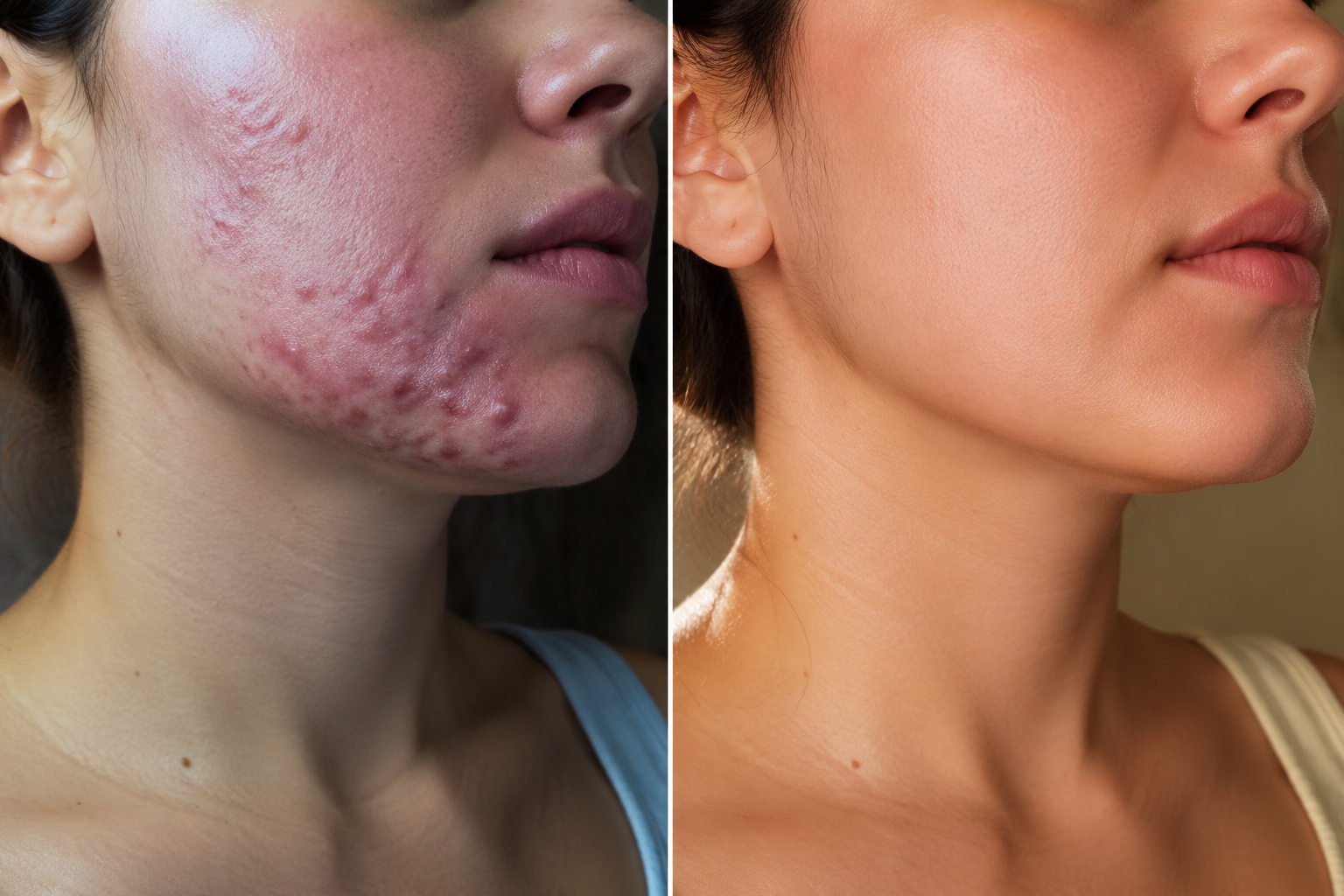
Androgens drive hormonal acne by telling your oil glands to produce more sebum than your skin can manage. Spironolactone interrupts that signal directly at the receptor level – which is what makes it different from every antibiotic or topical retinoid you may have tried.
Here’s the specific biology behind the drug and why it works for some acne patterns and not others:
- Androgens like testosterone and DHT stimulate sebaceous glands – these hormones bind to receptors in your oil glands and tell them to ramp up sebum production; the more androgen activity, the oilier and more congested your skin becomes.
- Hormonal acne clusters on the jawline, chin, and neck – those areas carry a higher density of androgen-sensitive oil glands, which is why your worst breakouts tend to land there rather than across your forehead or nose.
- Cyclical flares before your period are a strong hormonal signal – progesterone rises in the second half of your cycle and can amplify androgen activity in skin tissue, explaining why many women break out predictably in the 5-7 days before menstruation.
- Spironolactone blocks androgen receptors in skin cells – it fits into the same receptor sites that testosterone and DHT would normally occupy, so those hormones can’t deliver their “produce more oil” message to the gland.
- Sebum production drops because the signal never arrives – with the androgen receptor blocked, oil glands slow down noticeably; most patients I’ve worked with report their skin feeling less greasy within 4-8 weeks of starting.
- Less oil means less pore congestion – sebum is the main material that clumps with dead skin cells to form comedones, so reducing it upstream prevents new blockages from forming in the first place.
- This mechanism only applies to hormonally-driven acne – spironolactone has no meaningful antibacterial or barrier-repair action; if your breakouts are scattered across your whole face, started in early adolescence, and don’t track with your cycle, this drug is unlikely to move the needle.
That last point is worth sitting with before your appointment. Spironolactone is a precise tool for a specific problem – not a broad-spectrum acne fix.
Who Dermatologists Actually Prescribe Spironolactone To
Dermatologists prescribe spironolactone most often to adult women whose acne has a clear hormonal pattern – cyclical flares, jawline or chin distribution, and a history of failing topical treatments.
As noted in Contemporary OB/GYN‘s clinical discussion of hormonal acne treatments, spironolactone is effective for acne but is used off-label – the FDA has approved it as a diuretic and blood pressure medication, not specifically as an acne drug.
The table below separates strong candidates from poor ones across the criteria I see dermatologists weigh most in practice. Understanding where you fall helps you have a more productive first conversation with your doctor.
| Criteria | Good Candidate | Not a Good Candidate |
|---|---|---|
| Sex | Adult women (cisgender or transgender women on estrogen) | Men – anti-androgenic effects cause gynecomastia and sexual dysfunction |
| Age range | 20s through perimenopause; can continue into menopause | Adolescents rarely prescribed due to limited data and growth considerations |
| Acne pattern | Cyclical, jawline/chin-heavy, worsens before period | Scattered, non-cyclical, started in early teens, primarily comedonal |
| Prior treatments | Failed topicals (benzoyl peroxide, retinoids) or oral antibiotics | No trial of basic topicals yet – usually those are tried first |
| Pregnancy status | Not pregnant; reliable contraception in place | Pregnant or planning pregnancy – teratogenicity risk to a male fetus |
| Kidney function | Normal kidney function and potassium levels | Kidney disease or hyperkalemia (high potassium) – drug raises potassium further |
| Blood pressure | Normal or elevated BP (spironolactone lowers BP as a side effect) | Already hypotensive – BP-lowering effect may cause dizziness or fainting |
Before writing the first prescription, most dermatologists order a basic metabolic panel to check kidney function and baseline potassium. Blood pressure is measured at the visit.
Because spironolactone and birth control are often prescribed together – both to manage the teratogenicity risk and to regulate the hormonal fluctuations driving acne – your contraception plan is part of the conversation from day one.
The off-label status doesn’t mean weak evidence. It means the pharmaceutical company never pursued FDA approval for this specific indication – the clinical data supporting its use in female acne is substantial.
Dosage, Monitoring, and How Dermatologists Titrate the Prescription
The prescribing process for spironolactone follows a clear sequence. Knowing the steps ahead of time means fewer surprises at follow-up appointments and a better sense of whether your dose is actually optimized. Here’s a spironolactone dosage for acne plain-English guide that covers the full range – but the clinical steps below are what actually happen in practice.
-
Start low at 25-50 mg daily – Most dermatologists begin here to assess tolerability before pushing the dose up. At this level, you’re unlikely to see dramatic skin changes, but the body is adjusting to the drug’s diuretic and blood pressure effects. I typically spend 4-6 weeks at the starting dose before making any change.
-
Titrate upward toward the therapeutic range – JAAD Reviews’ 2025 clinical review identifies 50-200 mg daily as the evidence-based effective range for acne in women, with an initial target dose of 100 mg daily for most patients. Dose increases usually happen in 25 mg increments every 4-8 weeks based on response and tolerability.
-
Monitor potassium at the first follow-up – Spironolactone is a potassium-sparing diuretic, meaning it can raise blood potassium levels. A repeat metabolic panel at 4-8 weeks catches any elevation early. In healthy women under 45 with no kidney issues, significant hyperkalemia is uncommon – but monitoring is non-negotiable.
-
Check blood pressure at each visit – The drug lowers BP as a direct pharmacological effect. If you’re already running on the lower end of normal, your dermatologist will track this carefully and may adjust the dose if you’re experiencing dizziness, especially when standing up quickly.
-
Reassess the prescription at 3-6 months – By month 3, there should be some visible improvement if the drug is working. If there’s no meaningful change by month 5-6 at a dose of 100 mg or higher, the dermatologist will consider whether to push to 150-200 mg or shift strategy entirely.
-
Decide on oral contraceptive co-prescribing – Many dermatologists add a low-dose combined oral contraceptive pill alongside spironolactone. The OCP smooths out the hormonal fluctuations that drive cyclical breakouts and provides reliable contraception given the teratogenicity risk. This combination often produces faster, more consistent results than spironolactone alone.
-
Plan for long-term use if it’s working – Unlike antibiotics, which are typically limited to 3-6 months to reduce resistance risk, spironolactone can be continued indefinitely in women who tolerate it well and whose acne returns when they stop.
What a Realistic Spironolactone Timeline Actually Looks Like
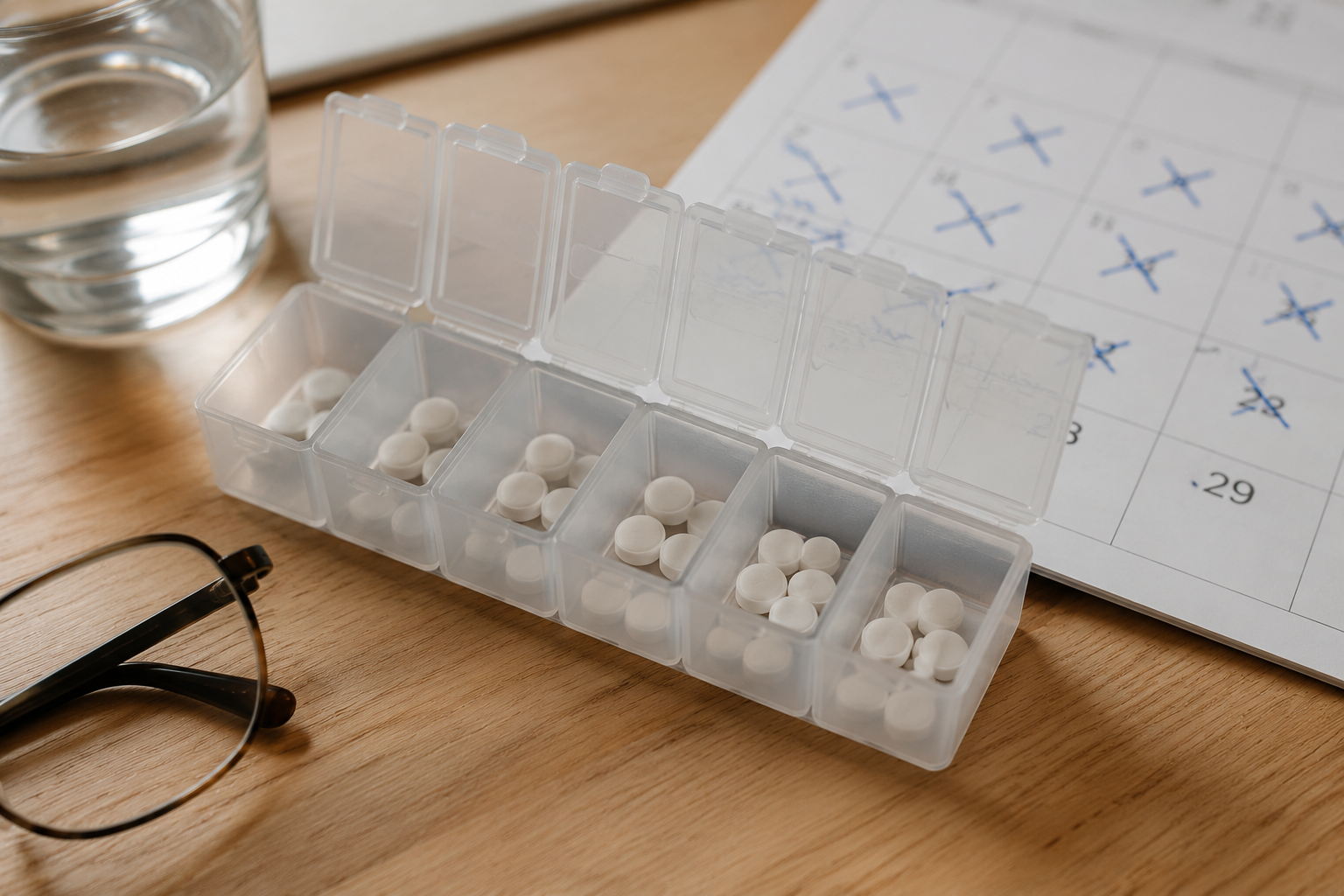
Most patients quit spironolactone too early. The drug’s mechanism is gradual by design – it’s reducing a physiological process (androgen signaling), not killing bacteria overnight. Understanding the actual timeline is what I spend the most time on during early follow-up appointments.
The AAD’s hormonal therapy overview notes that improvement with hormonal therapy ranges from a 50% to 100% reduction in acne – a wide range that reflects how much individual androgen sensitivity varies. The 2025 PMC meta-analysis pooling spironolactone trial data found a significant clinical benefit with no substantial increase in serious adverse events, which supports long-term use in appropriate candidates.
Weeks 1-4 are the quietest. Some patients experience a mild initial purge as the skin adjusts, though this is less pronounced than what you’d see with tretinoin. Visible skin changes are minimal at this stage, and that’s expected.
Months 2-3 are when most patients first notice something shifting. Skin tends to feel less oily. Active lesions may start healing faster. New cystic breakouts may begin appearing less frequently, though not yet reliably. For a detailed breakdown of this window, see how long spironolactone takes to work for acne.
Months 4-6 are the peak response period. Patients who are going to respond well usually have clear evidence of improvement by month 5. If you stop taking spironolactone, the underlying hormonal driver remains unchanged – acne typically returns within 2-4 months for most women. Long-term use is common and, based on current evidence, safe with routine monitoring.
My Patients’ Most Common Turning Point: A Case Study in Months 3-5
Spironolactone Questions Worth Answering Before Your First Prescription
Can men use spironolactone for acne?
Spironolactone is rarely prescribed to men for acne because blocking androgen receptors system-wide causes significant side effects in male patients. Gynecomastia (breast tissue growth), reduced libido, and sexual dysfunction are common enough that the risk-benefit calculation doesn’t hold up for most men.
Dermatologists treating male acne patients typically turn to isotretinoin (Accutane) instead – see spironolactone vs Accutane for acne for a full comparison. Transgender women on estrogen therapy are a different situation and may be appropriate candidates depending on their hormone levels and acne pattern.
Do I need to use birth control while taking spironolactone?
Many dermatologists strongly recommend it, though “required” depends on your specific situation. Spironolactone can feminize a male fetus if taken during pregnancy, which makes reliable contraception critical for anyone who could become pregnant.
A combined oral contraceptive pill (OCP) is the most common co-prescription – it also helps stabilize hormonal fluctuations that drive cyclical breakouts.
If you prefer non-hormonal contraception, options like a copper IUD are acceptable, but you and your dermatologist need to discuss the plan explicitly before starting.
For a deeper look at why these two drugs work well together, the spironolactone and birth control often prescribed together guide covers the full reasoning.
Will my acne come back when I stop taking it?
For most women, yes – because stopping spironolactone removes the androgen receptor block, and the underlying hormonal pattern that drove the acne in the first place hasn’t changed.
In my experience, patients who stop after 12-18 months of clearance typically see acne return within 2-4 months. That’s not a failure of the drug; it’s the nature of a hormonally-driven condition. Long-term use is a legitimate strategy.
Some women stay on a maintenance dose of 25-50 mg for years with no issues. The decision to stop should include a plan – often transitioning back to topical maintenance or having a clear trigger for reconsideration.
Is spironolactone safe to take long-term?
Based on current evidence, yes – with appropriate monitoring. The 2025 PMC meta-analysis on spironolactone for women with acne found no substantial increase in serious adverse events compared to control groups.
Routine potassium checks and blood pressure monitoring are the standard safeguards, and in healthy women with normal kidney function these values rarely drift into concerning territory.
The drug has been used as a blood pressure and diuretic medication for decades, so its long-term safety profile in adults is well-characterized. Your dermatologist will typically check labs annually once you’re on a stable dose.
How is spironolactone different from antibiotics like doxycycline for acne?
Doxycycline works by killing the C. acnes bacteria in your pores and reducing inflammation – it’s effective quickly (often within 6-8 weeks) but addresses a downstream effect rather than the hormonal root cause.
Spironolactone targets the androgen signaling that drives excess oil production in the first place. These two drugs are often used sequentially: doxycycline to get active inflammation under control in the first 3 months while spironolactone builds up to its therapeutic effect.
Once spironolactone is working, the antibiotic is typically discontinued. Using antibiotics long-term carries antibiotic resistance concerns; spironolactone does not.
Sources
The American Academy of Dermatology’s patient-facing overview of hormonal therapy covers which candidates benefit most from anti-androgens and what monitoring is typically involved.
A 2025 review published in JAAD Reviews examined oral spironolactone specifically in female patients with acne vulgaris, synthesizing current prescribing evidence and safety data including the recommended dose range of 50-200 mg daily.
A 2025 meta-analysis indexed on PubMed Central pooled efficacy and safety outcomes across multiple spironolactone trials in women, providing the quantitative backbone for claims about response rates and adverse event frequency.
Contemporary OB/GYN published a clinical discussion weighing the benefits and risks of hormonal acne treatments – useful context for understanding how gynecologists and dermatologists approach shared prescribing decisions around off-label spironolactone use.
Related from The Goal Is Clear
- Spironolactone and Birth Control: Why They’re Often Prescribed Together
- Spironolactone Vs Accutane: Which Is Right for Your Acne?
- Spironolactone Side Effects: Common, Less Common, and Serious
- Spironolactone Dosage for Acne: A Plain-English Guide
- How Long Does Spironolactone Take to Work for Acne?
- Complete Guide to Accutane
- iPledge Program
- Doxycycline Guide
- Retinol & Tretinoin Guide
- Acne Treatment Comparison
- Living Well on Acne Treatment