
Spironolactone and Birth Control: Why They’re Often Prescribed Together
Last updated: June 26, 2026
I’ve talked through this combination with more women than I can count – and the same question comes up every time: “Why do I need to take both?” It’s a fair thing to ask. Two prescriptions at once feels like a lot, especially when you just want your skin to clear up.
The short answer is that these two drugs attack hormonal acne from different angles. One blocks androgens at the skin level; the other reduces how many androgens your body produces in the first place. Together, they’re more effective than either one alone.
This article covers exactly how each drug works, why dermatologists pair them, which birth control pills are preferred, what you can realistically expect month by month, and who shouldn’t use this combination at all.
Quick answer: Dermatologists often prescribe spironolactone and birth control together to treat hormonal acne because the combination attacks androgen-driven breakouts on two fronts. Spironolactone blocks androgen receptors in the skin, while certain birth control pills lower circulating androgen levels. Birth control also prevents pregnancy, which spironolactone requires due to its risk of fetal harm.
How Spironolactone and Birth Control Each Fight Hormonal Acne
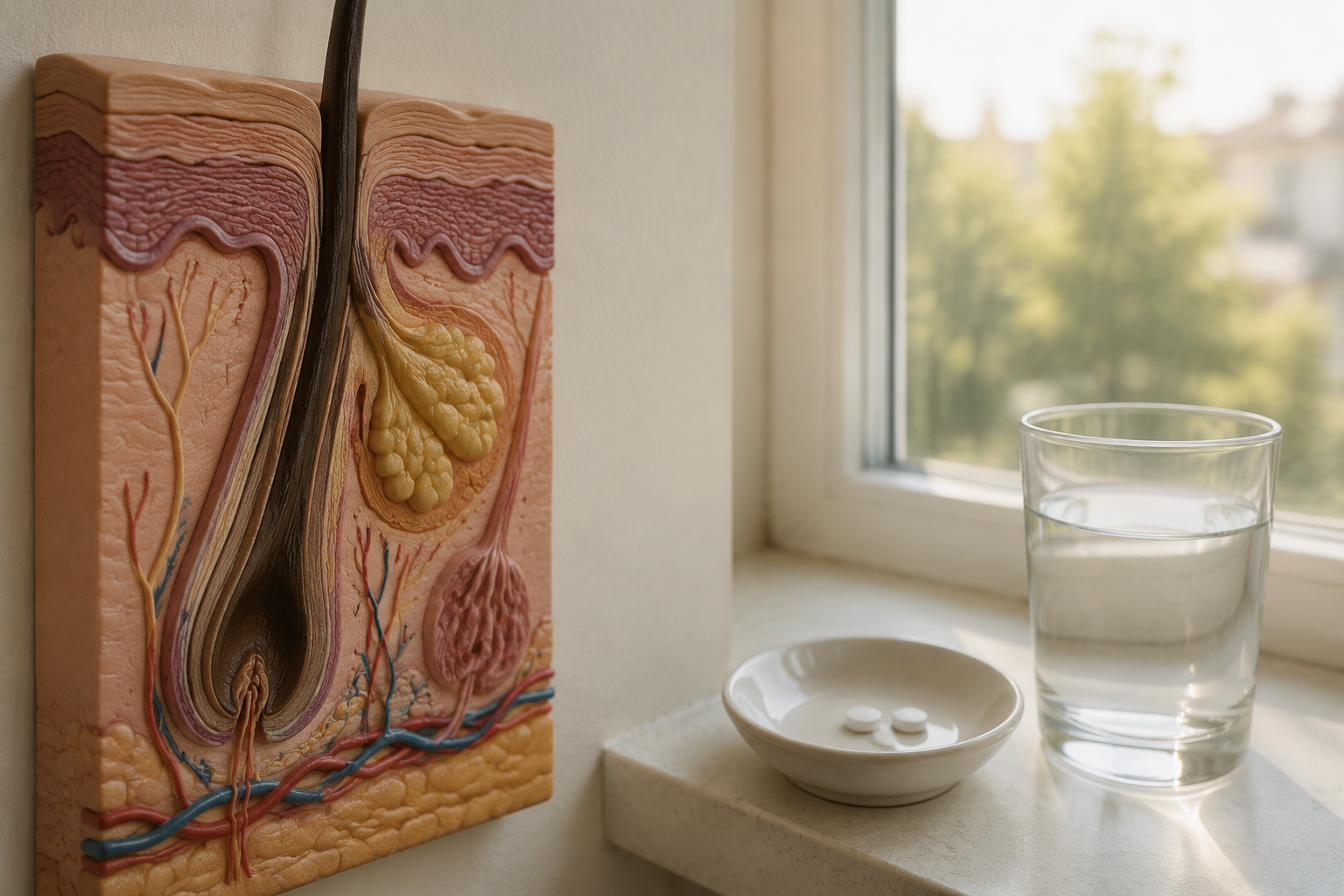
Both drugs target the same root problem – excess androgen activity – but through different pathways. Understanding how spironolactone works for acne alongside birth control makes it much easier to see why the combination produces stronger results than either drug alone.
-
Spironolactone blocks androgen receptors in your skin – Testosterone and DHT normally bind to receptors in your sebaceous (oil) glands and ramp up oil production. Spironolactone sits in those receptors instead, so the signal never gets through and your glands produce less sebum.
-
Less sebum means fewer clogged pores – Hormonal acne typically shows up along the jawline, chin, and lower cheeks because those areas are densest in oil glands sensitive to androgens. Cutting sebum production at the source directly reduces breakouts in exactly those spots.
-
Birth control pills lower the androgens circulating in your blood – Combined pills raise a protein called sex hormone-binding globulin (SHBG), which latches onto free testosterone and makes it inactive. The estrogen-progestin balance also suppresses androgen output from the ovaries directly.
-
The two drugs work at separate points on the same pathway – Spironolactone blocks androgens after they reach your skin. The pill reduces the androgens before they ever get there. I think of it as turning down the volume on the radio and unplugging the speaker – two separate interventions on the same signal.
-
The FDA has approved three specific pills for acne – Per GoodRx’s breakdown of FDA-approved acne pills, those are Yaz (drospirenone/ethinyl estradiol), Ortho Tri-Cyclen (norgestimate/ethinyl estradiol), and Estrostep (norethindrone acetate/ethinyl estradiol). Each has been studied specifically for acne reduction, not just contraception.
-
Both drugs together produce an additive effect – Neither drug alone eliminates androgens entirely. Combining them creates two complementary blocks on the same hormonal pathway, which is why the clinical results for the combination consistently outperform monotherapy.
The Real Reason Dermatologists Add Birth Control to Spironolactone
There are two reasons dermatologists prescribe birth control alongside spironolactone. One is about safety. The other is about results.
The safety reason comes first. Spironolactone can cause feminization of a male fetus – meaning it can interfere with the normal development of male sex characteristics during pregnancy.
That risk is serious enough that the American Academy of Dermatology states directly: if you can get pregnant, you need to use birth control while taking spironolactone. This is a non-negotiable part of the prescribing guidelines.
This requirement applies only to people who could become pregnant during treatment. If you’re postmenopausal, have had a surgical sterilization procedure, or are not sexually active with a partner who produces sperm, the pregnancy-prevention requirement doesn’t apply to you. The birth control piece is about eliminating a specific risk, not a blanket rule for everyone.
The efficacy reason is equally real. Research cited by skintreatment.com shows that low-dose spironolactone at 50 to 100 mg daily produces roughly a 33% reduction in acne lesions. Higher doses up to 200 mg combined with birth control pills show meaningfully stronger results.
That’s a significant gap – and it’s why Dermatology Times identifies the OCP-plus-spironolactone combination as a first-line hormonal acne treatment, not a secondary option.
I’ve seen this play out consistently. Patients who start on spironolactone alone at 50 mg often plateau at partial improvement. Adding an OCP – particularly one with anti-androgenic progestin – tends to push results further than titrating the spironolactone dose alone.
Which Birth Control Pills Work Best Alongside Spironolactone
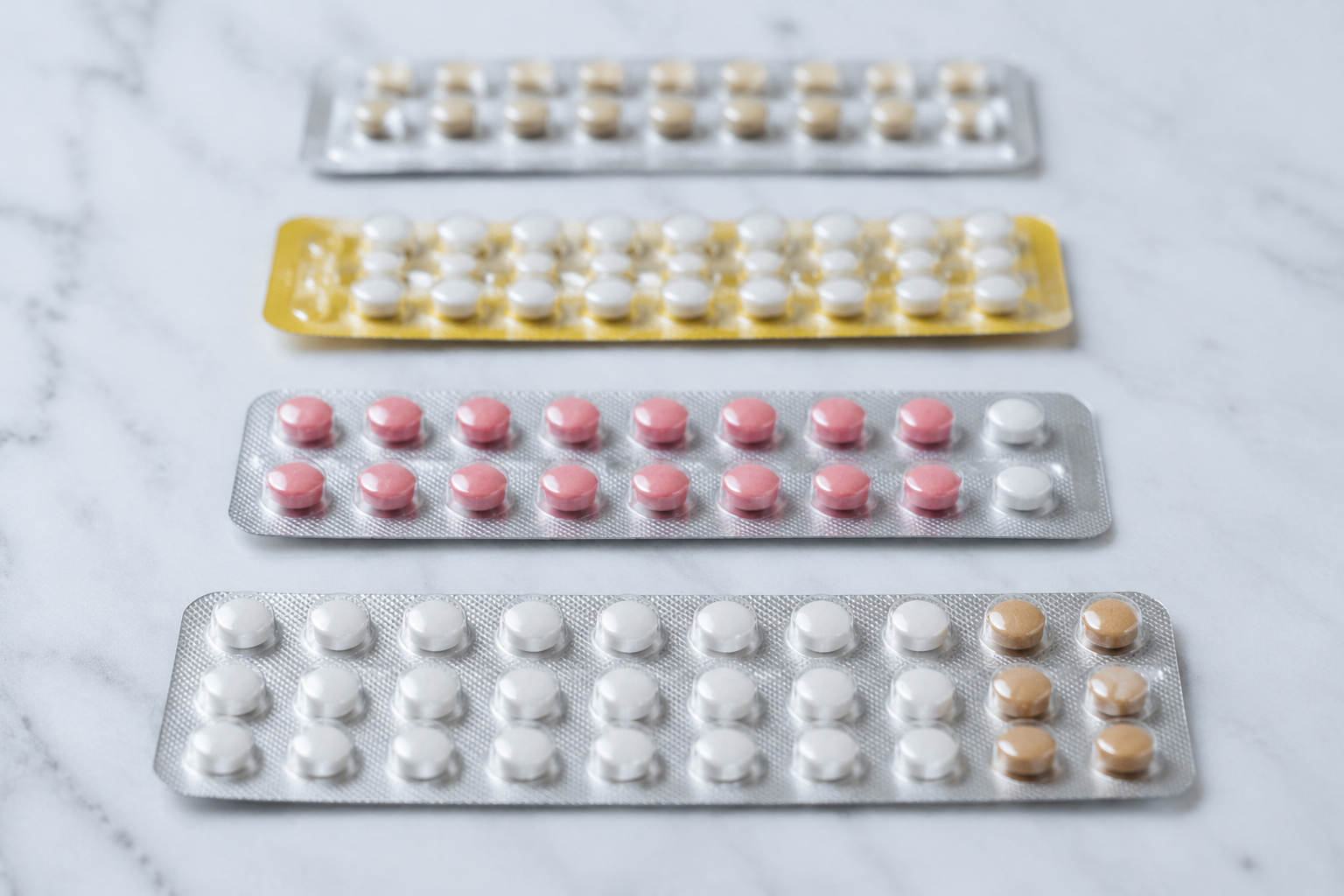
Not all birth control pills pair equally well with spironolactone. The progestin type matters – some progestins are androgenic (they can actually worsen acne), while others are anti-androgenic and complement what spironolactone is already doing.
The table below compares the most commonly prescribed options. I’ve seen drospirenone-containing pills come up most often in clinical discussions specifically because drospirenone has its own mild anti-androgenic activity, which stacks well with spironolactone’s mechanism.
| Brand Name | Generic Name | Progestin Type | Anti-Androgenic Activity | FDA Acne Approval |
|---|---|---|---|---|
| Yaz / Beyaz | Drospirenone / ethinyl estradiol | Drospirenone | High | Yes |
| Yasmin / Lucette | Drospirenone / ethinyl estradiol | Drospirenone | High | No (but same progestin as Yaz) |
| Ortho Tri-Cyclen | Norgestimate / ethinyl estradiol | Norgestimate | Moderate | Yes |
| Estrostep Fe | Norethindrone acetate / ethinyl estradiol | Norethindrone acetate | Low | Yes |
| Diane-35 (where available) | Cyproterone acetate / ethinyl estradiol | Cyproterone acetate | Very High | Not FDA-approved in the US |
One caution worth knowing: drospirenone has mild potassium-sparing properties, similar to spironolactone. Using both together can raise potassium levels (hyperkalemia) above the normal range of 3.5 to 5.0 mEq/L. Most prescribers will order a potassium lab at baseline and recheck at around 3 months. That monitoring step matters – don’t skip the bloodwork.
Pill choice should always be made with your prescribing clinician. Your cardiovascular history, migraine status, and smoking history all affect which option is safest for you specifically.
What Happened When I Tracked My Skin on Both for Six Months
Risks, Side Effects, and Who Should Avoid This Combination
The combination is well-studied and generally safe, but it carries real risks worth understanding before you start. Contemporary OB/GYN notes that providers need to be familiar with the adverse effects of both drugs before prescribing them together. I’d add: so do patients.
For a deeper look at spironolactone-specific risks on their own, the full spironolactone side effects to know about breakdown is worth reading before your first appointment.
Pros
- Dual hormonal suppression – blocks androgens at two separate points in the pathway for stronger acne clearance than either drug alone
- Pregnancy prevention is built into the regimen, satisfying the AAD’s teratogenicity requirement without an extra step
- Regulated, lighter periods are a common benefit of combined OCPs, especially relevant for women with PCOS-related irregular cycles
- Potential relief from other androgen-driven PCOS symptoms like excess hair growth and scalp shedding alongside acne improvement
- Well-documented safety profile – both drugs have decades of clinical use data
Cons
- Elevated potassium risk (hyperkalemia) when drospirenone pills are combined with spironolactone – requires lab monitoring at baseline and around the 3-month mark
- Estrogen-containing OCPs carry a small but real blood clot (VTE) risk, roughly 3 to 9 per 10,000 women per year, which increases if you smoke
- Not appropriate for smokers over age 35 due to compounded cardiovascular risk from estrogen-containing pills
- Women with certain cardiovascular conditions, migraines with aura, or a history of hormone-sensitive cancers may not be candidates for combined OCPs
- Side effects like spotting, breast tenderness, and mood changes are common in the first 1 to 3 months of starting the OCP component
Women who cannot use estrogen-containing pills still have options. A progestin-only pill, hormonal IUD, or copper IUD can satisfy the pregnancy-prevention requirement while avoiding estrogen-related risks.
If you’re comparing this approach against alternatives for stubborn acne, spironolactone vs Accutane for stubborn acne lays out when each is typically the better choice. The spironolactone dosage your doctor may prescribe is also worth reviewing, since dose adjustments are common in combination therapy.
Questions People Actually Ask Before Starting This Combo
Can I take spironolactone without birth control if I’m not sexually active?
Technically, some prescribers will allow it – but most dermatologists still require a reliable contraceptive method because the teratogenicity risk exists any time pregnancy is possible, even if it feels unlikely. A copper IUD is a common non-hormonal option that satisfies the requirement.
Have this conversation directly with your prescriber; the answer depends on your specific situation and their clinical judgment.
Will birth control alone clear my hormonal acne without spironolactone?
Sometimes, yes. FDA-approved pills like Yaz and Ortho Tri-Cyclen can produce meaningful acne reduction on their own – some women clear completely on a well-matched OCP. Spironolactone is typically added when the pill alone isn’t producing enough improvement after 3 to 4 months, or when a prescriber wants faster or stronger results from the start.
How long before I see results from the combination?
Most people notice the first visible clearing around months 3 to 4. Full results – meaning the skin stabilizing at its new baseline – usually take about 6 months.
The first 8 weeks are often the hardest; some people experience an initial purge before things improve. The full how long spironolactone takes to work for acne timeline covers each phase in detail.
Does spironolactone make birth control less effective?
No. Spironolactone does not reduce the contraceptive efficacy of birth control pills. The relationship between these two drugs runs one direction: the OCP protects against the pregnancy risk that spironolactone creates. There’s no pharmacological interaction that undermines contraceptive protection.
What if I want to stop birth control but stay on spironolactone?
You can, provided you switch to a reliable non-hormonal contraceptive method – a copper IUD or consistent barrier method use are the most common options. Your doctor needs to be part of that conversation.
Stopping the OCP without a replacement contraceptive in place would leave the teratogenicity risk uncovered, which is the one thing the prescribing guidelines are designed to prevent.
Sources
- American Academy of Dermatology – hormonal therapy for acne
- Dermatology Times – birth control pills and spironolactone as first-line hormonal acne treatments
- Contemporary OB/GYN – balancing rewards and risks of hormonal acne treatments
- GoodRx – birth control for acne, FDA-approved brands
- Healthline – spironolactone and birth control safety overview
- SkinTreatment.com – acne treatments in addition to hormonal birth control