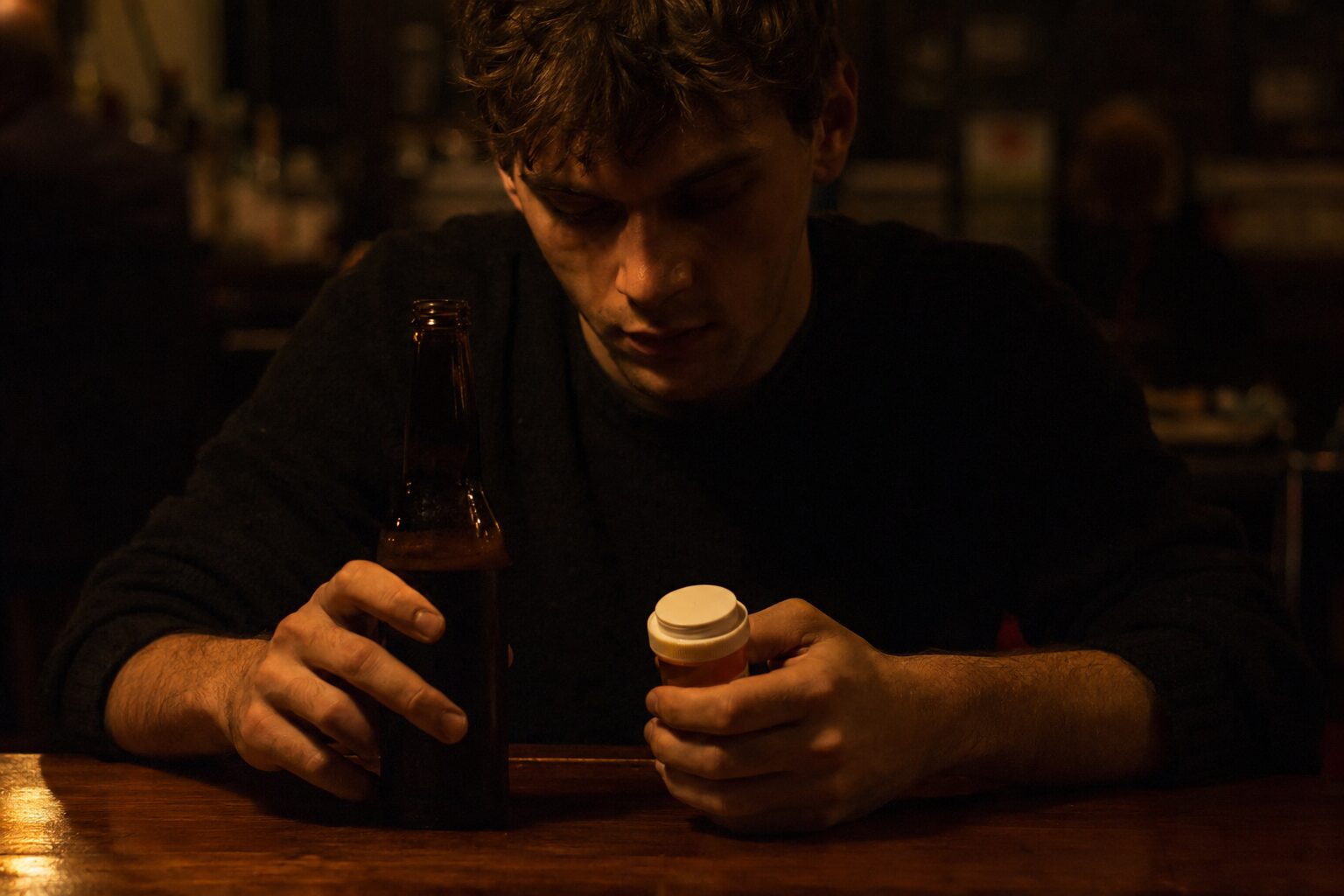
accutane and alcohol risks
Last updated: June 11, 2026
I’ve coached a lot of people through high-stakes, months-long commitments where the social cost of saying no becomes its own kind of obstacle. Accutane is one of those commitments. The treatment works – but only if your body can actually process it without interference, and alcohol is one of the clearest sources of that interference.
What I want to do here is give you the specific, biological picture that most dermatologist appointments don’t have time to cover. Not to scare you. To give you enough information that the decision is actually yours to make, clearly, when the moment comes. For a full isotretinoin treatment overview, that context matters too.
This article covers what happens inside your liver when the two substances overlap, how alcohol amplifies the side effects you’re already managing, what real bloodwork looks like when things go wrong, and the honest answers to the questions patients search for but rarely ask out loud.
Quick answer: Mixing Accutane and alcohol significantly raises the risk of liver damage, since both substances are processed by the liver simultaneously. The combination can elevate triglyceride levels, worsen common side effects like headaches and dizziness, and compromise bloodwork results. Dermatologists strongly advise avoiding alcohol entirely throughout the full course of treatment.
The Mistake Most Accutane Patients Make at the Worst Time
Most people on Accutane hear the alcohol warning once, nod, and then spend the next five months quietly negotiating with it. A friend’s birthday comes up. Homecoming. A college party on a Friday where everyone else has a drink in hand. The warning starts to feel like fine print.
The rationalization is almost always the same: just one drink, one night, I’ll be fine. That’s a reasonable-sounding thought, especially when your dermatologist’s warning was something like “avoid alcohol during treatment” with no further explanation. Vague warnings are easy to dismiss because they don’t give you anything specific to weigh against the social cost of saying no.
Accutane courses run four to six months. That’s a long stretch of real life – graduations, holidays, first semesters, weekends. The question of whether to drink isn’t abstract; it comes up repeatedly, and most patients aren’t equipped with enough information to answer it clearly.
According to The Recovery Village, alcohol and Accutane are probably not a safe combination, particularly for heavy or binge drinkers – but even moderate use carries risks that deserve a straight explanation.
The risks here are biological and specific. Understanding exactly what happens when isotretinoin and alcohol share your bloodstream makes the warning much harder to brush off.
What Actually Happens Inside Your Body When You Mix the Two
Isotretinoin runs a continuous workload through your liver for the entire course of treatment – typically 4 to 6 months at doses ranging from 0.5 to 1 mg per kilogram of body weight per day. Alcohol lands in the same processing queue. The combined load is where the real problem starts.
GoodRx’s clinical overview confirms that combining alcohol and Accutane raises your risk of liver damage and high cholesterol, and Paramount Wellness notes it can also reduce the medication’s effectiveness over time. Here’s what that double load actually does at the mechanism level:
- Liver enzyme competition slows clearance – Your liver uses CYP450 enzymes to break down isotretinoin around the clock. Alcohol demands those same enzymes as a priority toxin, which slows isotretinoin clearance and keeps alcohol circulating at higher concentrations longer.
- Enzyme suppression increases alcohol toxicity – Isotretinoin can suppress some of the enzymes your body uses to metabolize alcohol, meaning more toxic exposure from the same number of drinks than you’d get without the drug.
- Triglycerides spike from both directions – Isotretinoin independently raises triglyceride levels in most patients, which is why monthly bloodwork is required. Alcohol also raises triglycerides. Combined, the effect is additive – sometimes worse – and levels above 500 mg/dL carry a real risk of pancreatitis.
- Liver enzymes ALT and AST climb – Monthly labs measure these as markers of liver stress. Isotretinoin alone can push them toward the upper edge of normal. Adding alcohol can tip borderline numbers into a range that triggers a mandatory dose reduction or full treatment stop.
- Drug-induced liver injury becomes a real possibility – DILI from isotretinoin is rare when the drug is used correctly. Alcohol removes a significant margin of safety. Symptoms often don’t appear until damage is already showing in bloodwork.
- Even moderate drinking can push borderline labs into dangerous territory – There’s no safe floor that applies to everyone. Individual liver sensitivity varies, and a patient whose labs are already trending upward has almost no buffer left.
Side Effects That Get Noticeably Worse With Alcohol
Alcohol amplifies nearly every side effect that Accutane already produces. As Miiskin’s dermatologist commentary explains, alcohol worsens dry skin, cracked lips, nosebleeds, joint pain, and fatigue – all of which are already among the most common complaints from patients on isotretinoin. For a deeper look at the full list, see Accutane side effects explained.
The table below shows how each side effect changes when you add alcohol to an already-stressed system.
| Side Effect | On Accutane Alone | With Alcohol Added |
|---|---|---|
| Dry lips and skin | Moderate to severe dryness; requires daily moisturizing | Alcohol dehydrates at the cellular level; dryness intensifies sharply, cracking and bleeding more likely |
| Fatigue and brain fog | Common, especially in the first 4-6 weeks | Alcohol disrupts REM sleep cycles; next-day fatigue compounds significantly |
| Joint and muscle pain | Aching joints reported in roughly 16% of patients | Alcohol is pro-inflammatory; existing joint pain worsens and recovery slows |
| Mood changes and depression | Isotretinoin carries a black-box warning for mood changes and suicidal ideation | Alcohol is a CNS depressant; combining the two can deepen low mood and impair emotional regulation |
| Nosebleeds | Mucosal dryness makes nosebleeds frequent | Alcohol thins blood and further dries mucous membranes; frequency and severity both increase |
| Nausea and GI distress | Mild nausea, especially on an empty stomach | Both substances irritate the GI lining; nausea, cramping, and vomiting risk all rise |
I’ve seen patients describe the morning after drinking on Accutane as feeling like a 3-day hangover compressed into 24 hours. That’s not dramatic – it’s the additive effect working exactly as the mechanism predicts.
One Patient’s Course, Two Blood Panels, and a Lesson I Keep Sharing
What Your Dermatologist’s Bloodwork Is Actually Watching For
Your monthly bloodwork is the early-warning system for exactly the kind of liver stress that alcohol accelerates. Understanding what those numbers mean – and what triggers action – makes the stakes concrete. I always walk clients through these thresholds before their first appointment because monthly bloodwork on Accutane is more than a formality.
Normal ALT runs roughly 7 to 56 U/L; normal AST is about 10 to 40 U/L.
Most dermatologists will reduce your dose if either marker reaches 2 to 3 times the upper limit of normal, and will discontinue treatment if values climb higher or don’t respond to dose reduction.
Sanova Dermatology notes that Accutane can damage the liver on its own in certain cases – combined with alcohol, that effect can become dangerous fast.
Triglycerides above 150 mg/dL are considered borderline high. Isotretinoin alone can push levels to 200 to 300 mg/dL in some patients. Add alcohol, and crossing the 500 mg/dL threshold – where pancreatitis risk becomes real – is not a hypothetical.
The iPLEDGE program requirements mandate monthly labs precisely because these numbers can shift fast.
Drinking in the 48 to 72 hours before a blood draw is especially risky – alcohol raises triglycerides and liver enzymes acutely, meaning even one heavy night before your appointment can generate a result that looks like chronic damage and forces a treatment change you didn’t need.
Accutane and Alcohol Questions Worth Answering Before You Start
Can I have just one drink on Accutane?
One drink is low-risk for most patients, but it’s not zero-risk. The danger is cumulative and dose-dependent – one drink once is different from one drink several nights a week for months.
Individual liver sensitivity varies significantly, and you won’t know where you fall on that spectrum until your labs tell you. The safest answer is abstinence for the duration of treatment.
The honest answer is that a single drink at a wedding probably won’t destroy your labs, but it sets a negotiation in motion that tends to escalate.
How long after stopping Accutane can I drink safely?
Isotretinoin has a half-life of roughly 10 to 20 hours, so the drug itself clears your system within a few days of your final dose. Most clinicians suggest waiting at least 3 to 7 days after the last pill before drinking.
Liver enzyme normalization can take longer, though – especially if your ALT or AST was trending up late in your course. A follow-up blood panel 2 to 4 weeks after finishing is advisable before returning to regular alcohol use.
Will alcohol make Accutane stop working?
Heavy or frequent drinking can reduce treatment efficacy in a specific way. When your liver is under stress from alcohol, it processes isotretinoin less efficiently, which can alter the drug’s concentration in your system.
If your labs deteriorate because of alcohol, your dermatologist may reduce your dose or pause treatment entirely – which effectively weakens or interrupts the course. A reduced cumulative dose is directly linked to higher rates of acne recurrence after treatment ends.
What should I tell my dermatologist if I’ve already been drinking on Accutane?
Tell them exactly what happened. Dermatologists are not there to judge your social life – they need accurate information to read your labs correctly and make safe dosing decisions.
If your ALT is elevated and they don’t know about the drinking, they may attribute it to the drug alone and make a treatment decision based on incomplete information. Hiding it doesn’t protect you; it just makes their job harder and your outcome less reliable.
Sources
- GoodRx – Alcohol and Accutane: Side Effects, Interactions, and Safety Tips – clinical overview of the interaction, liver damage risk, and cholesterol effects
- NIH/NLM StatPearls – Isotretinoin pharmacology and adverse effects – pharmacological basis for isotretinoin metabolism and toxicity profile
- FDA – Isotretinoin prescribing and safety information – regulatory safety data and iPLEDGE monitoring requirements
- Miiskin – A dermatologist’s take on whether you can drink on Accutane – dermatologist commentary on alcohol’s effect on common side effects
- The Recovery Village – Alcohol and Accutane Risks and Side Effects – clinical overview of safety risks for different drinking patterns
- Sanova Dermatology – Is Alcohol Safe With Accutane? – dermatologist perspective on liver damage risk when combining the two substances