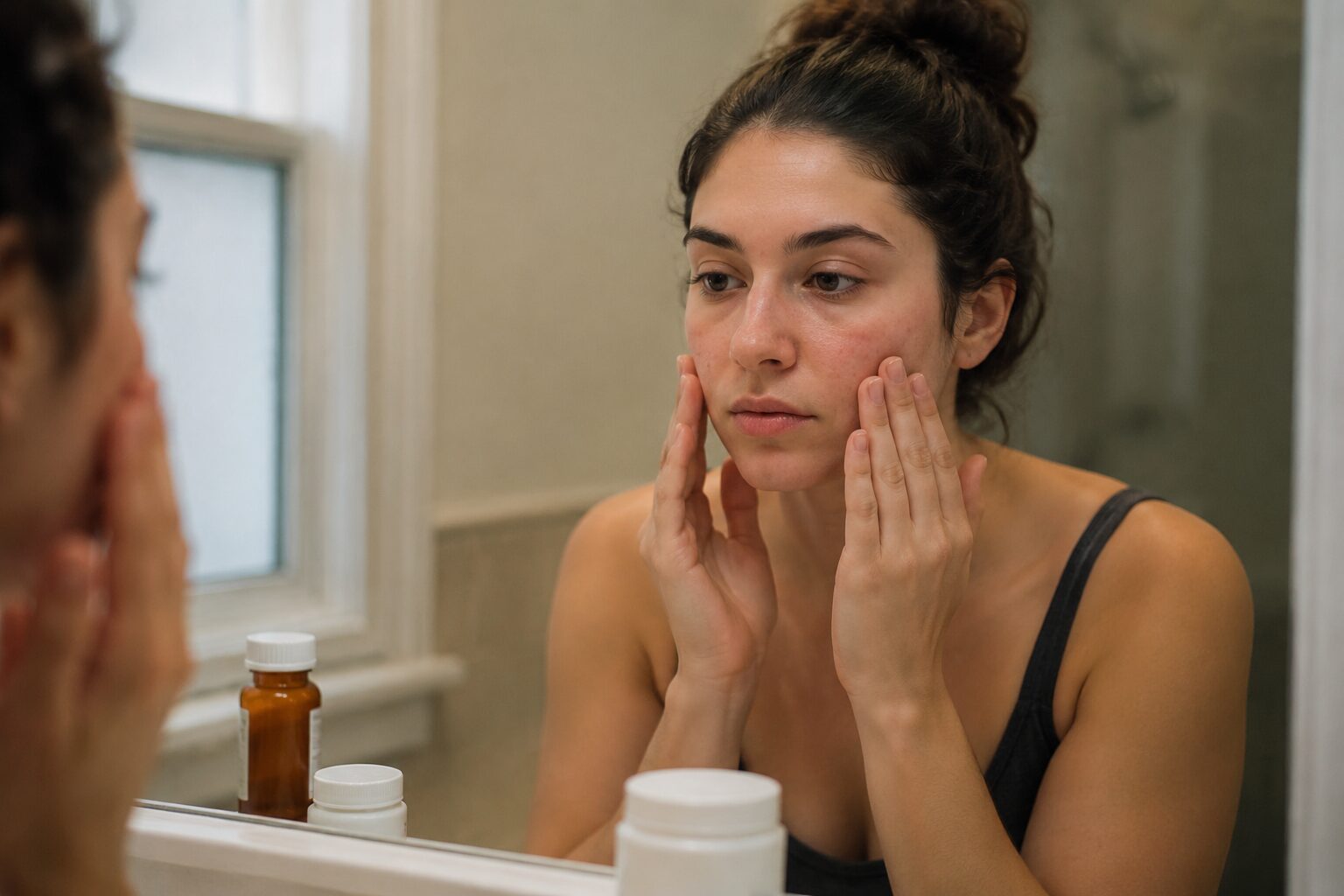
The Best Skincare Routine While on Accutane
Last updated: June 26, 2026
I’ve worked with a lot of people navigating Accutane, and the pattern is almost always the same: they start the medication, their skin falls apart within 2 weeks, and they have no idea what to put on their face. Their old routine – the one that worked fine before – suddenly feels like sandpaper.
This guide covers exactly what you need and nothing you don’t. A simple morning and evening routine, the specific ingredients to use and avoid, and what actually changed my own skin during the hardest weeks of treatment.
If you want the full context on living well during acne treatment beyond just products, the complete guide to living well on acne treatment is worth reading alongside this.
Quick answer: A skincare routine while on Accutane requires a gentle, hydration-focused approach: cleanse with a fragrance-free, non-stripping cleanser, apply a rich moisturizer twice daily, and use SPF 30+ sunscreen every morning. Avoid retinoids, exfoliants, and alcohol-based products. Accutane dramatically reduces oil production, making barrier repair and consistent moisture the top priorities.
Why Accutane Changes Everything About Your Skin
Accutane’s drying effects come directly from how it works – by shrinking your oil glands, it eliminates the skin’s built-in moisture system. The Royal Berkshire NHS skincare guide for isotretinoin patients puts it plainly: the medication commonly causes dry and flaky skin, making it significantly more sensitive throughout treatment.
Here’s what’s actually happening under the surface, broken down:
-
Sebaceous gland suppression – Isotretinoin shrinks your oil glands by up to 90%, which is why it clears acne so effectively – but it also strips away the natural lipids your skin needs to stay moisturized and protected.
-
Skin barrier compromise – Your outer skin layer relies on sebum to stay intact. With oil production nearly gone, that barrier thins out, becomes reactive, and heals slowly from even small amounts of friction or irritation.
-
Extreme dryness and tightness – Most people feel this on the face first, but it spreads to the lips, nostrils, and sometimes the scalp. The tightness after washing is a clear signal the barrier is struggling.
-
Visible peeling and flaking – Flaking tends to cluster around the mouth, chin, and forehead. Dryness usually peaks somewhere between weeks 2 and 6, then levels off as your body adjusts to the medication.
-
Photosensitivity – Accutane makes your skin burn faster than it ever did before. SPF 30 at minimum is non-negotiable every single morning, even on cloudy days or short commutes.
-
Severely chapped lips – Lip dryness is often the first side effect people notice, showing up within the first 7 to 10 days. It doesn’t resolve on its own – you have to actively treat it throughout the course.
-
Your old routine must stop – Retinoids, AHAs, BHAs, vitamin C serums, scrubs, exfoliating toners – all of it needs to be paused. Your barrier is too compromised to tolerate chemical or physical stress on top of what isotretinoin is already doing.
The 5-Step Accutane Skincare Routine (Morning and Night)
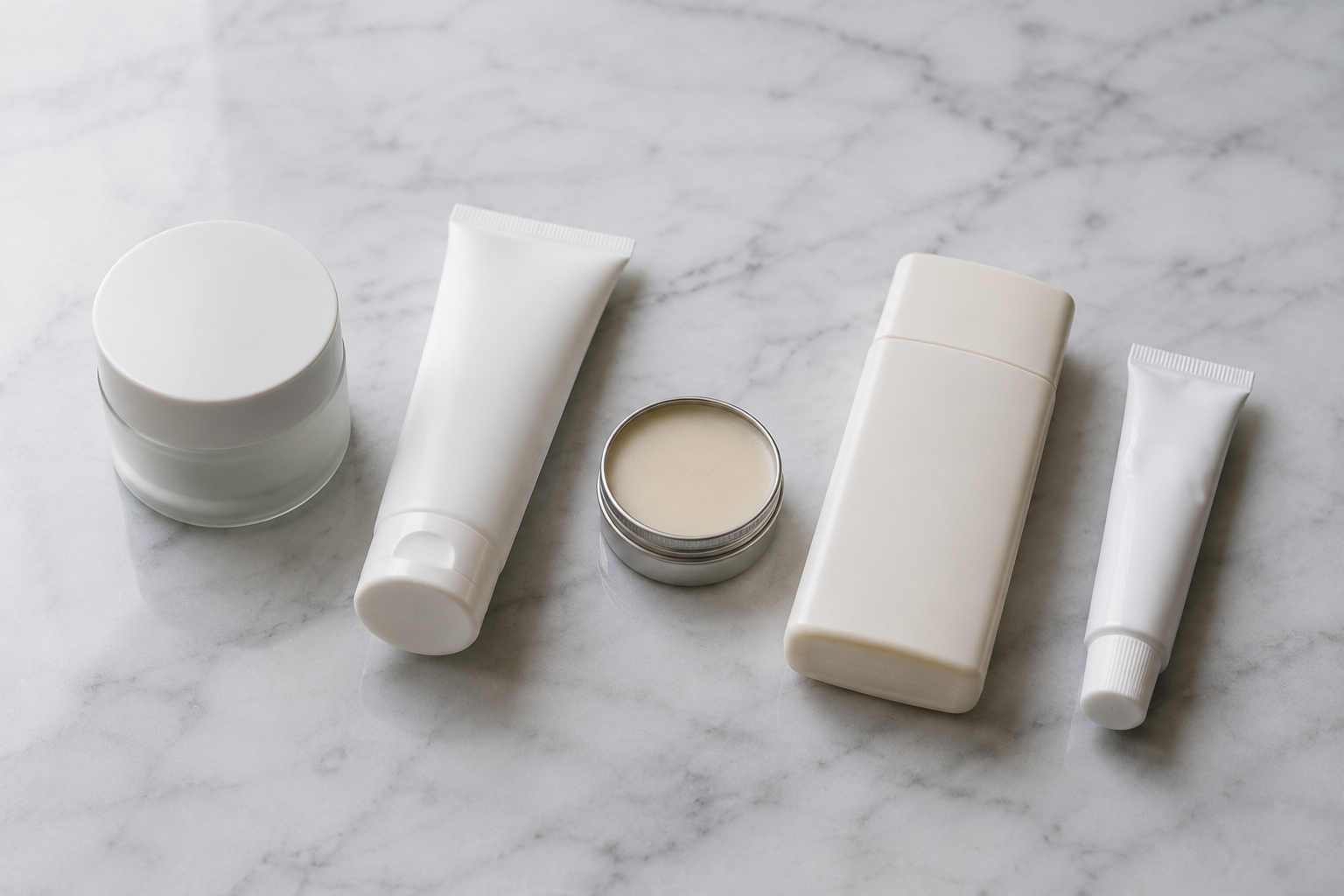
The goal here is simple: protect, hydrate, and leave the skin alone. I’ve seen people try to maintain 8-step routines on Accutane and end up red and raw by week 4. Keep it to the essentials below.
-
Gentle, fragrance-free hydrating cleanser – Use a cream or lotion cleanser with no sulfates and no foaming agents. CeraVe Hydrating Cleanser and Vanicream Gentle Facial Cleanser both work well. Cleanse once in the morning and once at night – no double cleansing needed.
-
Hydrating toner or essence (morning, optional) – If your skin is extremely tight after cleansing, a simple hyaluronic acid essence can help before moisturizer. Keep it to one ingredient if possible. Skip anything with alcohol, witch hazel, or exfoliating acids.
-
Thick, barrier-repair moisturizer with ceramides – This is the most important step. Apply it morning and night to slightly damp skin. Look for ceramides, glycerin, and niacinamide (under 5%). The best moisturizers for dry skin on Accutane go deeper on specific picks – Vanicream Moisturizing Cream and CeraVe Moisturizing Cream are the two I recommend most often.
-
Broad-spectrum SPF 50+ sunscreen (morning only) – Apply after moisturizer, before anything else. According to dermatologist guidance on Accutane skincare, you should reapply every 2 hours when you’re outdoors. Mineral sunscreens with zinc oxide tend to be gentler on sensitized skin than chemical filters.
-
Dedicated lip balm or healing ointment – Aquaphor Healing Ointment is the most reliable option. Apply it before bed, first thing in the morning, and every few hours throughout the day. For context on when to use Aquaphor on acne-prone skin, there’s a full breakdown in the sibling article.
Night routine specifically: Skip the toner and SPF. Cleanser, then a generous layer of ceramide moisturizer, then Aquaphor on the lips. That’s it. Adding anything else at night – serums, oils, actives – will likely cause irritation without adding benefit.
Ingredients to Avoid – and What’s Actually Safe
Most skincare ingredients that are fine on healthy skin become problematic when your barrier is compromised on isotretinoin. The two categories below aren’t complicated – avoid anything that strips or exfoliates, and stick to ingredients that hydrate and protect.
I made the mistake of keeping a vitamin C serum in my routine for the first 10 days of treatment. It caused a burning sensation within 60 seconds of application. I pulled it immediately and didn’t reintroduce it for 8 months post-course.
| Ingredient / Category | Status on Accutane | Why |
|---|---|---|
| Retinol / Retinoids | Avoid | Redundant with isotretinoin and will cause severe irritation, peeling, and potential skin damage |
| AHAs (glycolic, lactic acid) | Avoid | Chemical exfoliants that thin a barrier already compromised – high risk of rawness and burning |
| BHAs (salicylic acid) | Avoid | Even low-concentration BHA can over-strip skin with almost no sebum left to protect it |
| Benzoyl peroxide (5%+) | Avoid | High concentrations are too drying; if your derm approves a low dose, proceed cautiously |
| Physical scrubs / exfoliating tools | Avoid | Mechanical friction on fragile skin causes micro-tears and prolonged inflammation |
| Alcohol-based toners, astringents | Avoid | Alcohol evaporates moisture and disrupts the already-weakened lipid barrier |
| Ceramides | Safe | Directly repair the lipid barrier – one of the most useful ingredients on Accutane |
| Hyaluronic acid | Safe | Draws water into the skin – effective and non-irritating at any concentration |
| Glycerin | Safe | A gentle humectant that supports moisture retention without any irritation risk |
| Niacinamide (under 5%) | Safe | Supports barrier function and has some anti-inflammatory effect; stay below 5% to avoid flushing |
| Squalane | Safe | A lightweight, non-comedogenic emollient that replaces some of the lipids oil glands normally produce |
| Colloidal oatmeal, panthenol, allantoin | Safe | Soothing and barrier-supportive; well-tolerated even on the most sensitized skin |
One more thing worth stating clearly: waxing and laser treatments are completely off-limits during Accutane. Both carry a serious risk of skin lifting, scarring, or post-inflammatory pigmentation when the skin barrier is this fragile. Wait at least 6 months after finishing your course before booking either.
My Skin at Week 3 vs. Week 12: What Actually Worked
The daily habits that help your acne treatment work better are worth reading alongside this – skincare alone isn’t the whole picture. And if you’re wondering whether diet plays a role, foods to avoid while on acne medication covers what the evidence actually shows.
Accutane Skincare Questions Worth Answering Before You Start
Can I wear makeup while on Accutane?
Yes, makeup is fine – but the formulation matters more than it ever did before. Stick to non-comedogenic, fragrance-free products, and avoid heavy powder foundations that settle into dry patches and make flaking more visible.
Mineral makeup (loose or pressed mineral powder, tinted mineral SPF) tends to be the best-tolerated option because it sits on the surface rather than sinking into a compromised barrier.
How often should I moisturize on Accutane?
At minimum twice daily – morning and night – but many people on Accutane need a midday application too, especially during weeks 3 through 6 when dryness peaks. Apply moisturizer to skin that’s still slightly damp from cleansing or a water mist, which helps it absorb and lock in more hydration than applying to completely dry skin.
Is it safe to use a face mask on Accutane?
Clay masks, charcoal masks, and anything with exfoliating enzymes or acids should be completely avoided – they pull moisture and disrupt the barrier at a time when it has no reserves to recover.
A simple hydrating sheet mask with hyaluronic acid or aloe vera is generally fine, but patch-test on your inner arm first. If it causes any tingling or redness, skip it.
When can I go back to my normal skincare routine after Accutane?
Most dermatologists recommend waiting at least 6 months after finishing your course before reintroducing actives like retinol, AHAs, or BHAs. Your skin barrier needs time to fully rebuild its lipid structure and sebum production.
Rushing that window – say, adding glycolic acid at 8 weeks post-course – risks irritation that looks similar to what you experienced during treatment. Reintroduce one product at a time and give each at least 2 weeks before adding the next.
Sources
-
Taking care of your skin during isotretinoin treatment – Royal Berkshire NHS (May 2024) – patient-facing clinical guidance on moisturizer selection, sun protection, and what to avoid during treatment
-
Isotretinoin: Overview – American Academy of Dermatology – how isotretinoin works, who it’s appropriate for, and what patients should expect during a course
-
Isotretinoin and skin barrier function – PubMed / National Library of Medicine – peer-reviewed research on isotretinoin’s effect on transepidermal water loss (TEWL) and sebum reduction
-
Isotretinoin – DermNet NZ – clinician-reviewed reference covering both pharmacology and practical skincare guidance for patients