Acne Treatment Comparison: How to Choose the Right Option
Last updated: June 26, 2026
I’ve spent years watching people cycle through drugstore shelves, get frustrated, and finally sit down with a dermatologist holding a list of questions they weren’t sure how to ask. The gap between “I’ve tried everything OTC” and “I understand what my prescription actually does” is where most people get stuck.
This guide covers the full range – from benzoyl peroxide to isotretinoin – with a specific focus on the three treatments people search most: doxycycline, spironolactone, and tretinoin. I’ll walk you through how each works, who it’s actually for, and how to approach your appointment with a clearer sense of direction.
One thing I want to be honest about upfront: acne treatment is rarely a single drug. Combination therapy is almost always more effective, and the sooner you understand that, the better your results will tend to be.
Quick answer: The best acne treatment depends on your acne type, severity, and skin goals. OTC options like benzoyl peroxide suit mild breakouts, while prescription treatments — tretinoin, doxycycline, and spironolactone — target moderate to severe acne. Dermatologists most commonly recommend combination therapy, pairing treatments to address multiple causes simultaneously for faster, longer-lasting results.
The Acne Treatment Landscape: OTC vs. Prescription at a Glance
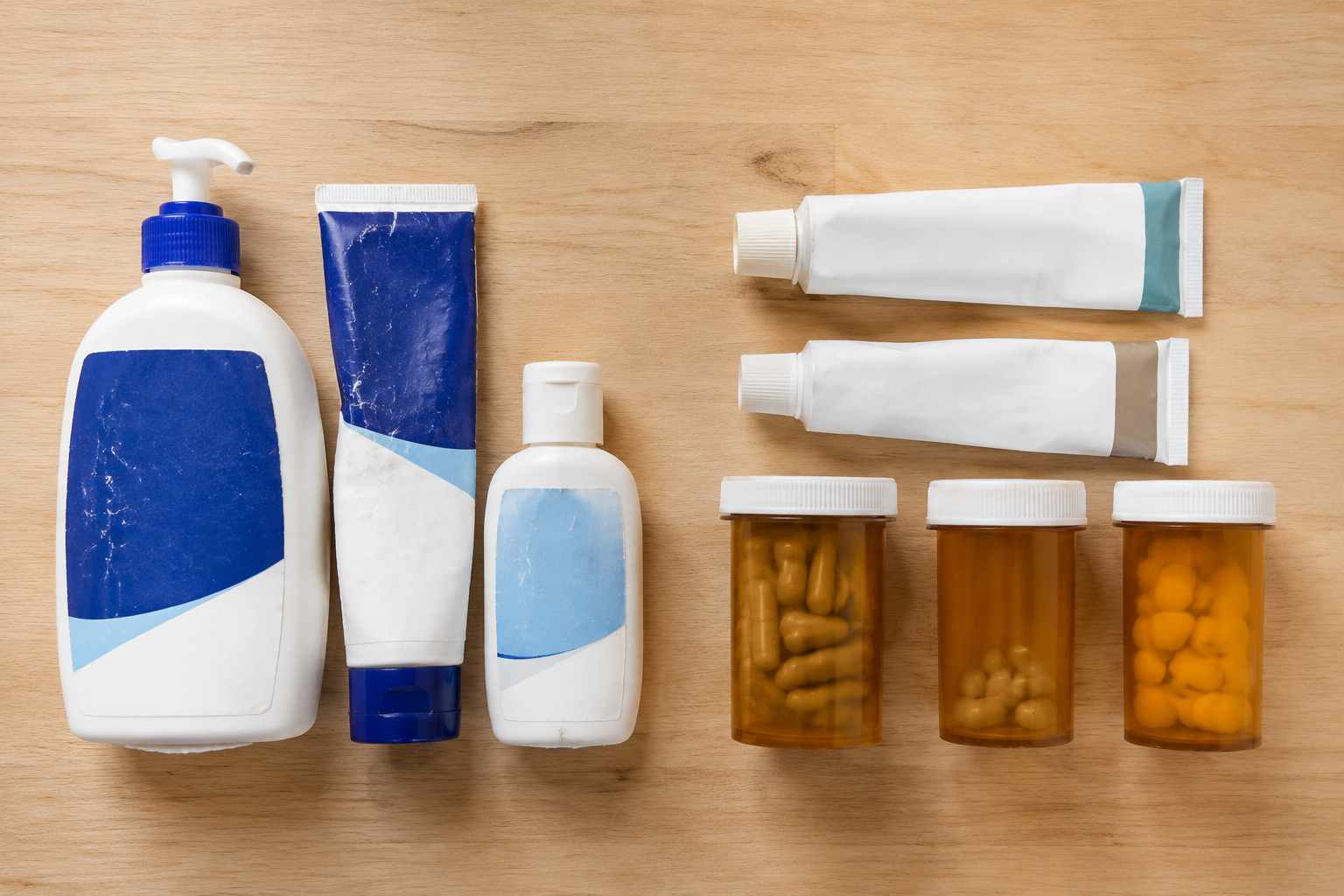
Every major acne option – from a $7 drugstore wash to a 9-month isotretinoin course – fits somewhere on a spectrum from mild-and-manageable to severe-and-treatment-resistant. I find it helps to see the whole map before zeroing in on one treatment.
According to the Mayo Clinic, benzoyl peroxide kills acne-causing bacteria, removes excess oil, and clears dead skin cells – making it one of the most well-rounded OTC options available. For mild comedonal or inflammatory cases, BYU Scholars Archive research cross-referencing first-line treatment data recommends adapalene 0.1% gel as a strong starting point before moving to prescription retinoids.
| Treatment | Type | Best For | How It Works | Typical Timeline |
|---|---|---|---|---|
| Benzoyl peroxide | OTC | Mild inflammatory (red pimples) | Kills acne bacteria, reduces oil and dead skin buildup | 4-8 weeks |
| Salicylic acid | OTC | Clogged pores, blackheads | Exfoliates inside the pore to prevent blockages | 4-6 weeks |
| Adapalene 0.1% (Differin) | OTC | Mild-moderate comedonal & inflammatory | Retinoid; speeds up skin cell turnover | 8-12 weeks |
| Tretinoin (0.025%-0.1%) | Rx topical | Moderate comedonal & inflammatory | Stronger retinoid; unclogs pores, boosts collagen | 10-16 weeks |
| Clindamycin (topical) | Rx topical | Inflammatory acne; usually paired with BP | Antibiotic; reduces bacterial load on skin | 6-10 weeks |
| Doxycycline (50-100 mg) | Rx oral | Moderate-severe inflammatory | Oral antibiotic; fights bacteria and inflammation system-wide | 6-12 weeks |
| Minocycline (50-100 mg) | Rx oral | Moderate-severe inflammatory | Oral antibiotic; similar mechanism, different side-effect profile | 6-12 weeks |
| Spironolactone (50-150 mg) | Rx oral | Hormonal acne in women | Blocks androgen receptors; reduces oil driven by hormones | 3-6 months |
| Isotretinoin (Accutane) | Rx oral | Severe or treatment-resistant | Shrinks oil glands dramatically; the only option with long-term remission potential | 5-9 months |
Two details in that table are easy to miss. Adapalene 0.1% is the only retinoid sold without a prescription – tretinoin always requires an Rx, even at the lowest 0.025% strength. Spironolactone appears only for women because it works by blocking male hormones; prescribing it to men risks feminizing side effects.
Timelines are what most people underestimate. Even prescription tretinoin takes 10-16 weeks to show its full effect. Patience with the process is part of the treatment.
Doxycycline, Spironolactone, and Tretinoin: Head-to-Head Breakdown
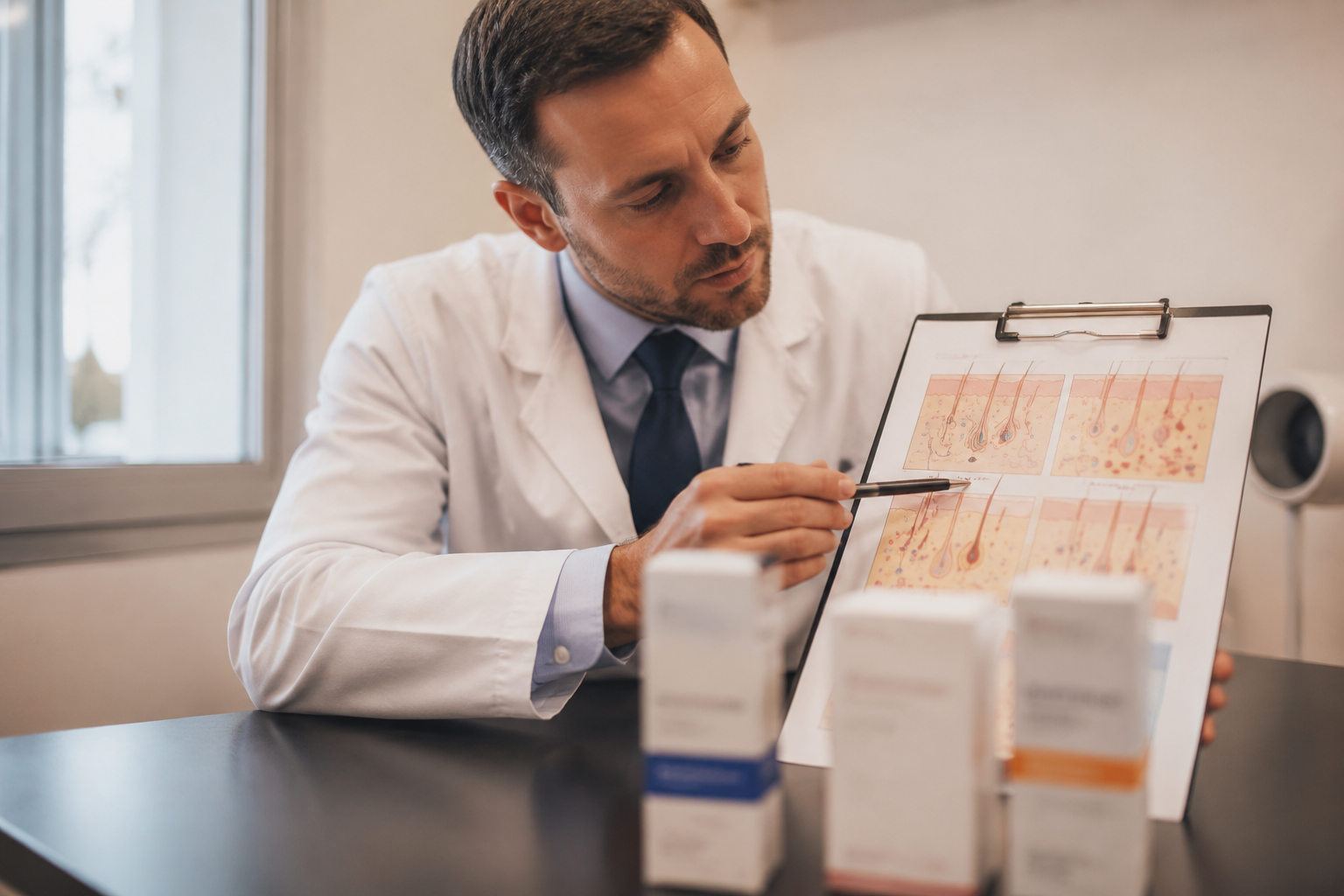
These three are the most-searched prescription acne treatments – and they work through completely different mechanisms. Knowing how each one works helps you understand why your dermatologist might recommend one, two, or all three at once.
A quick note on combination therapy before the table: doxycycline and tretinoin are frequently prescribed together. Doxycycline handles active bacterial inflammation while tretinoin normalizes cell turnover – they attack acne from different angles simultaneously. I’ll expand on that in the next section.
For a deeper look at oral vs. topical retinoid options, the Accutane vs tretinoin – oral vs topical retinoid comparison covers that specific decision in detail.
| Drug | How It Works | Best For | Typical Duration | Key Side Effects | Who Should Avoid |
|---|---|---|---|---|---|
| Doxycycline (50-100 mg/day) | Oral antibiotic; reduces C. acnes bacteria and suppresses inflammatory cytokines | Moderate-severe inflammatory or cystic acne | 3-6 months (bridge therapy) | Sun sensitivity, GI upset, yeast infections | Pregnant women; those with tetracycline allergy |
| Spironolactone (50-150 mg/day) | Blocks androgen receptors; lowers sebum production driven by hormonal fluctuations | Adult female hormonal acne (jawline, chin, cyclical breakouts) | Ongoing – often 1-2+ years | Increased urination, breast tenderness, irregular periods, elevated potassium risk | Males (feminizing effects); those with kidney disease or taking potassium-sparing diuretics |
| Tretinoin (0.025%-0.1% topical) | Retinoid; accelerates skin cell turnover, unclogs pores, reduces comedone formation | Comedonal and mild-moderate inflammatory acne; long-term maintenance | Long-term; often used indefinitely for maintenance | Purge period (weeks 4-8), dryness, peeling, sun sensitivity | Pregnant women; very sensitive or rosacea-prone skin |
A few patterns stand out. Doxycycline is intentionally short-term – 3 to 6 months max – to limit antibiotic resistance risk. Spironolactone, by contrast, is often a long-term commitment because hormonal acne tends to return once it’s stopped. Tretinoin sits in the middle: the purge period is temporary, but many people continue it for years as a maintenance treatment.
Combination therapy consistently outperforms monotherapy in the research. If your dermatologist suggests pairing doxycycline with tretinoin, that’s evidence-based practice, not overtreatment.
How to Match Your Acne Type to the Right Treatment
Picking the right treatment starts with classifying what you actually have. I’ve seen people spend months on the wrong product because they skipped this step entirely – treating hormonal cystic acne with a salicylic acid wash, for example, is like trying to fix a leaky pipe with duct tape.
Work through these six steps before your dermatology appointment. You’ll walk in with a clearer picture of your own case, and your doctor will be able to move faster.
-
Classify your severity – Mild acne means mostly blackheads and whiteheads (comedones) with few red bumps. Moderate means regular papules and pustules (the classic inflamed pimples). Severe means deep, painful nodules or cysts that don’t come to a head. This classification directly determines whether you’re a candidate for OTC products, prescription topicals, or oral medication.
-
Identify your pattern – Hormonal acne tends to cluster along the jawline and chin, flares predictably around your cycle, and often shows up as deep, tender cysts. Non-hormonal acne is more random – forehead, nose, cheeks – and less tied to your monthly schedule. Pattern recognition is one of the fastest ways to narrow down whether spironolactone belongs in your plan.
-
Factor in sex and hormonal status – Spironolactone is prescribed almost exclusively to females and AFAB (assigned female at birth) patients. If hormonal acne is your pattern and you’re male, your dermatologist will likely lean toward other options. For females, hormonal history (birth control use, PCOS, irregular cycles) is worth mentioning at your appointment.
-
Audit what’s already failed – I always ask patients to list every product they’ve tried and for how long. If you used a retinoid for only 6 weeks and stopped during the purge, that’s different from a genuine treatment failure at 4 months. Your treatment history shapes what comes next – for doxycycline vs minocycline for acne, prior antibiotic history matters too.
-
Think through lifestyle constraints – Doxycycline causes significant sun sensitivity, which matters if you work outdoors or live somewhere sunny. Tretinoin requires consistent SPF use. Spironolactone increases urination, which some people find disruptive. Isotretinoin requires monthly blood tests and two forms of birth control for women – a real logistical commitment.
-
Confirm with a dermatologist or telehealth provider – None of these steps replaces a prescription or a professional assessment. What they do is help you have a more productive 15-minute appointment. Come in knowing your severity, your pattern, your history, and your constraints – your dermatologist can take it from there.
What Dermatologists Actually Prescribe – and Why Combination Therapy Wins
Monotherapy – one drug, used alone – is rarely the strongest approach to moderate or severe acne. The clinical evidence backs combination regimens, and prescribing patterns reflect that.
A 2023 PMC/NIH network meta-analysis ranked oral isotretinoin as the single most effective acne treatment (MD = 48.41; P = 1.00), followed by triple therapy combining a topical antibiotic, a retinoid, and benzoyl peroxide.
That ranking matters because it tells you where the ceiling is – and why dermatologists escalate when simpler regimens stall. For a detailed look at where isotretinoin fits relative to topical tretinoin, the oral isotretinoin vs topical tretinoin differences article breaks that down specifically.
Antibiotic monotherapy – doxycycline or minocycline used without anything else – is now actively discouraged by major guidelines. The JAAD 2024 guidelines recommend always pairing oral antibiotics with benzoyl peroxide to reduce antibiotic resistance risk. Benzoyl peroxide doesn’t cause resistance, so it counteracts the selective pressure that antibiotics create.
Cost is a real factor in these decisions. ScienceDirect research on first-line acne treatment affordability confirms that generic formulas and compounded tretinoin are meaningfully more cost-effective than brand-name versions.
Generic doxycycline, for example, often runs under $15 per month with a GoodRx coupon – while brand-name Doryx can exceed $200. I always ask about generics and compounding options when cost is a concern for someone I’m advising.
The practical takeaway: if your dermatologist suggests a combination of tretinoin plus doxycycline, or a triple-therapy topical regimen, that’s evidence-based standard of care – not an upsell.
Six Months on Tretinoin and Spironolactone: What Actually Changed
Acne Prescription Questions Worth Answering Before Your Appointment
Most people walk into a dermatology appointment unsure which questions to ask. These are the ones I see come up most often – and the answers that actually help you make a decision.
Can I use tretinoin and doxycycline at the same time?
Yes – this is a common and evidence-backed combination. Tretinoin handles cell turnover and unclogs pores while doxycycline targets the bacterial and inflammatory side of acne. Dermatologists typically limit doxycycline to 3-6 months to prevent antibiotic resistance, then taper it off while continuing the tretinoin long-term.
Is spironolactone only for women?
For acne treatment, yes – spironolactone is prescribed almost exclusively to females and AFAB patients. It works by blocking androgens (male hormones), which drive excess sebum production. In males, blocking androgens can cause gynecomastia (breast tissue growth) and other feminizing effects, so it’s rarely appropriate.
If you’re curious about how comparing doxycycline and minocycline side effects stacks up as an alternative path, that comparison is worth reading.
How long before I see results from tretinoin?
Most people see an initial worsening – the “purge” – somewhere between weeks 4 and 8. Meaningful improvement typically appears around months 3-4, and significant clearing by month 6. Consistency matters more than anything else during this window. Daily SPF use is essential because tretinoin makes skin meaningfully more sensitive to UV damage.
What’s the difference between tretinoin and adapalene?
Both are retinoids that speed up skin cell turnover, but tretinoin is prescription-strength and generally more potent. Adapalene 0.1% (sold as Differin) is now available over the counter and causes less irritation – making it a reasonable first step for mild-to-moderate acne before graduating to prescription tretinoin.
Will I need to be on antibiotics like doxycycline forever?
No. Current guidelines recommend limiting oral antibiotics to 3-6 months. They function as bridge therapy – controlling active inflammation while a retinoid (which takes longer to work) builds up its effect. Once the retinoid is doing its job, the antibiotic is tapered off to reduce the risk of antibiotic resistance developing.
Sources
- Comparative Efficacy of Pharmacological Treatments for Acne Vulgaris – PMC/NIH meta-analysis, ranked isotretinoin and triple therapy efficacy
- Guidelines of care for the management of acne vulgaris – JAAD 2024 evidence-based prescribing guidelines
- First-Line Acne Treatment: Efficacy and Comparison of Cost – ScienceDirect, cost-effectiveness of generics and first-line options
- First Line Acne Treatment: Comparison of Cost and Efficacy – BYU Scholars Archive, adapalene 0.1% as first-line recommendation
- Nonprescription acne treatment: Which products work best? – Mayo Clinic, OTC ingredient overview
- Topical Therapy for Acne – AAFP, foundational review of topical retinoids and antibiotic therapy