Retinol and Tretinoin for Acne: How They Differ, and Which You Need
Last updated: June 26, 2026
I’ve watched a lot of people spend 6 months on a drugstore retinol serum, see almost nothing change, and then assume retinoids just don’t work for them. That’s the wrong conclusion. Usually, the problem is the product tier, not the ingredient category.
Both retinol and tretinoin are vitamin A derivatives. Both can clear acne. But they are not interchangeable, and the gap between them is bigger than most product labels suggest.
This article covers how the two actually differ at the biological level, what the clinical evidence shows for acne specifically, and a practical framework for choosing the right one based on where your skin is right now.
Quick answer: Tretinoin is significantly more effective than retinol for acne because it works directly on skin receptors without conversion, making it roughly 20 times more potent. Retinol suits beginners with mild breakouts and sensitive skin, while tretinoin, available by prescription only, delivers faster, clinically proven results for moderate-to-severe acne.
The Retinoid Conversion Chain: Why Strength Is Everything
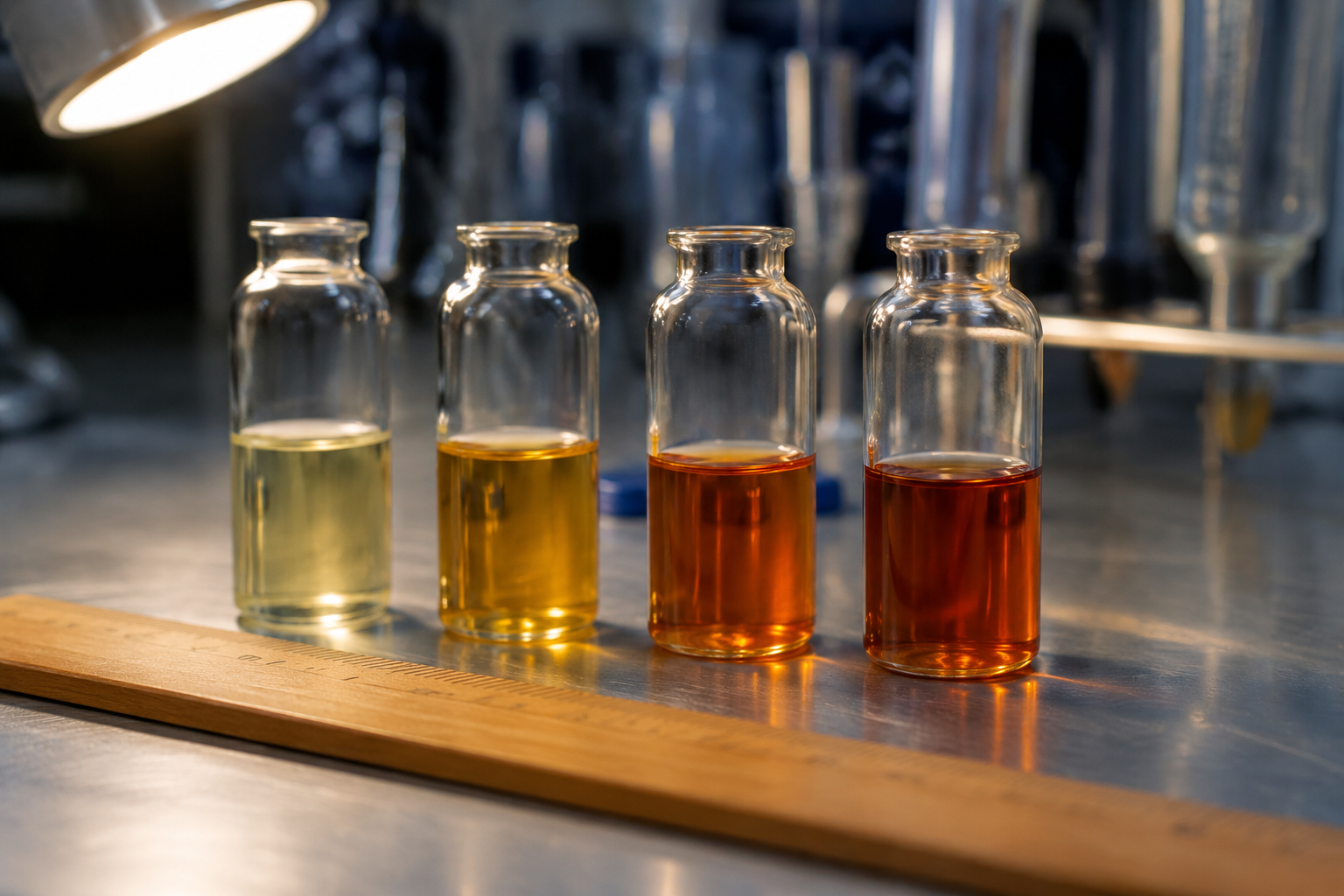
Every retinoid you apply has to become retinoic acid before your skin cells can use it. As Healthline explains, retinol is a vital nutrient that must be converted by the skin before it can act – and each conversion step costs you potency. Here is what that ladder actually looks like.
-
Retinyl ester (retinyl palmitate, retinyl acetate) – Requires three conversion steps to reach retinoic acid, meaning only a small fraction of what you apply ever becomes active. Found in many basic moisturizers; useful for very sensitive skin but limited for treating real acne.
-
Retinol – The OTC gold standard in serums from brands like RoC and La Roche-Posay. Two conversion steps stand between it and retinoic acid (retinol → retinaldehyde → retinoic acid), making it roughly 20 times less potent than tretinoin at the same labeled concentration.
-
Retinaldehyde (retinal) – One single conversion step away from retinoic acid, placing it meaningfully above retinol in real-world strength. A handful of OTC products use it – Avène A-Oxitive is one – and it causes less irritation than tretinoin. If tretinoin proves too harsh for your skin, retinaldehyde is worth trying before you give up on the prescription route.
-
Retinoic acid (tretinoin) – Already in its final active form. Zero conversion steps. Your skin receptors bind it immediately, which is why 0.025% tretinoin outperforms most OTC retinols despite looking like a lower number on the label.
-
The practical implication for acne – Retinol can improve mild congestion and skin texture over several months. Clinical studies on inflammatory and cystic acne consistently use tretinoin, not retinol. If your breakouts have persisted for more than 12 weeks without budging on OTC products, the conversion chain is the biological explanation – and a prescription changes the math.
Head-to-Head: Retinol vs Tretinoin Across Every Factor That Matters
Choosing between these two comes down to six factors: how bad your acne is, how quickly you want results, how sensitive your skin runs, whether you can access a prescription, what you want to spend, and how much clinical proof you need before committing. In my experience, the prescription barrier is the one that trips people up most. For a deeper look at efficacy, see retinol vs tretinoin which works better.
The table below compares both options across every dimension that actually affects your decision.
| Factor | Retinol (OTC) | Tretinoin (Rx) |
|---|---|---|
| Prescription required | No – available at any pharmacy or online | Yes – in-person derm or telehealth visit |
| Effective potency | Low to moderate; ~20x weaker than tretinoin at equivalent label % | High; active immediately with no conversion |
| Time to acne improvement | 12-16+ weeks of consistent use | 8-12 weeks; some see change by week 6 |
| Irritation likelihood | Mild to moderate; better tolerated by sensitive skin | Moderate to high, especially weeks 1-4 |
| Typical cost | $15-$45 per bottle; no insurance needed | $10-$30 with GoodRx or generic; some insurance covers it |
| Acne-specific clinical evidence | Limited; mostly small or industry-funded studies | Strong; FDA-approved for acne vulgaris since 1971 |
| Sensitive skin suitability | Good starting point; ramp up from 0.25% | Start at 0.025%; use buffer moisturizer method |
| Pregnancy/breastfeeding | Discuss with your OB; topical retinoids are generally avoided | Contraindicated – do not use during pregnancy |
Retinol makes sense if your acne is mild, your skin is reactive, or you genuinely cannot access a prescription right now. Tretinoin is the stronger clinical choice for anyone dealing with moderate to persistent breakouts – and telehealth has made getting that prescription easier and cheaper than most people realize.
What the Evidence Actually Says About Each One for Acne
Tretinoin has been FDA-approved for acne vulgaris since 1971, making it one of the longest-studied topical acne treatments available. According to Medical News Today, both retinol and tretinoin are forms of vitamin A used in skincare – but the depth of acne-specific evidence behind each one is very different. In my view, this evidence gap is the single most important thing to understand before choosing a product.
Tretinoin works by normalizing follicular keratinization – the process by which dead skin cells clump together and clog pores. When that process slows down, comedones stop forming and existing ones clear faster. Peer-reviewed data on PubMed consistently shows 50-70% lesion count reduction with tretinoin at concentrations between 0.025% and 0.1% over 12 weeks of use.
Retinol’s acne evidence is thinner. Most studies are smaller, shorter, and frequently funded by the brands selling the products. As Miiskin notes, tretinoin is superior to retinol for acne treatment because it requires no conversion steps before becoming active – and that difference shows up directly in clinical outcomes.
Retinaldehyde sits between the two. A handful of studies show it outperforms retinol for comedonal acne while causing less irritation than tretinoin, making it a legitimate OTC bridge option if you’re not ready for a prescription.
My 16-Week Skin Log: Testing Retinol Then Switching to Tretinoin
Choose Your Retinoid Based on Where You Actually Are Right Now
Picking the right retinoid is not complicated if you work through it step by step. As BSW Health notes, how you use a retinoid makes a big difference in both results and comfort – and that starts with matching the product to your actual situation. My recommendation is to be honest with yourself about where your skin is right now rather than defaulting to whatever is easiest to buy.
-
Assess your acne severity – Mild acne means mostly blackheads and whiteheads with few inflamed spots. Moderate means regular red papules and pustules. Severe or cystic means deep, painful nodules that leave marks. Retinol is a reasonable starting point for mild; tretinoin is the clinically supported choice for moderate to severe.
-
Evaluate your skin sensitivity and retinoid history – If you’ve never used a retinoid before, your skin will react to any of them. Start low regardless of which tier you choose. If you’ve used retinol for 3+ months without significant irritation, your skin is likely ready for a stronger option.
-
Figure out your prescription access – A dermatology appointment can take weeks. Telehealth platforms like Apostrophe, Curology, or Hims/Hers can get you a tretinoin prescription in 48-72 hours for $20-$60. If cost is the barrier, generic tretinoin 0.025% cream with a GoodRx coupon typically runs $10-$15.
-
Match yourself to a specific product – Retinoid novices with sensitive skin: start with best over-the-counter retinol for acne at 0.25-0.5%. I found that starting at 0.25% and building up slowly made a real difference in tolerability. OTC users wanting more power without a prescription: try a retinaldehyde formula. Anyone with moderate or persistent acne who can get a prescription: start at tretinoin 0.025%.
-
Follow a proper introduction schedule – Every third night for the first 2 weeks. Every other night for weeks 3-4. Nightly from week 5 onward if your skin tolerates it. Use the moisturizer sandwich – a thin layer of moisturizer before and after tretinoin reduces irritation without meaningfully reducing absorption.
-
Know when to escalate – If you have used an OTC retinol consistently for 12 weeks and seen no meaningful change in your breakout count, stop waiting. That’s your signal to get a prescription. Telehealth makes this a 48-hour process, not a 3-month wait.
Real Questions People Have Before Picking a Retinoid
These are the questions I hear most often from people standing in the skincare aisle or sitting in a telehealth queue. For visual outcome data, see tretinoin before and after results and timelines.
Can I use retinol or tretinoin with benzoyl peroxide or niacinamide?
Niacinamide pairs well with both retinol and tretinoin and can actively reduce the redness and irritation that retinoids cause – use it together without concern.
Benzoyl peroxide is trickier: it can oxidize tretinoin and reduce its effectiveness if applied at the same time, so the standard approach is benzoyl peroxide in the morning and tretinoin at night. Most dermatologists I’ve spoken with follow this split-routine protocol routinely.
How long before I see real acne results with either one?
Tretinoin typically produces meaningful improvement in 8-12 weeks of consistent nightly use. Retinol often takes 12-16 weeks or longer because of the conversion steps between retinol and active retinoic acid. Both require you to actually use them every night – skipping three nights a week extends your timeline significantly.
Is tretinoin worth the hassle of getting a prescription?
For moderate or persistent acne, yes – the clinical evidence is far stronger, and the speed of results is faster.
Telehealth platforms have made the prescription process much less of a hassle than it used to be; many people get approved within 48 hours without leaving home.
If your acne has been going on for more than 3 months without improvement, the prescription is worth pursuing.
Will either one make my acne worse before it gets better?
A purge phase – increased breakouts in weeks 2-6 – is common with both, and it’s caused by accelerated cell turnover pushing clogged material to the surface faster than usual. It typically resolves within 4-8 weeks.
If you want a detailed breakdown of what to expect week by week, the retinol purge timeline and what to expect covers it thoroughly. Starting at a low frequency (every third night) reduces the severity of the purge.
Can I use retinol or tretinoin if I’m also on doxycycline or spironolactone?
Generally yes – dermatologists frequently combine tretinoin with oral antibiotics like doxycycline or hormonal treatments like spironolactone as part of a multi-pronged acne protocol. One important note: doxycycline increases photosensitivity, so SPF 30+ every morning is non-negotiable, not optional. If you’re on isotretinoin (Accutane), the situation is different – see using retinoids safely while on Accutane before combining anything.
Sources
-
FDA drug label and approval record for tretinoin (retinoic acid) for acne vulgaris – approved indication, concentration ranges (0.025%-0.1%), and required safety disclosures.
-
American Academy of Dermatology – clinical guidelines on topical retinoids for acne – current standard-of-care recommendations from practicing dermatologists.
-
PubMed – peer-reviewed efficacy data on tretinoin in acne vulgaris – randomized controlled trials on lesion reduction, tolerability, and long-term use going back to the 1970s.
-
NIH Office of Dietary Supplements – Vitamin A (retinol) fact sheet – explains the biological conversion chain from dietary retinol to active retinoic acid.
-
MedlinePlus (National Library of Medicine) – tretinoin topical drug entry – patient-facing dosing instructions, side effects, and pre-treatment considerations.
Related from The Goal Is Clear
- Retinol Vs Tretinoin: Which One Actually Works Better?
- Best Over-the-Counter Retinol for Acne: A Buyer’s Guide
- Can You Use Retinol or Tretinoin While on Accutane?
- Tretinoin Before and After: Honest Results and Timelines
- The Retinol Purge: Why Skin Gets Worse Before Better
- Complete Guide to Accutane
- iPledge Program
- Doxycycline Guide
- Spironolactone Guide
- Acne Treatment Comparison
- Living Well on Acne Treatment