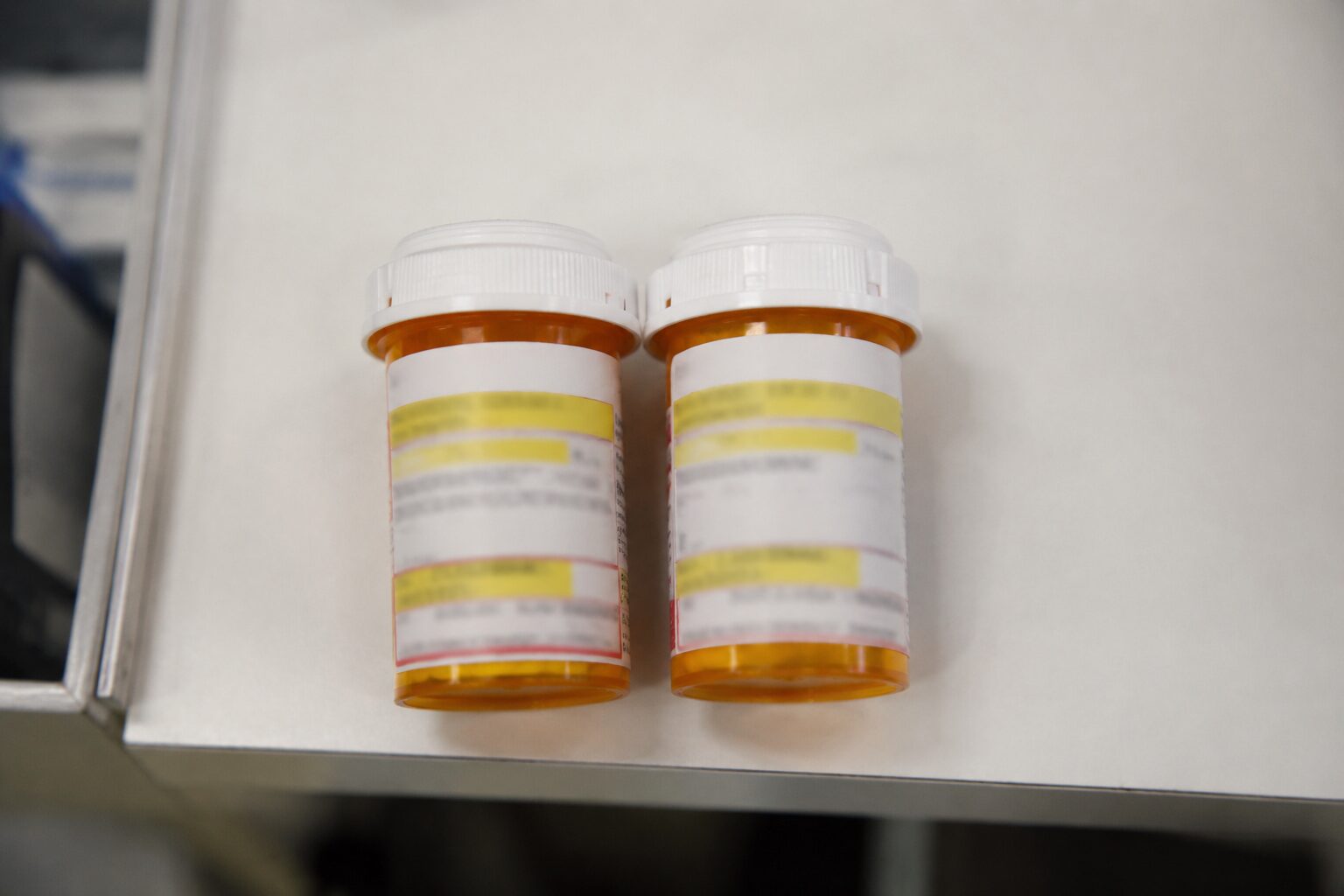
accutane generic vs brand
Last updated: June 11, 2026
Most people walk into a dermatologist’s office knowing one name: Accutane. They come out with a prescription that says something completely different – Claravis, Myorisan, Absorica – and suddenly they’re Googling at 11pm wondering if they got the “real” version.
I’ve worked with enough clients going through isotretinoin courses to see this confusion play out repeatedly. The anxiety is understandable. This is a serious medication with a demanding monitoring protocol, and you want to know exactly what you’re taking.
What I’ve found, across dozens of conversations with clients and their dermatologists, is that the brand-versus-generic question has a cleaner answer than most people expect – with one real exception worth knowing about.
This article covers every formulation currently on the market, what the research actually shows about quality differences, the one product that genuinely stands apart, and a practical framework for making the decision at your next refill.
Quick answer: Generic isotretinoin and brand-name Accutane contain the same active ingredient and deliver equivalent results for most patients. The primary differences are price and formulation — generics cost significantly less, while Absorica LD uses a unique lipid-based formula that improves absorption without food. For standard courses, generic isotretinoin is a clinically sound, cost-effective choice.
Every Isotretinoin Brand on the Market Right Now
According to the FDA, isotretinoin is currently marketed under six names: Absorica, Absorica LD, Claravis, Amnesteem, Myorisan, and Zenatane. The original Accutane was discontinued by Roche in 2009 – more than 15 years ago. If your friend says they “took Accutane,” they almost certainly took one of these options instead.
Every product below contains isotretinoin as the active ingredient. All require enrollment in the iPLEDGE program requirements before your pharmacy will dispense a single pill.
| Brand Name | Manufacturer / Type | Key Differentiator | Food Requirement |
|---|---|---|---|
| Accutane | Roche / Original brand | Discontinued – no longer available | With fatty meal |
| Absorica | Sun Pharmaceuticals / Brand | Proprietary LIDOSE technology; improves fat-independent absorption | With or without food |
| Absorica LD | Sun Pharmaceuticals / Brand | Micronized formulation; lower mg doses deliver comparable absorption to standard Absorica | With or without food |
| Claravis | Teva / Generic | Standard generic; widely prescribed across the US | With fatty meal |
| Amnesteem | Mylan (Viatris) / Generic | Standard generic; one of the earliest FDA-approved generics post-Accutane | With fatty meal |
| Myorisan | Mayne Pharma / Generic | Standard generic; liquid-filled capsule formulation | With fatty meal |
| Zenatane | Journey Medical / Generic | Standard generic; distributed through dermatology specialty pharmacies | With fatty meal |
The food requirement column matters more than most people realize. For five of the seven entries, your body’s absorption depends directly on whether you take the dose with a high-fat meal.
Skipping that step can cut how much drug actually reaches your bloodstream by roughly 50%, regardless of which brand is in your hand. Absorica and Absorica LD are the only two designed to work around that dependency.
Same Active Ingredient – So Why Does the Price Gap Exist?
The price difference between generic isotretinoin and brand-name options has nothing to do with ingredient quality. It’s a structural feature of how drug markets work, and understanding it takes the anxiety out of the cost conversation.
A 30-day supply of generic isotretinoin runs approximately $30 to $70 with a GoodRx coupon at most major pharmacies. GoodRx puts Absorica considerably higher – often $700 to $900+ per month without insurance, though manufacturer coupons can reduce that substantially for commercially insured patients.
Here’s what drives that gap:
- Brand manufacturers recover R&D costs through pricing – Sun Pharmaceuticals invested in developing Absorica’s LIDOSE delivery technology and prices the product to recoup that investment over time.
- Generic makers skip clinical trials – FDA approval for generics requires demonstrating bioequivalence to the original drug, not running new efficacy trials from scratch. That’s a fraction of the development cost, and the savings pass through to the price.
- Marketing adds cost to brands – Sales teams, physician outreach, and patient support programs are real expenses built into brand pricing that generic manufacturers don’t carry at the same scale.
- Insurance formularies often favor generics – Most commercial insurance plans place generic isotretinoin on a lower cost tier, sometimes at $0 copay. Brand-name versions frequently require prior authorization or land on higher tiers with $100+ copays.
- iPLEDGE applies equally to all versions – The mandatory monitoring program adds no cost difference between brand and generic. Every isotretinoin prescription, regardless of formulation, goes through the same monthly approval process.
- GoodRx and manufacturer coupons can close the gap – For patients paying out of pocket, GoodRx brings generic isotretinoin to under $50 at many chains. Sun Pharmaceuticals offers a savings card for Absorica that can bring the out-of-pocket cost closer to generic pricing for eligible patients.
The price gap signals market economics, not a quality hierarchy. A $40 generic and a $400 brand contain the same molecule.
Where Generic Isotretinoin Has Actually Fallen Short
The most credible concern about generic isotretinoin comes from a 2006 study published on PubMed that tested multiple generic products against Roaccutane (the international brand equivalent). Thirteen of the generics failed to match it on at least one quality measure. Eleven failed on three or more.
That sounds alarming. What it actually means requires some unpacking.
The failures were manufacturing precision issues – things like dissolution rate (how fast the capsule breaks down in your body) and content uniformity (whether each pill contains a consistent amount of active ingredient). These are not safety failures. Nobody was harmed. The products simply didn’t perform identically to the reference drug under controlled lab conditions.
The FDA’s bioequivalence standard allows a generic’s absorption – measured as AUC, or area under the curve – to fall between 80% and 125% of the brand’s. In practice, most approved generics land much closer to 100%.
A Dermatology Times review put it plainly: “if the drug is taken the way it should be, there is little difference in absorption rates between the generic and brand.”
That phrase “taken the way it should be” carries real weight. Isotretinoin is fat-soluble. Taking it without a fatty meal – something like 20 to 30 grams of dietary fat – can reduce your absorption by roughly 50%, for any formulation on the market.
That single variable likely affects your outcomes more than which brand name is printed on the bottle.
The 2006 study is also nearly two decades old. I always flag this for clients who find it during their own research: FDA manufacturing oversight has tightened considerably since that data was collected.
Using it as a reason to avoid generics entirely is a stretch the evidence doesn’t support. Understanding it as a reminder that manufacturing quality varies, and that sourcing from a licensed US pharmacy matters, is the right takeaway.
Refer to a solid isotretinoin treatment guide for the full clinical picture before making any decisions based on one study.
Absorica LD: The One Formulation That Genuinely Differs
Absorica LD is the only isotretinoin product on the US market with a formulation change significant enough to alter the clinical math. Its micronized, lipid-based delivery system increases absorption without requiring dietary fat – which is what earns it an FDA approval at a lower milligram dose that still delivers comparable drug exposure to standard isotretinoin at higher doses.
For most patients eating a normal diet and taking their dose with meals, this distinction won’t change their outcome. The patients who should pay attention are those with irregular eating schedules, GI conditions that affect fat absorption, or dietary restrictions that make consistent high-fat meals difficult to achieve every single day for 5 to 6 months.
Pros
- No fatty meal required – absorption is reliable regardless of what you eat with the dose
- Consistent drug exposure across the full course, reducing variability from day to day
- Lower mg doses reduce total drug burden while maintaining therapeutic effect
- Useful for patients with GI conditions, dietary restrictions, or unpredictable meal schedules
Cons
- Significantly higher cost than standard generics – often $700 to $900/month without insurance or manufacturer coupons
- Not always covered by insurance, and prior authorization is common
- The food-independence benefit is largely irrelevant if you’re already eating fatty meals consistently with every dose
- Manufacturer coupon availability can change, leaving patients with unexpected out-of-pocket costs mid-course
For patients who can reliably take their dose with food, Absorica LD’s premium is hard to justify on clinical grounds alone.
For patients who genuinely struggle with meal consistency, it’s worth a direct conversation with your dermatologist – not just as a comfort feature, but as a real factor in how much drug your body actually receives over a 5 to 6 month course.
Brand vs Generic: Real-World Outcomes
How to Actually Choose Between Generic and Brand
Most people overthink this decision. The framework is simpler than the anxiety around it suggests. Work through these steps before your next prescription or refill conversation.
-
Check your insurance formulary first – Log into your plan’s drug lookup tool and search isotretinoin, Claravis, and Absorica separately. Coverage tier determines your real out-of-pocket cost more than any other factor. Many plans cover generic isotretinoin at $0 to $15 and brand versions at $100 or more. This step alone resolves the question for most people.
-
Ask your dermatologist if they have a clinical preference and why – Some dermatologists have a preferred generic they’ve seen perform consistently in their practice. Others genuinely have no preference. Ask directly: “Do you have a reason to recommend one brand over another for my specific situation?” A good answer tells you something. A shrug tells you something too.
-
Evaluate your meal consistency honestly – Think about how to take isotretinoin with food for best absorption and whether you can realistically do that every day for 5 to 6 months. If your eating schedule is irregular – shift work, travel, a condition affecting fat absorption – bring that up with your dermatologist as a specific reason to discuss Absorica LD. If you eat regular meals, a standard generic will serve you well.
-
Confirm the generic is FDA-approved and sourced from a licensed US pharmacy – All the generics in the table above are FDA-approved. The concern is ordering from unverified online sources, which I’d never recommend for any medication on the iPLEDGE program. Fill at a licensed US pharmacy, full stop.
-
Once you’re on a formulation, stay on it – Switching mid-course introduces unnecessary variables into an already-complex treatment. If a switch is unavoidable due to insurance or availability, make it at the start of a new monthly supply, keep your dose and fat intake identical, and flag the change with your dermatologist at your next monthly check-in.
Note that iPLEDGE program requirements apply to every isotretinoin prescription without exception. There are no shortcuts and no workarounds based on which version you take.
What Patients Actually Ask Before Filling Their Prescription
Is Accutane still available, or do I have to use a generic?
The original Accutane was discontinued by Roche in 2009 and is no longer manufactured. What’s available today are generics (Claravis, Amnesteem, Myorisan, Zenatane) and newer branded formulations (Absorica, Absorica LD). All are FDA-regulated isotretinoin products. When someone says they “took Accutane,” they almost certainly took one of these – the original hasn’t existed for over 15 years.
Can I switch from a generic to brand-name (or vice versa) mid-course?
Switching is technically possible, but most dermatologists advise against it mid-course because it introduces a variable when you want consistency.
If a switch is unavoidable – due to insurance changes, pharmacy availability, or cost – time it to the start of a new monthly supply rather than mid-bottle, keep your dose identical, and maintain the same fat intake protocol.
Tell your dermatologist before you make the change, not after.
Do generics require the same iPLEDGE enrollment as brand-name?
Yes, without exception. iPLEDGE is mandatory for every isotretinoin product on the US market regardless of whether it’s a brand or generic. There are no streamlined pathways, no exemptions for specific formulations, and no way to fill a prescription without active enrollment and monthly clearance. The program exists because of the drug’s teratogenicity risk, which applies equally to every formulation.
Why do some people say generics “don’t work as well”?
Anecdotal reports exist, and they’re worth taking seriously as data points – but the most common culprit is inconsistent fat intake with the dose, not the formulation itself. Isotretinoin absorption is highly dependent on dietary fat for every standard formulation on the market.
The FDA bioequivalence standard requires generics to perform within 80% to 125% of the reference drug’s absorption profile, and most approved generics land much closer to 100%.
If someone’s experience on a generic was worse, the first question worth asking is whether their fat intake with each dose was consistent.
Sources
- Isotretinoin Capsule Information – FDA (current marketed formulations)
- Pharmaceutical quality of generic isotretinoin products compared with Roaccutane – PubMed (2006 quality study)
- Isotretinoin still the best drug for acne – Dermatology Times (absorption rates, brand vs generic)
- Isotretinoin (Claravis): Uses, Side Effects, Alternatives & More – GoodRx (pricing and generic availability)