Spironolactone Dosage for Acne: A Plain-English Guide
Last updated: June 26, 2026
I’ve sat across from a lot of women who walked into their dermatology appointments expecting a simple answer – “take this many milligrams and you’ll clear up” – and walked out confused. Spironolactone dosing is more of a moving target than most prescriptions, and the number your doctor writes down on day one is rarely the number you’ll stay on.
This guide covers the full dosing range, from 25 mg up to 200 mg, and explains the reasoning behind each step. I’ll walk you through how titration actually works, what red flags to watch for, and what the clinical evidence says about which doses deliver real results.
One thing I want you to take away early: patience with the process matters more than chasing the highest dose. The women I’ve seen do best on spironolactone are the ones who understand why they’re waiting – and what they’re waiting for.
Quick answer: Spironolactone for acne is typically prescribed at 25–100 mg daily, with most doctors starting at 25–50 mg and adjusting upward every 6–12 weeks based on response and tolerability. Some cases require up to 200 mg daily. Dose increases depend on clearing progress, side effects, and hormone-related symptoms like irregular periods or dizziness.
Why Dosage Is the Variable That Changes Everything
Spironolactone blocks androgens – the hormones that signal your sebaceous glands to overproduce oil. How much of that androgen activity gets suppressed depends almost entirely on how many milligrams you take each day.
Cleveland Clinic notes that spironolactone is prescribed anywhere from 25 mg to 200 mg per day for acne. Below 50 mg, most patients see little meaningful change. Push past 150 mg without a clear clinical reason, and side effects like dizziness, frequent urination, and cycle disruption become noticeably more likely.
No single dose works for everyone. Your dermatologist weighs your acne severity, your blood pressure, your cycle regularity, and how your body responds after the first 6 to 8 weeks before deciding whether to adjust. This guide walks through each rung of that dosing ladder – and the logic behind every decision.
The Standard Dosing Ladder: 25 mg to 200 mg Explained
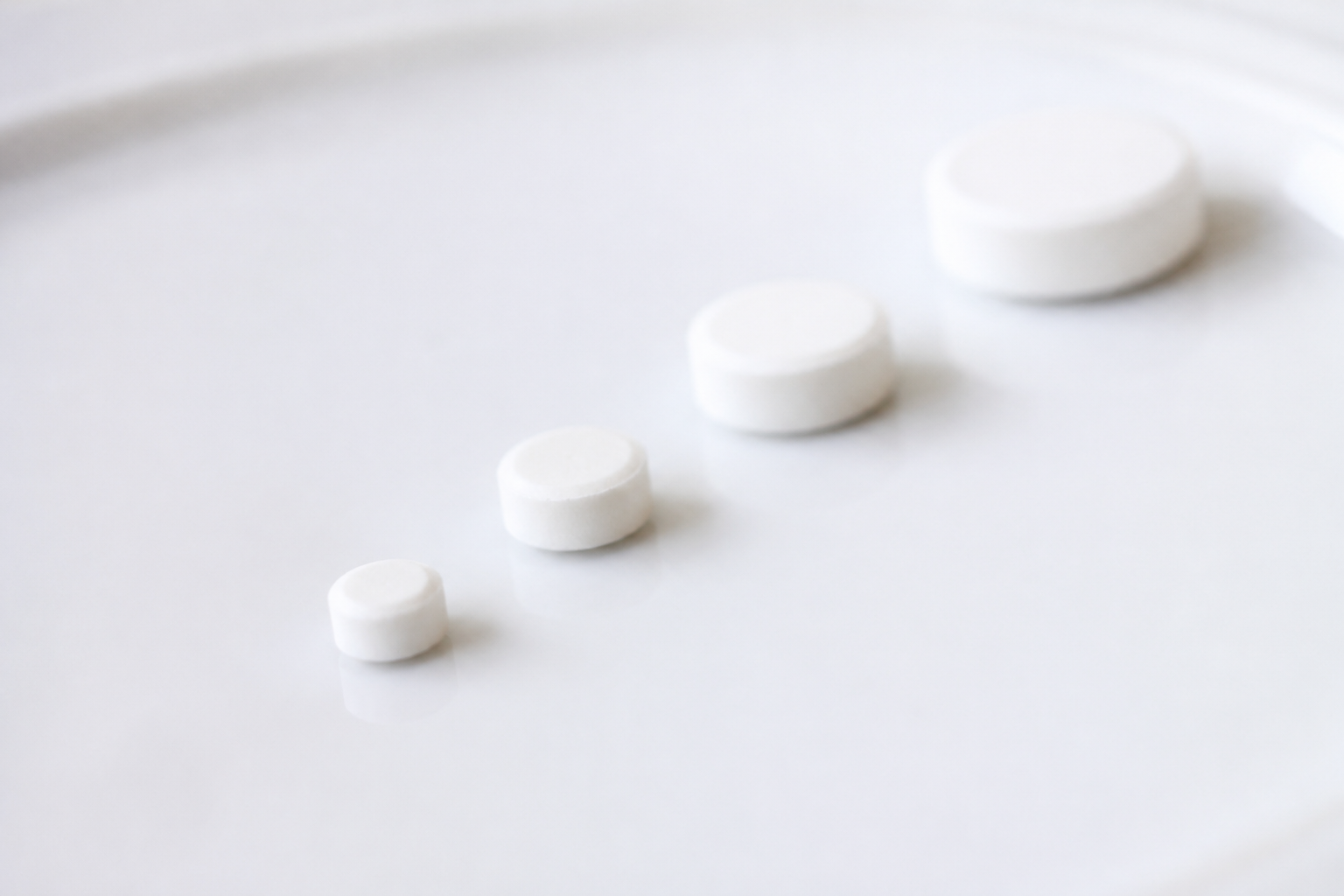
Understanding how spironolactone works to clear hormonal acne makes the dosing table below much easier to read. Each tier exists because the drug’s androgen-blocking effect scales with dose – and so does the risk of side effects.
Two randomized placebo-controlled trials reviewed by ScienceDirect confirmed spironolactone was effective at 50 to 100 mg daily. A 2025 JAAD Reviews paper recommends 100 mg/day as the preferred starting dose for most patients, a shift from the older convention of starting at 50 mg.
| Dose | Typical Use Case | What the Evidence Shows |
|---|---|---|
| 25 mg | Sensitivity starting point; sometimes added as an adjunct to another treatment | Rarely prescribed as a standalone acne dose; androgen suppression at this level is minimal |
| 50 mg | Common first prescription for mild-to-moderate hormonal acne | Lower side-effect burden; many patients see meaningful improvement within 3-4 months |
| 75-100 mg | Most widely prescribed range; the clinical sweet spot for most patients | Multiple RCTs support this range as effective; PubMed 2025 recommends 100 mg/day as the preferred starting dose |
| 150 mg | Used when a patient plateaus at 100 mg after 3-6 months | Meaningful increase in androgen suppression; blood pressure and potassium monitoring is standard |
| 200 mg | Reserved for severe or treatment-resistant cystic acne | Upper clinical ceiling; higher risk of dizziness, menstrual disruption, and electrolyte shifts |
A few things worth keeping in mind before you use this table as a checklist. Titration is gradual – most dermatologists move up in 25 to 50 mg increments and wait at least 8 to 12 weeks before deciding a dose is not working.
If a provider jumps you straight to 150 mg or 200 mg on the first visit, that warrants a conversation.
Most patients land somewhere between 75 mg and 150 mg and stay there. The table shows the full range, but your personal ceiling is wherever results and tolerability meet.
How Doctors Decide When to Increase Your Dose
The titration process follows a predictable rhythm.
Gloucestershire Hospitals NHS describes the standard approach as starting at 50 mg daily for one month before making any change – a pace I think is smart, because it gives your body time to signal what it can handle.
Understanding how long spironolactone takes to work for acne will help you set realistic expectations for each stage below.
-
Start at 50 mg or 100 mg and hold for 4-8 weeks – Your dermatologist picks an opening dose based on your acne severity and overall health. Resist the urge to call at week 2 asking for more – the drug takes time to build androgen suppression, and early impatience leads to unnecessary dose jumps.
-
Assess your acne response honestly – At your follow-up, your doctor will ask whether breakouts are improving, staying the same, or getting worse. Take photos every 2 weeks so you have actual evidence, not just a memory. I’ve found that patients who document their skin give their doctors much better information to work with.
-
Check tolerability alongside effectiveness – Side effects like dizziness, breast tenderness, and more frequent urination are the main reasons doctors pause before increasing. If these are mild and fading, an upward adjustment is reasonable. If they’re persistent or worsening, the current dose may already be your ceiling.
-
If response is partial and tolerance is acceptable, increase by 25-50 mg – Jumping by more than 50 mg at a time is uncommon in standard practice. Smaller steps give you and your doctor cleaner information about where improvement starts and where side effects begin.
-
Hold the new dose for another 4-8 weeks before re-evaluating – The same rule applies at every rung. A new dose needs time to show its full effect. Most dermatologists won’t make back-to-back increases faster than every 6 to 8 weeks.
-
If maximum tolerated dose isn’t clearing your acne, discuss alternatives – For some patients, spironolactone simply reaches its useful limit. This is the moment to talk about combination therapy, spironolactone vs Accutane for stubborn acne, or whether an oral antibiotic like doxycycline makes sense alongside it. Most patients find their effective range somewhere between 75 mg and 150 mg before this conversation becomes necessary.
My 14-Week Dosing Experiment: What the Numbers Actually Felt Like
Doses That Raise Red Flags – and When to Call Your Doctor
Certain warning signs are dose-dependent and worth recognizing before you encounter them. I always tell patients: knowing what’s expected versus what’s alarming is the difference between panicking unnecessarily and catching something real.
Here’s what to watch for at each level, and when to pick up the phone. You can find a full breakdown in the dedicated article on spironolactone side effects by dose level.
-
Potassium spike (hyperkalemia) at higher doses – Spironolactone is potassium-sparing, meaning it can raise potassium levels in your blood. This risk increases above 100 mg and is compounded by high-potassium diets, potassium supplements, or certain medications like ACE inhibitors. Your doctor should check a blood potassium level before starting and after any dose increase above 100 mg.
-
Severe dizziness or fainting at any dose – This signals a blood pressure drop that’s gone too far. Mild lightheadedness when standing quickly is common and usually harmless; actual fainting or near-fainting is not. Call your doctor the same day.
-
Irregular or stopped periods – Menstrual disruption is dose-dependent and becomes more common above 100 mg. Some cycle irregularity is expected, but a fully stopped period that persists beyond one cycle warrants a call. This is also one reason why spironolactone is often paired with birth control.
-
Breast pain that worsens over weeks rather than resolving – Early breast tenderness at a new dose often fades within 4 to 6 weeks. Tenderness that intensifies or spreads over time, rather than settling down, is worth reporting to your dermatologist.
-
Electrolyte and blood pressure labs after dose increases – There’s no universal schedule, but most dermatologists recheck potassium and blood pressure within 4 to 8 weeks of any increase to 150 mg or 200 mg. If yours hasn’t mentioned labs at higher doses, ask.
-
200 mg is the clinical ceiling for acne – No published evidence supports going above 200 mg for acne treatment. If a dose above this is suggested, ask for the clinical rationale before agreeing.
Spironolactone Dosage Questions Worth Answering Before Your Appointment
Can I start at 100 mg instead of 50 mg?
Yes, and this is increasingly common. A 2025 PubMed review recommends 100 mg/day as the default starting dose, citing superior effectiveness and reasonable tolerability for most women. Whether your dermatologist follows this depends on their protocol, your blood pressure, and your overall health history – so it’s worth asking directly at your first appointment.
What happens if I miss a dose?
Take it as soon as you remember, unless your next scheduled dose is within a few hours. In that case, skip the missed one and resume your normal schedule. Never double up to compensate. Consistency matters more than perfection – one missed dose won’t undo your progress, but frequent gaps will slow your results.
Is a lower dose safer long-term?
Lower doses do carry a smaller side-effect burden, but “safer” is individual. Most women tolerate 50 to 100 mg well for years with periodic monitoring – annual blood pressure checks and potassium labs are standard at these levels. The question to ask your doctor is what monitoring schedule is appropriate for your specific dose, not whether lower is automatically better.
Can the dose be split – morning and evening?
Yes. Splitting your total daily dose (for example, 50 mg in the morning and 50 mg in the evening for a 100 mg total) is a practical strategy that many dermatologists recommend at higher doses. It can reduce peak dizziness and spread the diuretic effect more evenly across the day.
Will I need to stay on this dose forever?
Not necessarily, but stopping often brings acne back. Some patients taper down after 12 to 18 months of sustained clearance and maintain results at a lower dose. Others find that any reduction restarts the breakout cycle. Talk to your dermatologist about a maintenance plan before making any changes on your own.
Sources
- Oral spironolactone for acne vulgaris in females – JAAD Reviews (2025) – cited for effective dose range and 100 mg/day recommendation
- Spironolactone for Acne: Practical Strategies for Optimal Clinical Outcomes – PubMed (2025) – cited for starting dose recommendation
- Clinical review: Oral spironolactone for acne vulgaris in females – ScienceDirect (2025) – cited for RCT evidence at 50-100 mg
- Should I Take Spironolactone for Acne? – Cleveland Clinic – cited for prescribed dose range overview
- Spironolactone for Acne (Women) – Gloucestershire Hospitals NHS – cited for standard titration protocol