Retinol vs Tretinoin: Which One Actually Works Better?
Last updated: June 26, 2026
I’ve spent years watching people cycle through OTC retinol products, frustrated that their skin isn’t changing fast enough – or at all. Then they get their hands on a tretinoin prescription and wonder why no one told them sooner.
Both are vitamin A derivatives. Both boost cell turnover and stimulate collagen. But the gap between them is bigger than most product descriptions let on, and choosing the wrong one for your situation costs you months of results.
This article breaks down the chemistry behind why tretinoin hits differently, gives you a side-by-side comparison across the factors that actually matter, and walks through exactly who should start with each one. I’ll also share what I personally experienced after switching from two years of retinol to a prescription tretinoin – numbers included.
Quick answer: Tretinoin works better than retinol for most skin concerns. It binds directly to retinoic acid receptors, delivering faster, more measurable results for wrinkles, acne, and hyperpigmentation. Retinol requires conversion steps in the skin, making it slower and milder. Tretinoin requires a prescription; retinol suits beginners or those with sensitivity concerns.
The Biochemistry Gap: Why Tretinoin Hits Faster and Harder
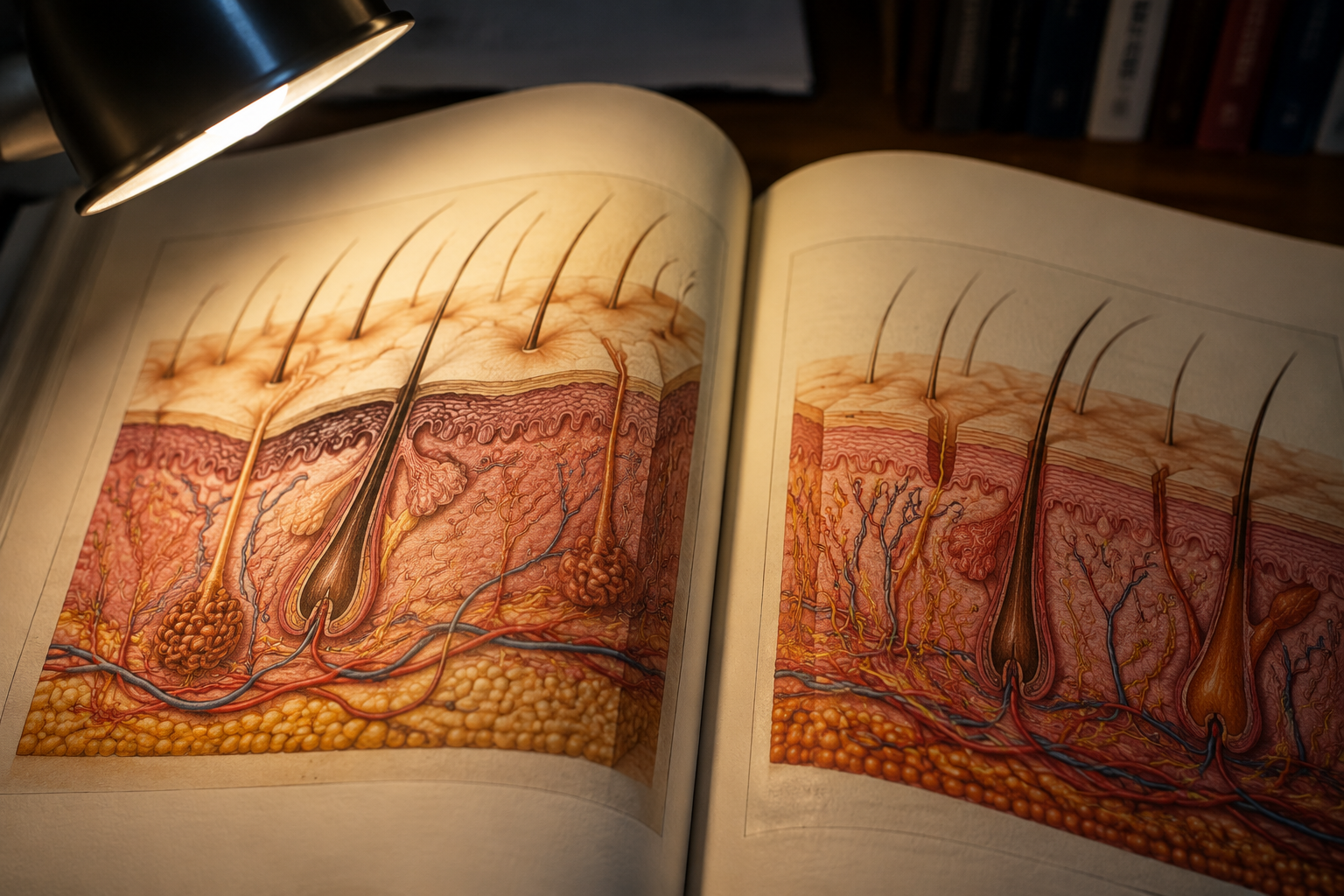
Tretinoin binds directly to retinoic acid receptors in your skin. Retinol has to earn that right through a two-step conversion process – and that journey is where most of its power disappears.
Your skin converts retinol to retinaldehyde first, then retinaldehyde to retinoic acid. Each step is inefficient. By the time retinol becomes active, you’re working with a fraction of what you started with.
Medik8’s breakdown of retinol vs tretinoin biochemistry puts it plainly: tretinoin is already retinoic acid and works directly on the skin, making it significantly stronger. Understanding how retinol and tretinoin differ for acne goes deeper on what this means at the pore level.
Here’s what that conversion gap means in practice across the five most important variables:
- Retinol requires two conversion steps – It goes retinol → retinaldehyde → retinoic acid before it can bind to skin receptors. Each conversion step loses potency through enzymatic inefficiency.
- Tretinoin skips both steps entirely – It arrives at the skin already in active retinoic acid form, binding to nuclear retinoic acid receptors (RARs) immediately. That’s the core reason BSW Health notes tretinoin works faster and more powerfully for acne and signs of aging.
- The potency gap is roughly 20x – Common estimates put retinol at about 1/20th the strength of tretinoin at equivalent concentrations. A 0.5% retinol serum is not close to a 0.025% tretinoin cream in terms of receptor activity.
- Cell turnover speed reflects this gap directly – Tretinoin accelerates epidermal cell turnover within 2-4 weeks. With retinol, measurable changes in turnover rate typically take 3-6 months of consistent use.
- Retinaldehyde (retinal) sits in the middle – If you want something stronger than retinol but aren’t ready for prescription tretinoin, retinaldehyde is one conversion step away from active retinoic acid. It’s available OTC in products like Avène RetrinAL and works faster than retinol – though still slower than tretinoin.
- Receptor binding strength drives results – Both molecules eventually reach the same retinoic acid receptors. Tretinoin just gets there faster, in higher concentrations, and with less wasted conversion.
Head-to-Head: Retinol vs Tretinoin Across Six Key Factors
The decision between retinol and tretinoin usually comes down to access, budget, and how fast you need results. These six factors cover the dimensions that actually shift the choice.
Note that tretinoin concentration ranges (0.025% to 0.1%) don’t compare directly to retinol percentages (0.1% to 2%) because of that 20x potency gap. A 0.025% tretinoin cream is already more active than most OTC retinol products on the market.
| Factor | Retinol (OTC) | Tretinoin (Rx) |
|---|---|---|
| Prescription required | No – available at drugstores and online | Yes – dermatologist, primary care, or telehealth |
| Potency range | 0.1% – 2%; ~20x weaker than tretinoin at equivalent concentrations | 0.025% – 0.1% cream; 0.01% – 0.05% gel; immediately active |
| Time to visible results | 3-6 months for consistent improvement | 8-12 weeks for noticeable change in acne and texture |
| Side effects | Mild dryness, possible purge; generally well tolerated | Peeling, redness, purging weeks 1-4; more pronounced irritation |
| Cost | $15-$80 OTC depending on brand and formulation | $10-$30/month with insurance; $20-$60/month via telehealth generics; up to $200+ brand-name without insurance |
| Best-fit concern | Mild acne, early anti-aging, first-time retinoid use | Persistent or moderate acne, cystic breakouts, significant photoaging, faster collagen remodeling |
Community comparisons on r/30PlusSkinCare consistently echo the same theme: tretinoin is approximately 20x stronger than retinol and requires more careful use, but the results timeline is substantially faster.
If your primary goal is mild maintenance and you’re new to retinoids, retinol is a reasonable starting point. If you’re dealing with persistent breakouts or you’ve already used retinol for 6+ months without satisfying results, the table above makes the case for a prescription.
Six Weeks on Tretinoin After Two Years of Retinol: What Actually Changed
For anyone tracking tretinoin before and after results and timelines, my experience tracks closely with the 8-12 week window most dermatologists cite for meaningful clearing. The 6-week snapshot above is promising but not the full picture – texture improvements continued past that point.
Who Should Actually Choose Retinol (It’s Not Just About Sensitivity)
Retinol gets framed as “tretinoin for sensitive people,” but that misses the real decision. Access, goals, and product quality matter just as much as how reactive your skin is.
I’d recommend checking out the best over-the-counter retinol for acne options if you land in the “start with retinol” camp – because product quality varies enormously and a poorly formulated 1% retinol serum won’t outperform a stable 0.3% one.
Pros
- Available without a prescription at most drugstores and online retailers
- Lower upfront cost – effective options exist from $20 to $50
- Gentler initiation for first-time retinoid users or those with reactive skin
- Works well for mild comedonal acne and early-stage anti-aging goals
- Wide format variety (serums, creams, oils) makes routine integration easier
Cons
- Results take 3-6 months versus 8-12 weeks with tretinoin
- Significant potency loss during the two-step conversion to retinoic acid
- Product quality varies wildly – some OTC retinols are poorly stabilized and degrade before they work
- Not reliably effective for persistent or cystic acne – the conversion loss matters at that severity level
- No prescriber oversight means users often abandon too early or layer incorrectly
Retinol is genuinely the smarter starting point if you’ve never used a retinoid before, your acne is mild and mostly comedonal, or you don’t currently have access to a prescriber. It’s also worth trying if you’ve had prior reactions to strong actives – the gentler initiation lets you build tolerance before stepping up.
When Tretinoin Is the Obvious Answer – and How to Get It
Tretinoin makes sense when retinol’s 3-6 month timeline is too slow for your concern, or when you’ve already run that timeline and results have plateaued. Dermatologists at SkinMDs consistently recommend tretinoin for persistent acne because its active form delivers more reliable clearing than OTC options can match.
Getting started is more straightforward than most people expect. Here’s the practical path:
-
Confirm your concern warrants a prescription – Persistent papules or pustules lasting more than 8-12 weeks on retinol, cystic breakouts, or significant photoaging (deep lines, uneven pigmentation) are all strong indicators. Mild, occasional breakouts may not require the step up.
-
Choose your prescription pathway – A board-certified dermatologist is the gold standard, but a primary care physician can prescribe tretinoin for acne. Telehealth platforms like Curology, Apostrophe, or Hims/Hers now offer dermatology consultations starting around $20-$30/month, with tretinoin included in the formulation. If you’re also on isotretinoin, check the guidance on using tretinoin while on Accutane before combining anything.
-
Start at 0.025% cream, not gel – Cream base is less irritating than gel for most beginners. I started here and it was the right call. Gel formulations have higher ethanol content and dry out skin faster – worth it for oilier skin types, but not the place to begin.
-
Use the sandwich method for the first 4-6 weeks – Apply a thin layer of moisturizer first, then a pea-sized amount of tretinoin over the top, then another light moisturizer layer. This buffers the initial irritation without blocking absorption. I used CeraVe Moisturizing Cream on both layers.
-
Know what not to layer on the same night – Avoid benzoyl peroxide on the same night as tretinoin – it oxidizes the molecule and reduces efficacy. Skip vitamin C (ascorbic acid) on the same morning for the first 4 weeks; the pH conflict adds irritation when your barrier is already adjusting.
-
Give it 8-12 weeks before judging – The retinol purge and why skin gets worse before better applies to tretinoin too, often more intensely. Weeks 1-4 frequently look worse. That’s accelerated cell turnover pushing congestion to the surface – a sign the product is working, not failing. Clear skin before week 8 is a bonus, not the benchmark.
What Readers Ask Most Before Choosing a Retinoid
Is tretinoin always better than retinol?
Tretinoin is more potent and delivers results faster, but “better” depends on what you’re treating and what you can access. For mild comedonal acne or early anti-aging in a first-time retinoid user, retinol is a legitimate and effective choice.
For persistent breakouts, cystic acne, or significant photoaging, tretinoin’s direct receptor activity makes it the more reliable tool. The NIH peer-reviewed research on retinoids and skin aging confirms both molecules work – the difference is speed and degree of effect.
Can I switch directly from retinol to tretinoin without a break?
You can switch directly, but start at the lowest available concentration – 0.025% cream. Even after years of retinol use, your skin will go through a re-adjustment period with tretinoin. The potency jump is significant enough that tolerance built on retinol doesn’t fully transfer.
I’d also recommend dropping back to every-third-night frequency for the first 2 weeks, regardless of how well you tolerated retinol.
Does retinol actually work for acne, or only anti-aging?
Retinol works for acne. It promotes cell turnover and keeps pores from clogging, which addresses the root mechanism behind comedones and papules. The AAD’s guidance on retinoids for acne includes OTC retinol as an option for mild cases. For moderate-to-severe or persistent acne, though, the conversion loss and slower timeline make tretinoin the more reliably effective choice.
Will tretinoin make my skin break out worse at first?
A purge phase in weeks 1-4 is common. Tretinoin accelerates cell turnover, which pushes existing congestion to the surface faster than it would have appeared on its own. This looks like new breakouts but is actually existing buildup clearing out.
Most people see the purge resolve by weeks 6-8. Stopping during the purge is the most common reason tretinoin “doesn’t work” – the clearing happens right after the phase people quit.
Sources
- BSW Health: Tretinoin vs. Retinol clinical overview
- Medik8: Retinol vs Retinal vs Tretinoin biochemistry explainer
- SkinMDs: Dermatologist recommendations on retinol vs tretinoin
- NIH/PubMed: Retinoids in the treatment of skin aging – peer-reviewed
- American Academy of Dermatology: Retinoids for acne patient guidance