Foods to Avoid While on Acne Medication (and What the Evidence Actually Says)
Last updated: June 26, 2026
When I first started researching this topic, I was genuinely surprised by how much conflicting advice existed online. One forum said to cut out all dairy. Another said to avoid vitamin C. A third listed seventeen foods with zero explanation of which medication any of it applied to.
Most of that advice mixes up two completely different things: real drug-food interactions that affect how your medication works, and general diet-acne research that applies whether you’re on medication or not. Knowing which is which changes how seriously you need to take any given warning.
This article covers all four major prescription acne medications – doxycycline, spironolactone, tretinoin, and isotretinoin (Accutane) – and separates the hard pharmacological rules from the softer nutritional evidence. Most restrictions are manageable. A few are genuinely important. I’ll tell you which is which.
Quick answer: While on acne medication, avoid dairy, high-glycemic foods, and alcohol, as these can worsen breakouts or interfere with drug absorption. Tetracyclines like doxycycline require avoiding calcium-rich foods and antacids near dose times. Alcohol raises side-effect risks with most acne prescriptions. Evidence most strongly supports limiting refined carbohydrates and skim dairy to improve outcomes.
Why Diet Advice for Acne Medication Is So Confusing
Drug-food interactions are pharmacological – they affect how much medication reaches your bloodstream or how safely your liver processes it. General diet-acne advice is nutritional – it affects sebum production, inflammation, and skin cell turnover over time. These are completely different categories, but they get lumped together constantly online.
Your medication matters here because each one works differently. Doxycycline is an antibiotic that kills acne-causing bacteria. Spironolactone is a hormone blocker. Tretinoin is a topical retinoid that speeds up cell turnover. Isotretinoin (Accutane) is an oral retinoid that shrinks oil glands.
A food that interferes with one of these mechanisms may have zero relevance to another. For a broader picture of living well on acne treatment, understanding this distinction is the foundation.
The good news is that the actual list of hard dietary rules is short. Most of the anxiety you’ve read about online is either overstated, medication-specific, or based on weak evidence. A few real restrictions do exist – and I’ll walk through each one clearly.
Drug-Specific Food Interactions: What Actually Matters by Medication
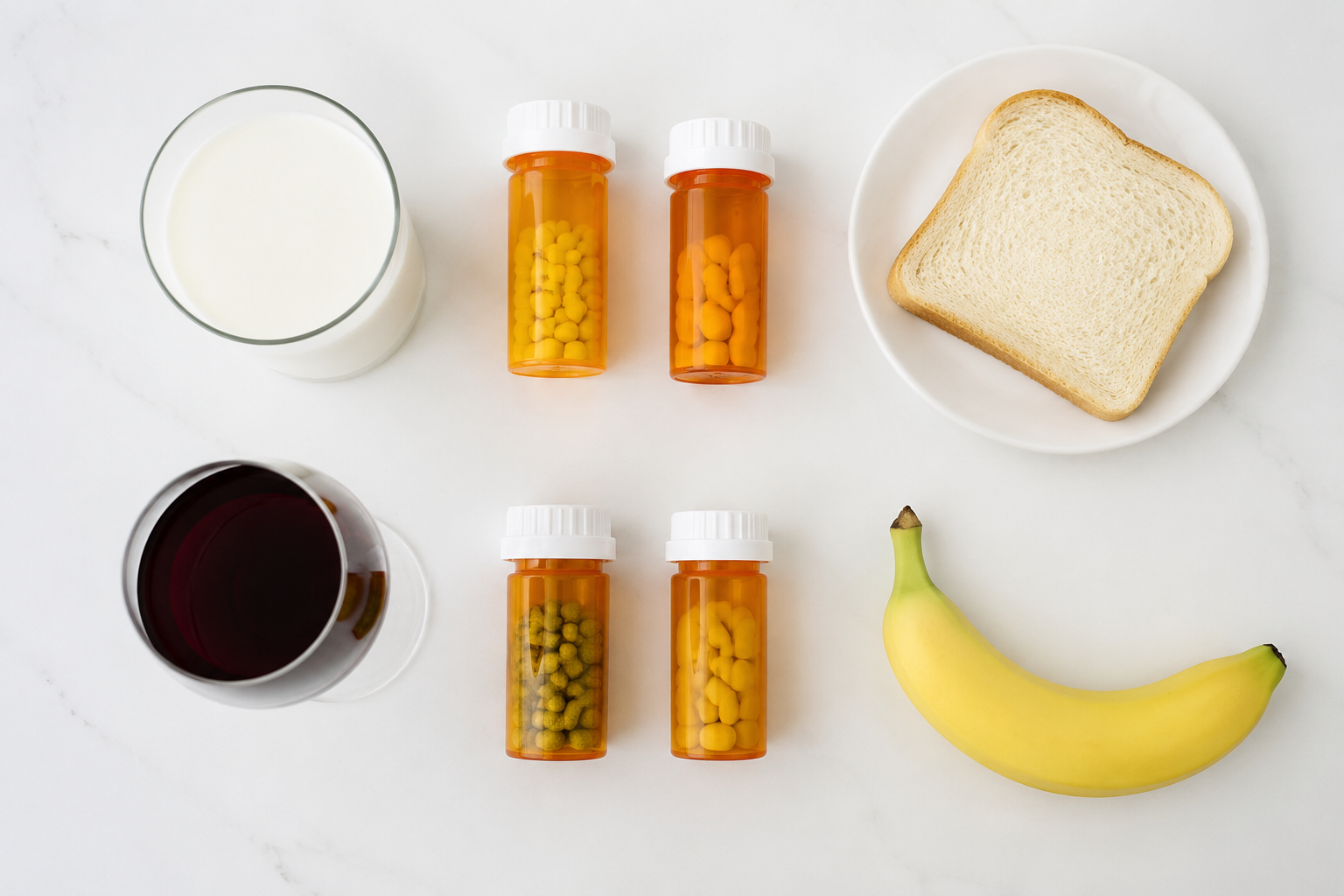
The most important thing to know about food and acne prescriptions is that each medication has its own specific concerns – there’s no single universal list. Some interactions are serious, some are mild inconveniences, and some barely matter at all.
Below is a breakdown based on current prescribing information and clinical guidance. I’ve flagged severity honestly so you can prioritize. For Accutane users specifically, GoodRx’s guide on foods to avoid on Accutane is a solid supplementary reference.
| Medication | Key Food to Limit or Avoid | Reason | Severity |
|---|---|---|---|
| Doxycycline | Dairy, calcium-fortified foods, antacids | Calcium ions bind to doxycycline in the gut and reduce absorption by up to 80% | High – time your doses carefully |
| Doxycycline | Alcohol | Impairs immune function; worsens GI side effects like nausea | Moderate – not prohibited but worth limiting |
| Spironolactone | High-potassium foods (bananas, oranges, potatoes, salt substitutes) | Spironolactone is potassium-sparing; extra potassium can cause hyperkalemia (dangerously high potassium) | High – moderate intake, don’t eliminate |
| Spironolactone | NSAIDs (ibuprofen, naproxen) | Reduce spironolactone’s effectiveness and can stress kidneys | Moderate – use acetaminophen instead |
| Tretinoin (topical) | No significant direct interactions | Topical application means minimal systemic absorption | Low – diet affects skin barrier but not the drug itself |
| Isotretinoin (Accutane) | Low-fat or fat-free meals | Isotretinoin is fat-soluble; absorption drops by roughly 50% without dietary fat | High – always take with a fatty meal |
| Isotretinoin (Accutane) | Alcohol | Shares liver metabolism pathways; raises triglycerides; can cause serious liver strain | High – avoid or minimize strongly |
| Isotretinoin (Accutane) | Vitamin A supplements | Additive toxicity; both are retinoids and the combination can cause hypervitaminosis A | High – do not take any vitamin A while on Accutane |
With doxycycline, the calcium interaction is the one most people miss. You can still eat dairy – just wait at least 1 to 2 hours after your dose before having milk, yogurt, or cheese. Taking it with a full glass of water and a small amount of food (not dairy) reduces nausea without hurting absorption.
High-Glycemic Foods, Dairy, and Acne: Separating Hype from Evidence
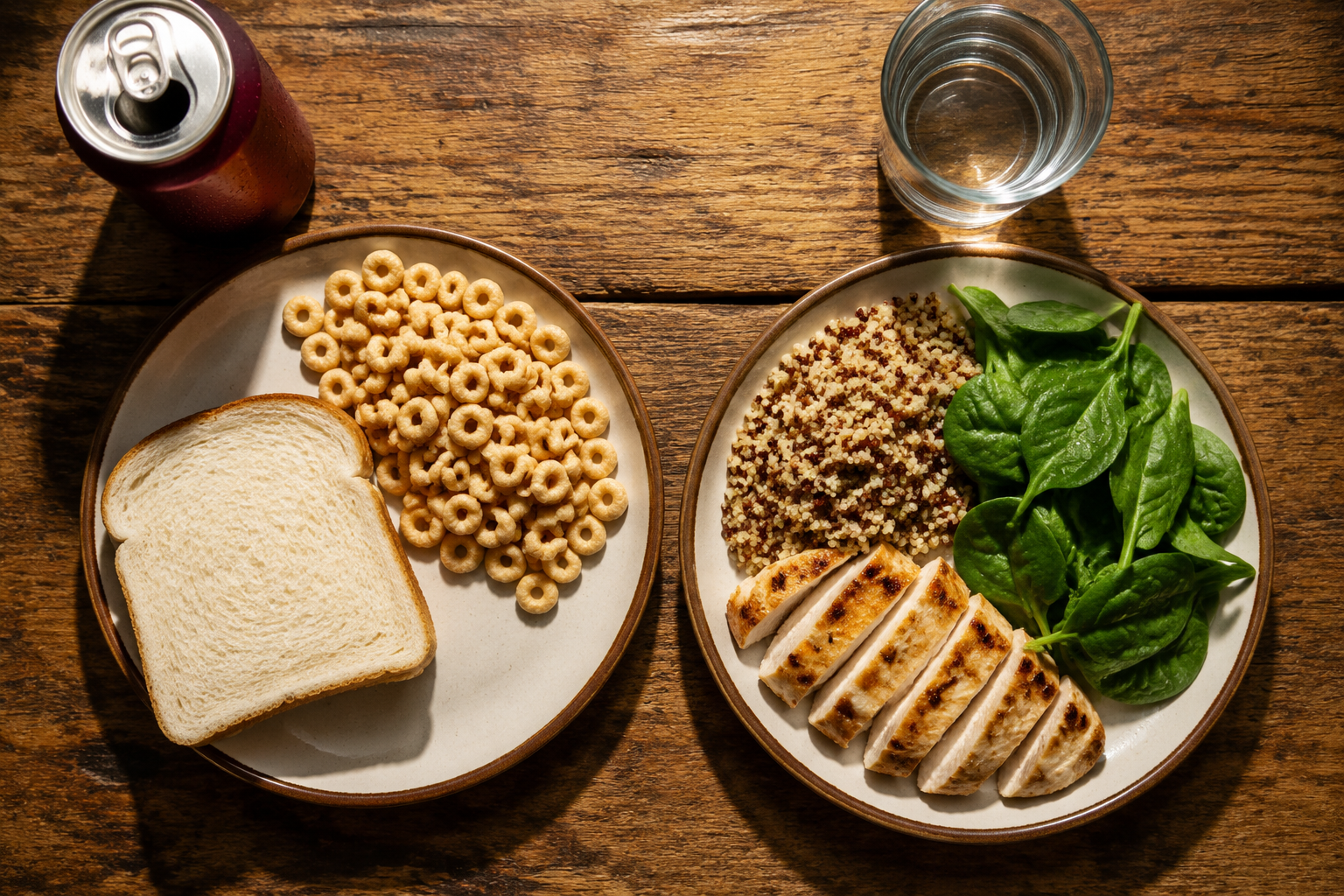
High-glycemic foods have the strongest diet-acne evidence of any food category, but “strongest” is relative – the effect is real but modest. These are separate from your medication’s pharmacology, so they apply whether you’re on doxycycline or nothing at all.
Here’s what the actual research shows on the main dietary suspects:
-
High-GI foods (white bread, white rice, sugary drinks, processed snacks) – The American Academy of Dermatology notes that foods raising blood sugar quickly may worsen acne by spiking insulin and IGF-1, which stimulates sebum production. WebMD similarly reports that diets heavy in soda, white bread, white rice, and cake correlate with higher acne rates. This is the most consistently supported dietary link.
-
Dairy, especially skim milk – Moderate evidence exists here, but the mechanism is still debated. Some research suggests hormones or bioactive compounds in milk may affect androgen pathways. It’s not universally agreed upon, and I personally saw no measurable difference when I eliminated dairy for 8 weeks.
-
Chocolate and greasy or fried food – Weak to no direct evidence. These are long-held myths that haven’t held up well in controlled studies. Fried food may correlate with a poor overall diet, but the grease itself doesn’t cause breakouts.
-
Omega-3 fatty acids and low-GI whole foods – Some positive evidence exists for reducing skin inflammation. Healthline’s anti-acne diet overview lists whole grains, legumes, fruits, and vegetables as foods that may benefit acne-prone skin. These support the daily habits that help your acne treatment work better rather than replacing medication. If you’re on isotretinoin, see our full guide to building a skincare routine while on Accutane and our picks for the best moisturizer for dry skin on Accutane. For those dealing with residual breakouts, Aquaphor for acne is worth understanding as a barrier-repair option.
-
Supplements marketed for “skin clearing” – Many are unregulated and unstudied for acne. Some contain vitamin A, which is dangerous if you’re on isotretinoin or tretinoin. Check every label.
-
Zinc and green tea – Early research suggests modest anti-inflammatory benefits, but evidence is nowhere near strong enough to recommend them as treatments.
-
The core nuance – Diet effects on acne are real but small. Missing a dose of your prescription matters far more than eating a slice of white bread. Don’t let dietary perfectionism distract you from medication adherence.
What I Noticed When I Tracked My Diet During Six Months on Doxycycline
Alcohol, Caffeine, and Supplements: The Often-Overlooked Risks
Most people ask about food. Fewer think to ask about drinks and supplements – but some of the most significant interactions fall into those categories. Here’s where each one lands by medication.
Lower Risk / Generally Manageable
- Caffeine has no direct pharmacological interaction with doxycycline, spironolactone, tretinoin, or isotretinoin. The main concern for tretinoin users is dehydration – dry, compromised skin gets worse when you’re under-hydrated, so balance coffee intake with adequate water.
- Alcohol with doxycycline is not prohibited by prescribing guidelines. It does impair immune function and can worsen nausea and GI upset, so heavy drinking while on doxycycline is a bad idea even if it’s not technically contraindicated.
- St. John’s Wort has weak but real interactions with several medications by inducing liver enzymes. If you’re on isotretinoin or any hormonal therapy alongside spironolactone, skip it – it can reduce drug effectiveness.
Higher Risk / Take Seriously
- Alcohol with isotretinoin is a serious concern. Both are processed by the liver, and Accutane already raises triglyceride levels in many users. Adding regular alcohol use increases liver strain significantly – your prescriber will likely monitor your liver enzymes every 30 days.
- Alcohol with spironolactone amplifies the blood-pressure-lowering effect of the drug. The combination can cause dizziness and fainting, particularly when standing up quickly. Even 1 to 2 drinks can produce noticeable lightheadedness in some people.
- Vitamin A supplements are dangerous with both isotretinoin and tretinoin. Both are vitamin A derivatives (retinoids). Adding a supplement creates additive toxicity risk – symptoms of hypervitaminosis A include severe headache, nausea, and liver damage. Check every multivitamin label before taking it.
- Potassium supplements are directly contraindicated with spironolactone. Spironolactone already raises blood potassium. Adding a potassium supplement risks hyperkalemia, which can cause dangerous heart rhythm problems.
When in doubt, run any supplement by your prescriber or pharmacist before starting it. Drug-supplement interactions are just as real as drug-food interactions, and they’re easier to overlook.
Real Questions People Have About Eating on Acne Prescriptions
Can I eat dairy while taking doxycycline for acne?
Yes, but timing matters. Calcium in dairy binds to doxycycline molecules in your gut and can reduce how much medication your body absorbs – by a significant margin.
Wait at least 1 to 2 hours after taking your dose before eating dairy, or take it between meals. This one timing adjustment solves the problem without requiring you to give up dairy entirely.
Do I need to avoid bananas and potassium-rich foods on spironolactone?
You don’t need to eliminate them, but you should moderate them. Spironolactone is a potassium-sparing diuretic, which means it causes your body to retain potassium rather than excrete it.
Eating large amounts of high-potassium foods – bananas, oranges, potatoes, and especially salt substitutes that use potassium chloride – can push blood potassium to dangerous levels (hyperkalemia).
Eat these foods in normal portions rather than avoiding them completely, and tell your doctor if you’re using any potassium-based salt substitute regularly.
Does cutting out sugar actually help acne clear faster on medication?
Possibly, but modestly. High-GI foods spike insulin and IGF-1, which can stimulate sebum production and worsen inflammation. The effect is real but smaller than what your prescription is doing. Reducing added sugars and refined carbs is a reasonable supporting habit – just don’t expect it to replace or dramatically accelerate your medication.
Is it safe to drink alcohol while on tretinoin or spironolactone?
Topical tretinoin has no meaningful alcohol interaction – the medication stays mostly on your skin’s surface and isn’t absorbed in significant amounts systemically. Spironolactone is a different story. It lowers blood pressure, and alcohol does too.
The combination can cause pronounced dizziness, especially when you stand up. Isotretinoin users should avoid alcohol as much as possible due to the shared liver burden and the triglyceride issue.
Should I take a vitamin A supplement while on tretinoin or Accutane?
No. Both tretinoin and isotretinoin are retinoids – synthetic derivatives of vitamin A. Taking a vitamin A supplement on top of either medication risks hypervitaminosis A, which can cause liver damage, severe headaches, and bone pain at high doses.
This applies to cod liver oil, high-dose multivitamins, and any “skin health” supplement containing retinol or vitamin A. Check every label before you take anything.
Sources
- Can the right diet get rid of acne? – American Academy of Dermatology – cited for high-GI foods and acne evidence
- Foods to Avoid While on Accutane – GoodRx – cited for isotretinoin dietary guidance including fat-meal absorption and high-GI foods
- Anti-Acne Diet: Can Food Help or Worsen Acne? – Healthline – cited for whole foods and anti-inflammatory diet evidence
- Best and Worst Foods for Acne – WebMD – cited for high-GI diet and acne correlation
- Doxycycline drug information – MedlinePlus / NIH – cited for calcium/dairy absorption interaction and dosing guidance
- Isotretinoin prescribing information – FDA – cited for fat-meal absorption requirement and liver monitoring