Aquaphor for Acne: Does It Help, and When to Use It
Last updated: June 26, 2026
I’ve watched patients get genuinely contradictory advice about Aquaphor – their dermatologist recommends it for tretinoin dryness, and a TikTok they watched the same afternoon insists it causes cystic breakouts. Both things can be true. Context is everything with this product.
Aquaphor is not a simple yes or no for acne-prone skin. It works beautifully in specific situations and backfires badly in others. The difference comes down to your skin type, your prescription routine, where you apply it, and when.
This guide covers what Aquaphor actually does on a biochemical level, exactly how to fold it into a tretinoin or doxycycline routine without wrecking your skin, and a direct comparison against Vaseline and CeraVe Healing Ointment so you can pick the right product.
I also share what happened during my own 6-week test using it as a tretinoin buffer – including the one comedone I caused by getting sloppy.
If you want broader context on managing your full routine, foods to avoid while on acne medication is worth reading alongside this.
Quick answer: Aquaphor does not treat acne, but it helps acne-prone skin by protecting the moisture barrier, reducing irritation from prescription treatments like tretinoin, and speeding healing of post-acne wounds. It works best as an occlusive buffer in active acne routines. However, its petrolatum and lanolin content can clog pores for some users, so patch-testing is essential.
What Aquaphor Actually Is (and What It Isn’t)
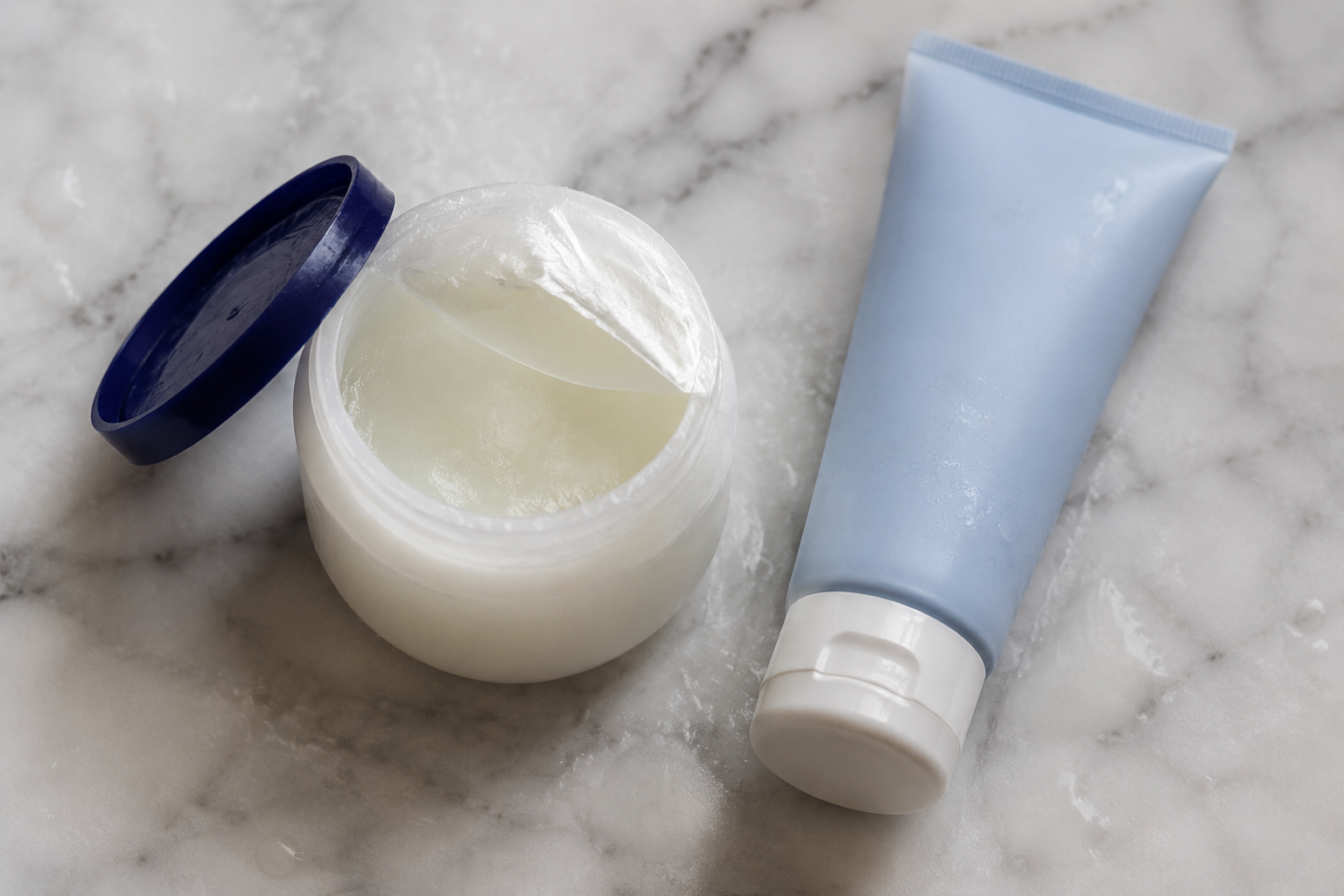
Aquaphor is an occlusive ointment – meaning it seals moisture into skin rather than adding moisture itself. Most people assume it’s just a fancier Vaseline. It’s more complicated than that.
Here’s a breakdown of every meaningful ingredient and why it matters for acne-prone skin:
- Petrolatum (41%) – The primary occlusive, forming a semi-permeable barrier on skin’s surface that slows transepidermal water loss; on its own, it scores a 0-1 out of 5 on comedogenicity scales, making it one of the least pore-clogging occlusives available.
- Mineral oil – A lightweight emollient that softens skin and fills in surface cracks; comedogenicity varies by grade, but cosmetic-grade mineral oil used in skincare products is generally considered low-risk for most skin types.
- Lanolin alcohol – An emollient derived from wool; this is the ingredient that draws the most scrutiny, because it can trigger contact dermatitis or breakouts in people sensitive to it – it scores a 2 out of 5 on some comedogenicity scales.
- Panthenol (pro-vitamin B5) – A humectant and wound-healing agent that draws water into the skin; genuinely useful for repairing the irritated barrier that tretinoin can cause.
- Glycerin – Another humectant; pulls moisture from the air into the upper layers of skin; well-tolerated by virtually all skin types.
- Ceresin – A wax used to stabilize the ointment’s texture; no meaningful comedogenic concern.
- Bisabolol – An anti-inflammatory compound derived from chamomile; helps calm redness and sensitized skin.
The occlusive vs. emollient vs. humectant distinction matters here. Occlusives (like petrolatum) seal. Emollients (like lanolin alcohol, mineral oil) soften. Humectants (like glycerin, panthenol) attract water. Aquaphor does all three, which is why it outperforms plain Vaseline for barrier repair – but also why it carries more ingredient variables for reactive skin.
Aquaphor is clinically tested as non-comedogenic, but that label carries a catch. The FDA does not regulate or define “non-comedogenic,” so it’s a brand claim, not a certified standard. Individual responses to lanolin alcohol vary enough that some dermatologists still flag it for sensitive or acne-prone patients.
When Aquaphor Helps Acne-Prone Skin – and When It Backfires
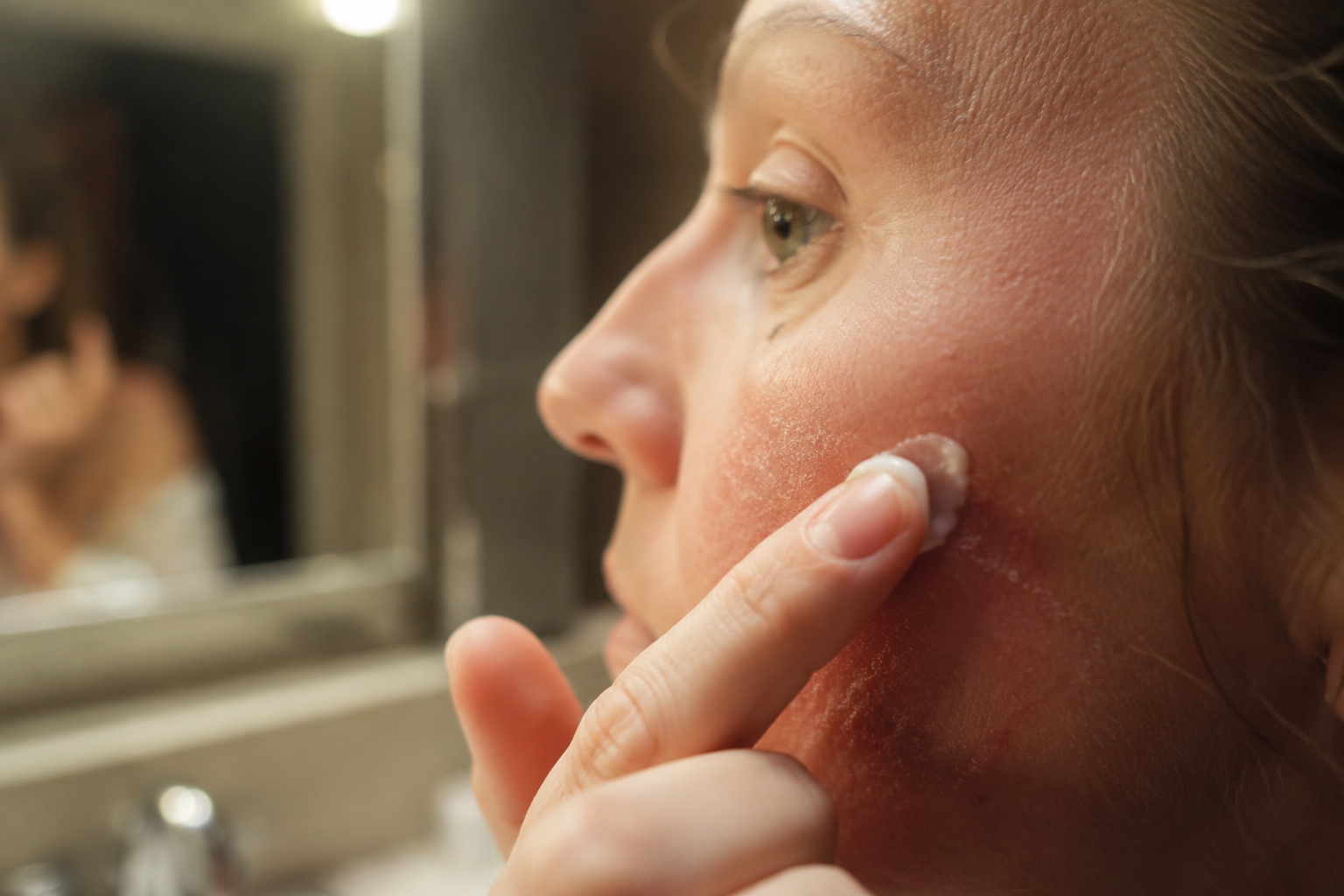
Aquaphor helps in some acne scenarios and actively worsens others. The table below maps out the key situations so you can figure out where you fall before you open the tube.
Two factors drive most of the risk: the sweat-plus-occlusion mechanism and your skin’s baseline oil production. When Aquaphor traps sweat against skin in warm or humid conditions, that mix of sebum and sweat creates an environment where breakouts thrive. And dermatologists note that Aquaphor is not recommended for full-face use on acne-prone skin precisely because of that occlusion risk.
| Scenario | Risk Level | Why |
|---|---|---|
| Dry patches from tretinoin, spot-applied at night | Low | Targeted use on flaking areas; no sweat; prescription absorbed first |
| Post-extraction healing on a cleared blemish | Low | Acts as a wound-healing occlusive on broken skin; keeps area sterile |
| Winter dryness from doxycycline on cheeks/jawline | Low | Cold air strips barrier; Aquaphor restores it; no heat/sweat factor |
| Combination skin – oily T-zone, dry cheeks | Moderate | Safe on dry cheeks; risky if it migrates to nose or chin |
| Full-face overnight slugging with active breakouts | High | Traps bacteria, sebum, and dead skin cells; can worsen comedones |
| Summer heat or pre-workout application | High | Sweat + occlusion = clogged pores; derms consistently flag this |
| Comedone-prone zones (nose, chin) in any season | High | These zones produce the most sebum; adding an occlusive amplifies congestion |
The clearest pattern: Aquaphor works when your skin is dry, cool, and clean. It backfires when your skin is oily, warm, or sweating.
Targeted, nighttime-only use on genuinely dry patches is a fundamentally different act than full-face slugging. Treating them as the same thing is where most of the confusion on social media comes from.
How to Use Aquaphor Safely in a Prescription Acne Routine
Adding Aquaphor to a tretinoin or antibiotic routine requires sequencing. Put it in the wrong spot, and you either dilute your prescription or trap things you don’t want trapped. As one dermatologist-reviewed source notes, using it no more than a few times per week and only at the end of your routine keeps the risk minimal.
For a full picture of how Aquaphor fits within a broader regimen, see this guide on skincare routine while on prescription acne medication.
-
Cleanse thoroughly first – Remove sunscreen, makeup, and sweat before anything else. Any residue trapped under an occlusive will stay there all night. A gentle, non-stripping cleanser is enough – avoid anything with exfoliating acids on tretinoin nights, since the combination amplifies irritation.
-
Apply your prescription treatment and wait – Put tretinoin or your topical antibiotic on clean, dry skin. Then wait 15-20 minutes before touching anything else. This absorption window matters: applying Aquaphor on top of wet tretinoin can increase penetration unpredictably, which raises the chance of irritation rather than reducing it.
-
Apply Aquaphor sparingly to dry spots only – A rice-grain amount (roughly 2-3 mm of product squeezed from the tube) is enough for a cheek patch or a section of jawline. Dot it on the dry or flaking areas only. Spreading it across the whole face is where the risk climbs.
-
Keep it to nighttime use – Aquaphor under daytime SPF is a recipe for congestion and smearing. At night, you’re horizontal, not sweating from activity, and the skin has 6-8 hours to absorb without disruption. Morning use, especially before exercise, is the scenario dermatologists most consistently warn against.
-
Start at 2-3 nights per week and assess over 2 weeks – Give your skin two full weeks before judging the outcome. New comedones on the treated area after 14 days are a signal to reduce frequency or stop. No new breakouts after 14 days is a reasonable green light to continue.
One technique worth knowing if you’re new to tretinoin: the sandwich method. You apply moisturizer first, then tretinoin, then a thin layer of Aquaphor on top. This buffers irritation significantly. I only used this approach for the first 3 weeks of my own tretinoin start, then dropped the pre-moisturizer step once my barrier had adapted.
My 6-Week Test: Aquaphor as a Tretinoin Buffer
Aquaphor vs. Vaseline vs. CeraVe Healing Ointment for Acne-Prone Skin
If Aquaphor isn’t right for your skin, two other occlusives come up in almost every dermatology conversation: Vaseline and CeraVe Healing Ointment. They’re not interchangeable.
Verywell Health notes that Aquaphor tends to be the better facial choice for oily or acne-prone skin compared to pure Vaseline, because its added skin-repairing actives do more than just seal. But CeraVe Healing Ointment is worth serious consideration if lanolin sensitivity is a concern.
| Product | Petrolatum % | Key Added Ingredients | Comedogenic Risk | Best Use Case | Price (approx.) |
|---|---|---|---|---|---|
| Vaseline | 100% | None | Very low (petrolatum only) | Body skin, lips, wound care | ~$5 for 7.5 oz |
| Aquaphor Healing Ointment | 41% | Lanolin alcohol, panthenol, glycerin, bisabolol | Low-moderate (lanolin risk for some) | Tretinoin barrier repair, dry patches | ~$10 for 3.5 oz |
| CeraVe Healing Ointment | ~46% | Ceramides (1, 3, 6-II), hyaluronic acid, petrolatum blend | Low | Sensitive or acne-prone skin needing barrier + hydration | ~$12 for 5 oz |
Vaseline is the safest occlusive on the comedogenicity scale, but it offers nothing beyond sealing – no healing actives, no ceramides, no anti-inflammatory compounds. For post-extraction healing or pure barrier protection on the body, it’s fine.
Aquaphor earns its place in a prescription routine because panthenol and bisabolol genuinely speed up barrier repair, which matters when tretinoin is actively degrading your skin. The lanolin alcohol is the only real wildcard – if you’ve ever reacted to wool or found certain skincare products irritating without a clear cause, CeraVe Healing Ointment is the lower-risk swap.
CeraVe Healing Ointment is my first recommendation for anyone with known sensitivity or moderate-to-severe acne. The ceramide complex supports the skin barrier at a structural level, and the fragrance-free formula removes one more potential irritant from the equation.
What Dermatologists and Acne Patients Actually Disagree About
Is Aquaphor non-comedogenic or not? The brand says yes, but derms say no – who’s right?
Both positions have merit, which is what makes this confusing. Petrolatum, Aquaphor’s main ingredient, consistently scores 0-1 on the comedogenic scale used in dermatology research – that’s about as low as it gets. The brand’s non-comedogenic claim is based on clinical testing.
The catch is that “non-comedogenic” is not an FDA-regulated term, so it’s not held to a universal standard.
More importantly, lanolin alcohol – one of Aquaphor’s emollients – can trigger breakouts in individuals sensitive to it, even if the full formula tests clean in a general population study.
Can I use Aquaphor every night on tretinoin, or will it block the tretinoin from working?
Applying Aquaphor after tretinoin has fully absorbed – typically 15-20 minutes after application – does not meaningfully block tretinoin’s efficacy. The prescription has already begun penetrating by then.
What does affect efficacy is applying Aquaphor before or simultaneously with tretinoin, because occlusion can increase absorption unpredictably, raising irritation rather than lowering it.
Nightly use is fine for some people, but I’d start at 3 nights per week and adjust based on your skin’s response over 14 days before committing to every night.
My dermatologist told me to use Aquaphor for dryness on doxycycline – is that safe?
Yes. Doxycycline causes photosensitivity and can contribute to skin dryness in some patients. Applying Aquaphor to targeted dry areas at night is appropriate and consistent with what many dermatologists recommend.
Two things to keep in mind: use it only on the dry patches rather than all over, and make sure you’re wearing a broad-spectrum SPF 30+ every morning, since doxycycline makes your skin significantly more vulnerable to UV damage.
Also worth reviewing: daily habits that help your acne treatment work better covers sun protection and other lifestyle factors that matter on antibiotics.
Does slugging with Aquaphor cause acne?
Full-face overnight slugging carries real risk for acne-prone skin, particularly in warm or humid conditions. The mechanism is straightforward: if your pores aren’t fully clear and you seal the entire face under an occlusive, you’re trapping sebum, bacteria, and any residue your cleanser missed.
Targeted use on genuinely dry patches is a different situation – the surface area is small, the skin is dry rather than oily, and the conditions that drive breakouts aren’t present.
Slugging as a trend works better for people with dry or normal skin types, not for those actively managing acne.
Sources
- Healthline – whether Aquaphor on the face can treat acne or cause breakouts
- Verywell Health – Aquaphor vs. Vaseline comparison for acne-prone and dry skin
- Aquaphor official site – non-comedogenic claims and face use guidance
- Truly Beauty – dermatologist input on whether Aquaphor clogs pores
- American Academy of Dermatology – moisturizer guidance for acne-prone skin
- National Library of Medicine / PubMed – petrolatum occlusion and skin barrier repair research