
Doxycycline vs Accutane: Which Is Right for Your Acne?
Last updated: June 26, 2026
I’ve spent years watching people cycle through prescription after prescription, frustrated that their skin isn’t clearing the way they hoped. The doxycycline vs. Accutane question comes up constantly – and it’s genuinely one of the most important decisions you’ll make about your skin.
These two drugs are not competing versions of the same thing. They work through completely different biology, target different severities of acne, and carry very different commitments. Knowing the distinction before you walk into a dermatologist’s office puts you in a much stronger position to ask the right questions.
This guide covers how each drug works, what the side effects actually feel like, what the iPLEDGE program requires, and when one makes more sense than the other. I’ll also share what my own experience going from doxycycline to isotretinoin looked like, because the timeline and trade-offs are easier to understand when they’re grounded in a real case.
Quick answer: Doxycycline is an antibiotic best suited for mild-to-moderate acne, while Accutane (isotretinoin) is reserved for severe or treatment-resistant cases and offers a potential permanent cure. Doxycycline carries fewer serious risks but can lose effectiveness over time. Accutane requires enrollment in the iPLEDGE program due to serious side effects, including severe birth defects.
How Each Drug Actually Fights Acne
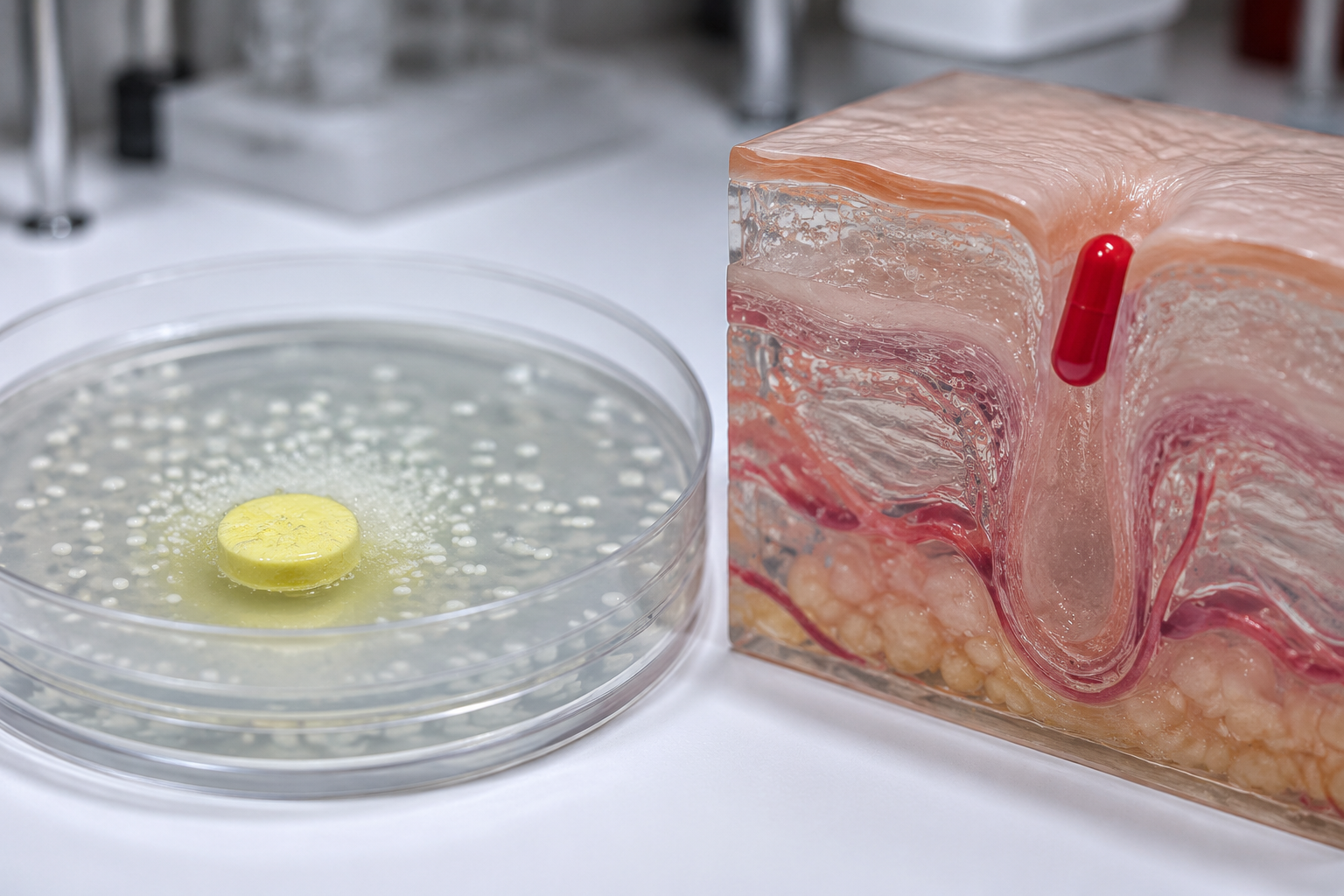
how doxycycline works for acne and how isotretinoin works are two completely separate stories. One targets bacteria. The other targets your oil glands directly. Understanding that difference is the whole game.
Both are oral prescriptions – swallowed daily, working from the inside out. Neither is a cream or gel, which means their effects (and risks) are systemic rather than local.
Here’s what each drug is actually doing inside your body:
- Doxycycline kills C. acnes bacteria – This tetracycline antibiotic penetrates your pores and reduces the bacterial population that triggers breakouts, cutting off one of acne’s main fuel sources.
- Doxycycline also dials down inflammation – Beyond killing bacteria, it suppresses the inflammatory response that turns a clogged pore into a red, swollen, painful cyst – which is why it can work faster than topicals for inflammatory acne.
- Doxycycline is maintenance-oriented, not a cure – Stop taking it, and C. acnes bacteria rebound. Most dermatologists pair it with a topical like benzoyl peroxide or tretinoin to hold results after the antibiotic course ends.
- Isotretinoin shrinks your sebaceous glands – This vitamin A derivative physically reduces the size of your oil glands – sometimes by up to 90% – cutting off the excess sebum that feeds acne in the first place.
- Isotretinoin normalizes skin cell turnover – Abnormal shedding inside the follicle is what creates the plug that blocks a pore. Isotretinoin fixes that process at the cellular level, so pores stop getting blocked.
- Isotretinoin can be a one-time course – Because it targets the underlying cause rather than managing symptoms, a completed 4-6 month course can clear acne for years or permanently. That’s a fundamental difference from any antibiotic.
- Neither drug replaces the other – Doxycycline is typically the first step for moderate inflammatory acne. Isotretinoin is typically reserved for severe, nodular, or treatment-resistant cases. They occupy different rungs on the treatment ladder.
Side-by-Side: Severity, Safety, and Who Each Drug Is For

These two drugs are used for overlapping but distinct patient profiles, and the Accutane vs Doxycycline comparison at Drugs.com makes clear they belong to entirely different drug classes. I find the clearest way to see the differences is side by side.
According to GoodRx’s breakdown of isotretinoin, Accutane is typically reserved for more severe or treatment-resistant cases – a threshold worth understanding before you request it.
| Factor | Doxycycline | Isotretinoin (Accutane) |
|---|---|---|
| Acne severity | Mild to moderate inflammatory acne | Severe, nodular, or cystic; treatment-resistant cases |
| Common side effects | GI upset, nausea, sun sensitivity, yeast infections | Dry skin, chapped lips, dry eyes, joint aches, mood changes |
| Serious safety concern | Antibiotic resistance with long-term use | Severe birth defects (Category X teratogen) |
| Monitoring required | None beyond standard follow-up | iPLEDGE enrollment, monthly blood tests, pregnancy tests |
| Typical duration | 3-6 months | 4-6 months (dose based on body weight) |
| Cost without insurance | $10-30/month (generic) | $200-400+/month (generic isotretinoin) |
| Permanence of results | Acne often returns after stopping | High rate of long-term remission after one course |
| Antibiotic resistance risk | Yes – guidelines recommend limiting to 3-6 months | No – not an antibiotic |
For doxycycline, the most common complaint I hear is stomach upset and getting sunburned much faster than expected. I’d also point you toward a full breakdown of doxycycline side effects to watch for before starting.
The cost gap is significant and worth planning around. Generic doxycycline is among the cheapest prescriptions your pharmacy carries. Generic isotretinoin without insurance is a different story – though manufacturer coupons and GoodRx can bring it down meaningfully.
The iPLEDGE Program and Why Accutane Requires More Commitment
Starting isotretinoin takes longer than picking up a doxycycline prescription the same day your dermatologist calls it in. The FDA’s iPLEDGE REMS program exists specifically because isotretinoin causes severe, life-altering birth defects if taken during pregnancy – and the system is designed to make that outcome as close to impossible as the regulatory process can manage.
Here’s what the process actually looks like, step by step:
-
Enroll in iPLEDGE before your prescription is filled – Your dermatologist registers you in the system, and you create your own account at ipledgeprogram.com. No enrollment means no prescription – pharmacies are legally blocked from dispensing without it. This step typically happens at your first appointment.
-
Complete a monthly blood test – Your dermatologist orders labs each month to monitor liver enzymes, triglycerides, and cholesterol, all of which isotretinoin can elevate. Missing a lab window means your prescription window closes automatically.
-
Pregnancy testing is required every 30 days – For anyone who can become pregnant, a negative pregnancy test must be logged in the iPLEDGE system within the 30-day window before each refill. This is non-negotiable and enforced at the pharmacy level.
-
Use two forms of contraception simultaneously – If you can become pregnant, the program requires two independent forms of contraception for the entire course plus one month after stopping. One method alone is not sufficient under the program’s rules.
-
Pick up each prescription within a 7-day window – iPLEDGE issues 30-day supplies only. Once your dermatologist authorizes a refill, you have 7 days to pick it up. Miss that window and the authorization expires – you restart the monthly process.
-
Complete a knowledge assessment each month – The program requires you to answer questions confirming you understand the risks. It takes about 5 minutes but must be done before each refill is released.
Doxycycline, by contrast, works like most other prescriptions. Your dermatologist calls it in, you pick it up. Some providers allow 90-day supplies. There’s no monitoring program, no mandatory testing, and no enrollment system between you and the medication.
My Six Months on Doxycycline Before Switching to Isotretinoin
Questions Worth Answering Before You Talk to Your Dermatologist
Can I take doxycycline and Accutane at the same time?
No – combining them raises the risk of pseudotumor cerebri, a condition where pressure builds inside the skull and mimics a brain tumor. Both drugs individually carry a small risk of this; together, that risk compounds. Dermatologists always separate these treatments, typically completing a doxycycline course before evaluating whether isotretinoin is the next step.
Will doxycycline clear my acne permanently, or will it come back?
Doxycycline suppresses acne while you’re taking it, but it’s not a cure. The bacteria it targets – C. acnes – can rebound after you stop, and most people see some return of breakouts within weeks to months.
Pairing doxycycline with a topical retinoid like tretinoin gives you a better chance of maintaining results. For long-term remission, isotretinoin has a significantly higher track record – Honeydew’s comparison describes isotretinoin as offering more effective, lasting relief for severe acne cases.
How do I know if my acne is severe enough for Accutane?
Dermatologists typically consider isotretinoin when you have nodular or cystic acne, acne that hasn’t responded to at least two antibiotic courses combined with topicals, or acne that’s actively causing scarring.
Formal grading tools like the IGA (Investigator’s Global Assessment) or Leeds scale are used in clinical settings. If you’re forming cysts – hard, painful, deep lumps that don’t come to a head – that’s the profile most likely to qualify.
Understanding how long doxycycline takes to clear acne helps set realistic expectations before concluding it has failed.
Does doxycycline cause antibiotic resistance?
Prolonged use can contribute to resistance in C. acnes and other bacteria on your skin.
This is why most guidelines from the American Academy of Dermatology recommend limiting antibiotic courses to 3-6 months and always pairing them with benzoyl peroxide, which kills bacteria through a mechanism that doesn’t generate resistance.
Using doxycycline open-endedly without a topical partner is the pattern that creates problems.
Which is cheaper – doxycycline or Accutane?
Generic doxycycline typically runs $10-30 per month at most pharmacies, often covered well by insurance. Generic isotretinoin without insurance lands in the $200-400+ per month range, though the full 6-month course can exceed $2,000 out of pocket.
GoodRx coupons and manufacturer patient assistance programs can reduce that meaningfully – checking GoodRx before filling any isotretinoin prescription is worth 5 minutes of your time.
Sources
The clinical guidance in this article draws from the American Academy of Dermatology’s acne treatment guidelines, which outline severity thresholds and first-line prescription recommendations.
Isotretinoin’s mandatory safety program is administered by the FDA under the name iPLEDGE REMS. All prescribers, pharmacies, and patients must enroll before a prescription can be filled.
Clinical evidence on doxycycline’s efficacy for acne – including trial data on dosing and duration – is indexed through the National Library of Medicine on PubMed.
For cost comparisons, GoodRx provides regularly updated pricing across pharmacy chains.
A full side-by-side drug profile comparing Accutane and doxycycline – including interactions, warnings, and dosing – is available from Drugs.com.