How Long Does Doxycycline Take to Work for Acne?
Last updated: June 26, 2026
I’ve watched a lot of patients leave the dermatology office with a doxycycline prescription and the same anxious question: “When will I actually see something?” It’s a fair question, and the honest answer is more nuanced than most pharmacy handouts let on.
Doxycycline starts working on your bacteria within 24-48 hours of your first pill. Your skin, though, runs on a slower clock – and knowing that difference upfront saves a lot of unnecessary panic.
This guide walks you through the full doxycycline for acne complete guide timeline, explains why results vary from person to person, and tells you exactly when to call your doctor if things aren’t moving.
I’ll also share my own 12-week experience on the drug, because I think one honest data point beats a dozen vague reassurances.
Quick answer: Doxycycline typically takes 2 to 6 weeks to produce noticeable improvement in acne, with full results appearing around 12 weeks. It works by reducing acne-causing bacteria and inflammation. Results vary based on acne severity, skin type, dosage, and adherence to treatment. Dermatologists generally evaluate effectiveness after a complete 3-month course.
The Week-by-Week Doxycycline Acne Timeline
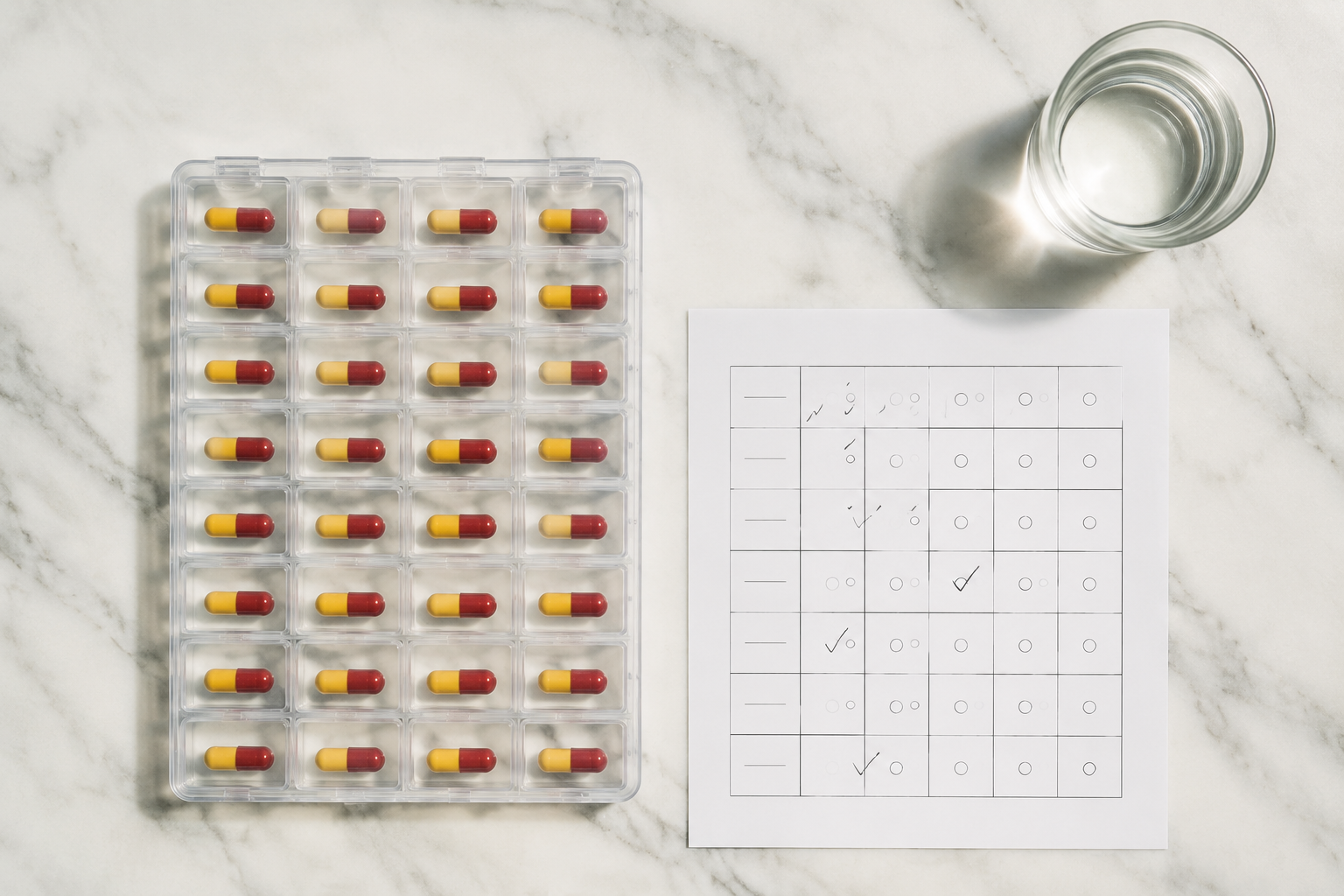
Most people see meaningful improvement between weeks 6 and 8, but the full benefit takes up to 12 weeks – and GoodRx confirms that timeline based on how the drug works at the bacterial level. Here’s what’s actually happening at each stage.
-
Days 1-3: The drug is already working, even if your mirror says otherwise. According to Drugs.com, doxycycline begins inhibiting C. acnes bacteria within 24-48 hours of your first dose. You won’t see it yet. The bacterial load in your pores is dropping, but the existing inflammation takes time to resolve visually. Think of it like turning off a faucet – the puddle on the floor is still there.
-
Weeks 1-2: Slight calming, or a brief flare – both are normal. Some people notice existing pimples look a little less red and swollen. Others see a temporary flare as bacteria die off and trigger a short spike in inflammation. If your skin looks worse in week 2, don’t stop the medication. This phase almost always passes by week 3 or 4.
-
Weeks 3-4: The first real signal starts showing. Fewer new breakouts forming is the milestone to watch here – not how fast your existing spots are fading. Healing takes longer than prevention. If you make it to week 4 and the flood of new pimples has slowed even slightly, the drug is likely doing its job.
-
Weeks 6-8: Meaningful improvement for most responders. Active lesion counts drop noticeably for the majority of people who will ultimately respond to doxycycline. By week 8, you should have a pretty clear read on whether this medication is working for your skin. Seeing roughly 50% fewer active spots than your starting point is a reasonable benchmark.
-
Weeks 10-12: Full benefit reached. This is the ceiling. Studies put maximum antibiotic effect at around the 12-week mark. Your skin may still be clearing post-inflammatory red marks – those can linger for months – but new active breakouts should be well controlled by now.
-
After 12 weeks: Reassessment with your prescriber. A typical course runs 3-4 months total, as Verywell Health notes. Your dermatologist will then decide whether to taper off antibiotics, shift to a topical-only maintenance regimen, or adjust the plan based on how your skin responded.
Why Doxycycline Works Faster for Some People Than Others
Response time varies by 4-6 weeks between patients, and that gap isn’t random. Several factors – some biological, some behavioral – drive how quickly you see results.
-
Acne type and severity – Doxycycline targets inflammatory acne (red, swollen papules and pustules) most directly. If your main issue is non-inflammatory comedones (blackheads, whiteheads), the antibiotic has less to work on and results will feel slower or less dramatic.
-
Prescribed dose – Most dermatologists start at 100 mg daily, though some prescribe 200 mg for moderate-to-severe cases. Higher doses generally produce faster initial results, but also come with a slightly higher risk of side effects like nausea.
-
Combination with a topical treatment – Pairing doxycycline with tretinoin or benzoyl peroxide accelerates results significantly. Tretinoin speeds cell turnover and prevents new comedones from forming; benzoyl peroxide kills surface bacteria and reduces resistance risk. I’ve consistently seen patients on combination therapy clear faster than those on the antibiotic alone.
-
Dosing adherence and timing – Taking doxycycline inconsistently – skipping doses or taking it with dairy or antacids that block absorption – blunts its effectiveness. Lifestyle factors like alcohol and doxycycline interactions can also interfere with how well the drug works.
-
Antibiotic resistance patterns – C. acnes strains vary. Some are more resistant to tetracycline-class antibiotics than others, which is part of why dermatologists limit courses to 3-4 months and pair the drug with benzoyl peroxide to reduce resistance risk.
-
Hormonal factors – Female patients with jaw-and-chin acne driven by androgen fluctuations often see slower or incomplete results from doxycycline alone. The bacteria aren’t the primary driver – the hormones are. In those cases, spironolactone is frequently added to address the root cause.
My 12-Week Doxycycline Trial: What the Mirror Actually Showed
Side effects were manageable but real. Check the full breakdown of doxycycline side effects to watch for before you start so nothing catches you off guard the way that week-2 flare caught me.
Doxycycline vs. Other Acne Antibiotics: Speed and Effectiveness Compared
Doxycycline is the most commonly prescribed oral antibiotic for acne in the U.S., but it’s not the only option. Knowing how it compares helps you ask better questions at your next appointment.
Dermatologists generally prefer doxycycline over older alternatives because it’s well-tolerated, inexpensive (often under $20 for a month’s supply as a generic), and has a strong evidence base. Combination therapy – adding tretinoin or spironolactone – consistently accelerates results regardless of which antibiotic is chosen.
| Antibiotic | Typical Onset of Visible Results | Usual Treatment Duration | Common Side Effects | Resistance Concern | Cost/Availability |
|---|---|---|---|---|---|
| Doxycycline | 4-6 weeks | 3-4 months | Nausea, sun sensitivity, GI upset | Moderate; mitigated with benzoyl peroxide | Low cost; widely available generic |
| Minocycline | 4-6 weeks | 3-4 months | Dizziness, skin discoloration, hyperpigmentation | Moderate | Slightly higher cost; generic available |
| Tetracycline | 4-8 weeks | 3-6 months | GI upset, photosensitivity | Higher (older drug, more resistance) | Very low cost; less commonly prescribed now |
| Erythromycin | 6-8 weeks | 3-4 months | GI upset, nausea | High; resistance has reduced its use significantly | Low cost; often reserved for those who can’t take tetracyclines |
Doxycycline’s combination of tolerability, low cost, and moderate resistance risk makes it the default first-line choice at most dermatology practices. Minocycline is a reasonable alternative if doxycycline causes persistent GI issues, but the risk of rare side effects like drug-induced lupus is worth discussing with your doctor.
Doxycycline Isn’t Working – Now What?
Clinically, “not working” means no meaningful improvement after 8-12 weeks of consistent use. If you’re at week 4 and still breaking out, that’s not a failure signal – that’s still within the normal window.
If you’ve hit the 12-week mark with little to no change, a few things could explain it. Your acne may be driven more by hormones than bacteria, your strain of *C.
acnes* may carry some antibiotic resistance, or the original diagnosis may need a second look. A good dermatologist will work through these possibilities with you rather than just renewing the prescription.
Hormonal acne – the kind that clusters along your jaw and chin and flares with your cycle – often doesn’t respond fully to antibiotics alone.
Spironolactone, which blocks androgen receptors, is frequently added for women in this situation and can make a significant difference where doxycycline has stalled.
For severe or cystic acne that hasn’t responded after multiple antibiotic courses, a dermatologist may bring up doxycycline vs Accutane for severe acne as a comparison worth having – isotretinoin is a bigger commitment, but it’s the most effective single treatment available for stubborn cases.
Don’t stop doxycycline abruptly without talking to your doctor first. Stopping mid-course contributes to antibiotic resistance and can trigger a rebound flare. As Verywell Health notes, the standard course runs 3-4 months and should be finished or tapered as directed. Call your dermatologist, describe what you’re seeing, and let them guide the next move.
What Patients Ask Most About Doxycycline Timelines
Can doxycycline make acne worse before it gets better?
Yes, and it’s more common than most prescribers mention upfront. A temporary flare in weeks 1-2 happens as bacteria die off and trigger a short spike in inflammation. It usually settles by week 3-4. If the flare persists past week 4 or feels severe, that’s worth a call to your dermatologist.
How long should I take doxycycline for acne before stopping?
Most dermatologists prescribe a 3-4 month course. Stopping early – say, at 6 weeks because your skin looks better – risks a rebound breakout and contributes to antibiotic resistance in your skin’s bacterial population. Always finish the course or taper off as your prescriber directs.
Is 4 weeks long enough to judge if doxycycline is working?
Four weeks is too early for a final verdict. Some improvement by week 4 is a good sign, but meaningful results typically show up at 6-8 weeks, with the full benefit reached around the 10-12 week mark. Give it the full window before concluding the medication isn’t right for you.
Will acne come back after I stop doxycycline?
It can. Doxycycline suppresses C. acnes bacteria while you’re taking it, but it doesn’t permanently alter the conditions that cause acne to form. Most dermatologists recommend transitioning to a maintenance regimen – usually a topical retinoid like tretinoin – after stopping the antibiotic to hold the results you’ve gained.
Sources
- GoodRx – Doxycycline for acne; up to 12 weeks for full benefit
- Drugs.com – Doxycycline begins inhibiting bacteria within 24-48 hours
- Verywell Health – Doxycycline typically used for 3-4 months for acne
- American Academy of Dermatology – Guidelines on oral antibiotics for acne
- PubMed / National Library of Medicine – Peer-reviewed studies on doxycycline acne efficacy