Living Well on Acne Treatment: Skincare, Diet, and Daily Habits
Last updated: June 26, 2026
I’ve sat across from enough people holding a fresh prescription – tretinoin, doxycycline, spironolactone – who had no idea what to do next. The dermatologist visit covered the medication. It rarely covered what to wash your face with, what to eat, or why your skin might get worse before it gets better.
That gap is what this guide fills. I’ll walk you through what each medication is actually doing to your skin, how to build a routine around it, which foods work for or against you, and the small daily habits that quietly determine whether your prescription succeeds or stalls.
One thing I want to be upfront about: the medication does the heavy lifting. But in my experience, the routine and lifestyle choices around it account for more of the outcome than most people expect.
Quick answer: A skincare routine on acne medication should prioritize gentle cleansing, fragrance-free moisturizer, and daily SPF, since most prescriptions increase dryness and sun sensitivity. Avoid active ingredients like exfoliating acids or retinol unless your dermatologist approves them. Supporting your prescription with consistent habits and a low-inflammatory diet improves results and reduces irritation.
What Your Prescription Is Actually Doing to Your Skin
Your prescription is reshaping your skin’s biology – and according to the Mayo Clinic, if a consistent routine alongside treatment doesn’t show improvement in 2-3 months, it’s worth revisiting your approach with your provider. Before you build that routine, understand what each medication is doing underneath the surface.
-
Doxycycline reduces bacteria and inflammation – It’s an oral antibiotic that targets Cutibacterium acnes in the follicle and dials down the inflammatory signals that turn a clogged pore into a swollen cyst. It does not change your skin barrier or oil production directly, so texture and oiliness may feel unchanged in weeks 1 through 4.
-
Doxycycline raises your sun sensitivity – Even though it’s a pill, not a cream, it increases your skin’s UV reactivity enough that skipping SPF on a doxycycline day is a real mistake – not just a theoretical one.
-
Spironolactone blocks androgen receptors – Androgens tell your sebaceous glands to make more oil. Spironolactone interrupts that signal, which means less sebum over time – but also drier skin, especially along the jawline and cheeks, for the first 4 to 8 weeks.
-
Spironolactone works slowly – Most people don’t see meaningful clearing until months 2 or 3. Full hormonal stabilization can take 3 to 6 months. Expecting week-4 results is the fastest way to abandon a medication that would have worked.
-
Tretinoin accelerates cell turnover – It pushes your skin’s renewal cycle from roughly 28 days down to as few as 14. Faster turnover clears clogged follicles, but it also temporarily thins the outermost skin layer (the stratum corneum).
-
A thinner stratum corneum loses water faster – This is called transepidermal water loss (TEWL), and it’s why tretinoin users feel tight and flaky even if they never had dry skin before. Moisturizer isn’t optional here – it’s compensating for a real physiological shift.
-
Tretinoin dramatically increases photosensitivity – UV damage accumulates faster on thinned skin. Using tretinoin without daily sunscreen actively works against what the medication is trying to accomplish.
-
Combination therapy compounds both concerns – Many dermatologists prescribe tretinoin and doxycycline together for moderate inflammatory acne – the antibiotic handles active bacteria while the retinoid works on long-term pore clearance. If that’s your situation, you have two independent photosensitivity risks stacking. SPF 30 is the floor, not the goal.
Building Your Skincare Routine Around Your Prescription
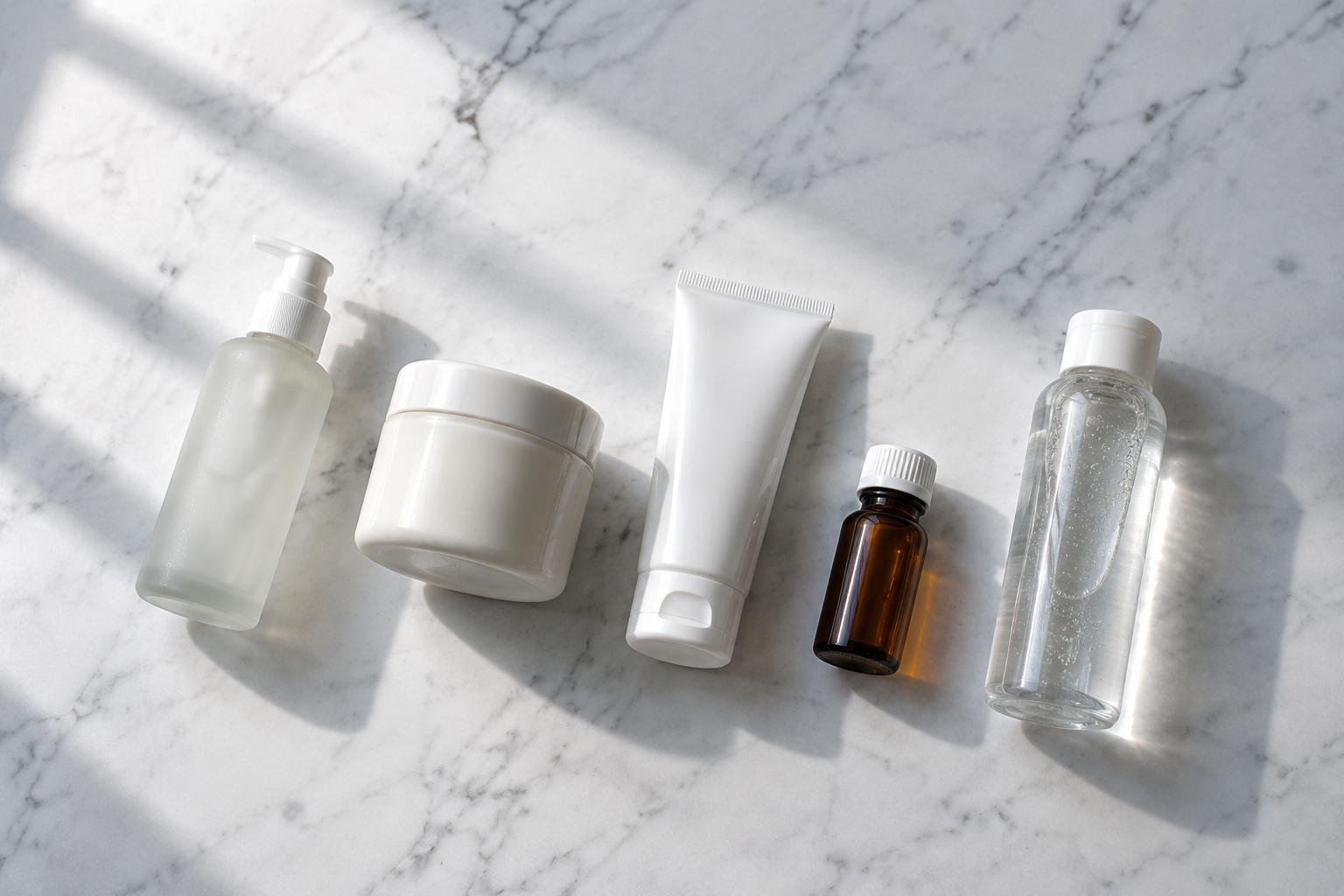
A safe, effective routine on acne medication has five steps – no more complexity than that. Verywell Health’s acne skincare framework confirms the core sequence: cleanser, toner (optional), medication, moisturizer, sun protection. Here’s how to execute each step when you’re on a prescription.
-
Start with a gentle, non-stripping cleanser – Harsh cleansers with sulfates or scrubbing beads feel thorough, but they damage a barrier that tretinoin and spironolactone are already stressing. I use a fragrance-free, pH-balanced cleanser – something with ceramides or glycerin – morning and night. The goal is clean skin, not squeaky skin. Squeaky means stripped.
-
Add an alcohol-free toner only if your skin tolerates it – A hydrating toner with ingredients like niacinamide or hyaluronic acid can help with moisture retention. Skip it entirely during the first 4 to 6 weeks on tretinoin, when your barrier is at its most reactive. Any astringent toner with witch hazel or alcohol is off the table permanently while you’re on these medications.
-
Time your prescription application correctly – Apply tretinoin at night, to clean, completely dry skin – I wait at least 20 minutes after washing, because moisture speeds absorption and increases irritation. Doxycycline is oral; take it with a full glass of water and stay upright for 30 minutes to avoid esophageal irritation. Never apply tretinoin in the morning – daytime UV exposure degrades the molecule and worsens photosensitivity.
-
Layer a barrier-repair moisturizer immediately after tretinoin – Wait 10 to 20 minutes after applying tretinoin, then apply a ceramide-rich moisturizer. This is non-negotiable on tretinoin. I’ve found that readers who skip this step are the ones who give up during the purge phase because the dryness feels unbearable. For specific product guidance, the best moisturizers for dry, prescription-stressed skin article covers what to look for at every price point. On nights when my skin feels particularly raw, I reach for an occlusive like Aquaphor – learn when to use Aquaphor on irritated or over-treated skin to avoid over-relying on it.
-
Apply SPF 30 or higher every single morning – Both tretinoin and doxycycline increase UV sensitivity, so this is the one step with zero exceptions. A broad-spectrum mineral sunscreen (zinc oxide or titanium dioxide) is gentler on a compromised barrier than chemical filters. I apply it as the last step before going outside, after moisturizer has fully absorbed – roughly 5 minutes.
Ingredients to avoid: Benzoyl peroxide can be used on a tretinoin regimen, but not at the same time. Apply benzoyl peroxide in the morning and tretinoin at night – using them simultaneously causes degradation of the tretinoin molecule. Alcohol-based products, strong AHAs (glycolic, lactic acid above 5%), BHAs (salicylic acid), and physical scrubs all increase irritation on an already-stressed barrier. Pull these from your routine for at least the first 3 months. For a fuller picture of how to manage barrier disruption, the complete skincare routine while on Accutane is a useful reference – Accutane users face an extreme version of the same challenges.
What to Eat (and Avoid) When You’re on Acne Medication
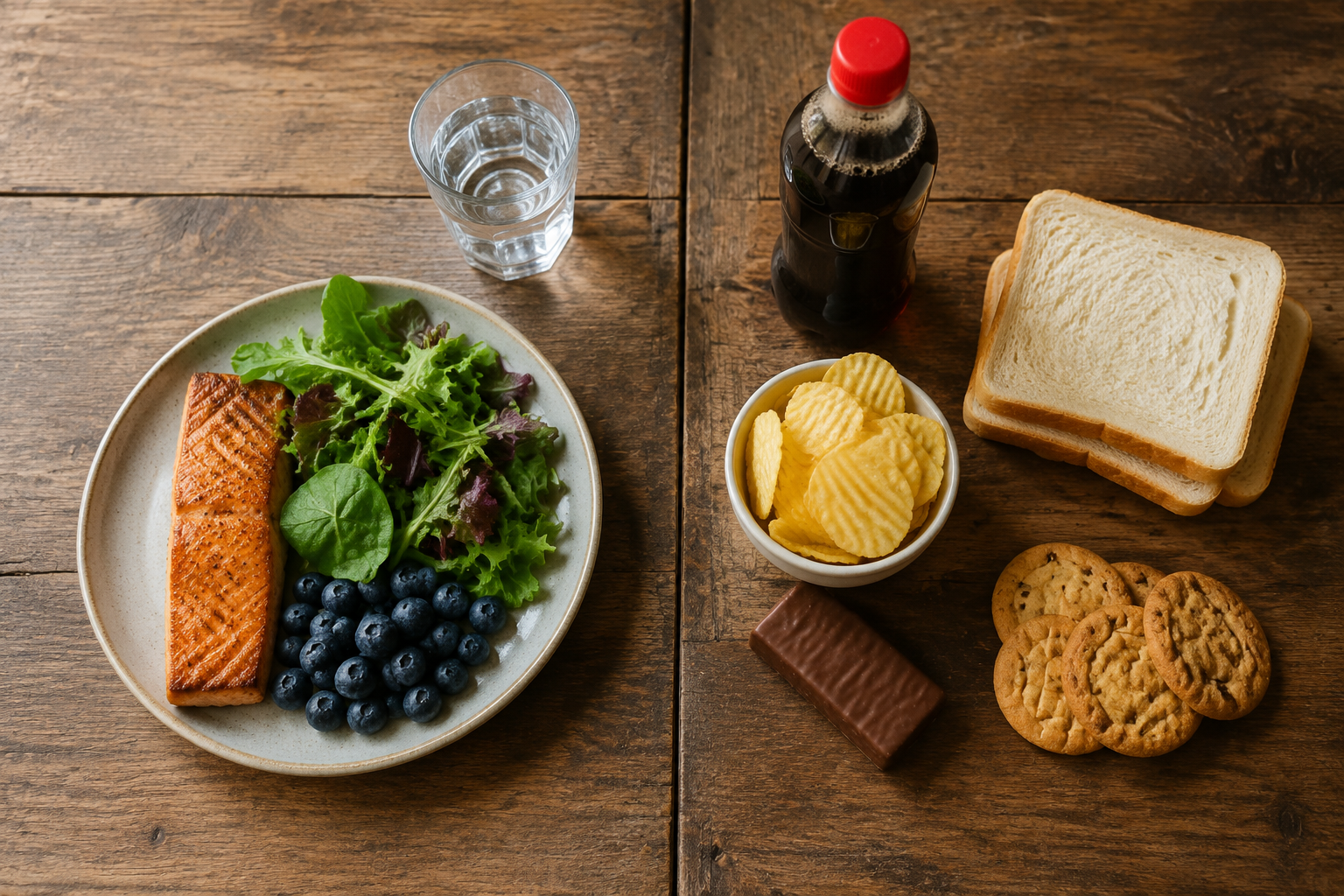
Diet doesn’t replace your prescription – but it can work with it or quietly against it. The evidence base here is real: peer-reviewed studies indexed on PubMed through the NIH show consistent links between dietary patterns and acne severity, particularly around glycemic load and dairy.
I treat food choices as one more variable I can control while the medication does its main job.
The table below compares food categories by their effect on acne-relevant biology and any medication-specific interactions you should know.
| Food Category | Effect on Acne | Medication Interaction |
|---|---|---|
| High-glycemic foods (white bread, sugary drinks, white rice) | Spike insulin and IGF-1, which drives sebum production and inflammatory acne | Worsens hormonal acne spiro is trying to control; no direct drug interaction |
| Skim and low-fat dairy | Linked to androgen-related acne flares via growth hormone residues | Particularly relevant for spironolactone users; also interferes with doxycycline absorption |
| Whole-fat dairy (cheese, full-fat yogurt) | Weaker acne link than skim; some evidence of neutral or minimal effect | Still avoid within 2 hours of doxycycline dosing due to calcium interference |
| Omega-3-rich foods (salmon, sardines, walnuts, flaxseed) | Anti-inflammatory; may reduce severity of inflammatory lesions | No negative interactions; supports tretinoin’s long-term skin health goals |
| Leafy greens and low-GI carbs (lentils, oats, sweet potato) | Stabilize blood sugar, reduce IGF-1 driven sebum signaling | No interactions; actively support the hormonal environment spironolactone is managing |
| Alcohol | Dehydrates skin and depletes electrolytes, worsening dryness | Spironolactone raises potassium levels; alcohol adds dehydration stress; limit or avoid |
| Calcium-rich foods (milk, fortified OJ, calcium supplements) | Neutral for acne | Binds doxycycline in the gut, reducing absorption by up to 50% – take doxy 2 hours before or after |
The doxycycline-calcium interaction is the one most people miss. A glass of milk or a calcium supplement taken with your morning doxycycline can cut the drug’s absorption roughly in half – a detail confirmed in FDA prescribing information for doxycycline hyclate. Timing your dose correctly matters as much as taking it consistently.
For a deeper breakdown of specific foods and the evidence behind each, the foods to avoid while on acne medication companion article goes into more detail than this table can. Diet is a support layer – your prescription is still doing the primary work.
Daily Habits That Quietly Sabotage Your Results
Small, repeated behaviors move the needle more than most people expect.
The American Academy of Dermatology notes that applying acne medication only to visible blemishes – instead of the full affected area – and switching products too frequently are two of the most common ways people undermine their own treatment. Those are just the obvious ones.
Here are the habits I see cause the most silent damage.
-
Pillowcase contact transfers bacteria every night – Your pillowcase collects oil, dead skin cells, and C. acnes bacteria over 24 to 48 hours. Sleeping on a fresh case every 2 days is one of the lowest-effort changes with a consistent payoff. I keep a stack of cheap cotton pillowcases in rotation.
-
Your phone screen is a bacteria delivery system – The average phone screen carries more bacteria than most surfaces people worry about. Pressing it against your cheek and jawline – exactly where hormonal acne clusters – transfers that directly to skin that’s already inflamed. Use speakerphone or earbuds, and wipe your screen with an alcohol wipe daily.
-
Touching your face breaks down the skin barrier – On tretinoin-thinned skin, repeated mechanical contact increases irritation and risks introducing bacteria into already-compromised follicles. Manual extraction – squeezing – tears tissue that heals more slowly on retinoids.
-
Poor sleep raises cortisol, which raises sebum – Cortisol triggers androgen production, which tells sebaceous glands to produce more oil. Getting fewer than 7 hours consistently works directly against what spironolactone is trying to achieve. Sleep is not a soft recommendation here.
-
Chronic stress feeds the cortisol-androgen cycle – The same cortisol pathway that disrupts sleep also responds to sustained psychological stress. Stress management – even 10 minutes of structured breathing or a consistent wind-down routine – has a measurable effect on hormonal acne patterns over weeks.
-
Post-workout sweat left on skin occludes follicles – Sweat mixed with occlusive gym clothing creates exactly the environment that feeds acne. Wash your face within 30 minutes of finishing a workout – not a full skincare routine, just a gentle rinse or cleanser. Change out of workout clothes immediately.
-
Inconsistent medication application erases progress – Applying tretinoin to visible spots only (instead of the full affected zone) means the surrounding follicles continue clogging. Spreading a pea-sized amount across the entire treatment area – forehead, cheeks, chin – is how the medication is designed to work.
For a more detailed breakdown of lifestyle factors and how to build them into a sustainable routine, the daily habits that help your acne treatment work better article covers each of these in depth.
Six Months on Tretinoin and Doxycycline: What Actually Changed
Prescription Acne Medication: Questions Worth Answering Before You Start
Can I use retinol products alongside my tretinoin prescription?
No – retinol is a weaker retinoid, but stacking it with prescription tretinoin increases irritation without adding any benefit. Your skin can only use so much retinoid activity at once, and the excess just inflames the barrier. Use one or the other – on a tretinoin prescription, retinol is redundant.
How long before I see results from doxycycline or spironolactone?
Doxycycline typically shows noticeable improvement in 6 to 8 weeks as bacterial load drops. Spironolactone works more slowly – the hormonal effect builds over 3 to 6 months as androgen signaling stabilizes. If you’re 10 weeks in and see no change at all, that’s worth a conversation with your prescriber, not a reason to stop unilaterally.
Is it safe to wear makeup while on tretinoin?
Yes – but the formula matters. Choose non-comedogenic, fragrance-free products and apply them after your tretinoin has fully absorbed, which takes at least 20 minutes. Avoid heavy, occlusive foundations during the purge phase. Mineral powder formulas tend to be the most tolerated on tretinoin-stressed skin.
Should I stop my prescription if my skin gets worse before it gets better?
Purging on tretinoin is normal and typically peaks between weeks 2 and 6 as the accelerated cell turnover pushes existing clogged material to the surface.
Consult your prescriber before stopping – most advise continuing through the purge phase, sometimes at a reduced frequency (every other night instead of nightly). A true allergic reaction looks different: hives, swelling, or severe burning that doesn’t ease after 30 minutes.
That warrants a call to your provider immediately.
Sources
The American Academy of Dermatology publishes free, clinician-reviewed guidance on acne skincare habits at aad.org. Their recommendations on consistent medication application, gentle cleansing, and product selection informed the daily habits and routine sections of this article.
The Mayo Clinic’s acne treatment overview at mayoclinic.org covers both prescription and nonprescription options, including how topical retinoids and oral antibiotics are typically sequenced and evaluated over time.
Verywell Health’s acne skincare routine framework at verywellhealth.com provided the five-step structure – cleanser, toner, medication, moisturizer, sun protection – that anchors the routine section above.
Dietary claims around glycemic index and dairy draw on peer-reviewed studies indexed on PubMed through the National Institutes of Health, including Kwon et al. (2012) on high-glycemic diets and acne severity, and Adebamowo et al. (2006) on dairy intake in young adults.
Prescribing information for tretinoin and doxycycline hyclate – including the calcium absorption interference and photosensitivity warnings cited above – was sourced from FDA-approved package inserts at fda.gov.
Related from The Goal Is Clear
- Daily Habits That Help Your Acne Treatment Work Better
- Foods to Avoid While on Acne Medication (and What the Evidence Actually Says)
- Aquaphor for Acne: Does It Help, and When to Use It
- Best Moisturizers for Dry Skin on Accutane: How to Choose
- The Best Skincare Routine While on Accutane
- Complete Guide to Accutane
- iPledge Program
- Doxycycline Guide
- Spironolactone Guide
- Retinol & Tretinoin Guide
- Acne Treatment Comparison