Doxycycline for Acne: How It Works, What to Expect, and Results
Last updated: June 26, 2026
I’ve spent years watching patients cycle through drugstore shelves – salicylic acid washes, benzoyl peroxide gels, spot treatments that do just enough to keep hope alive but not enough to actually clear skin. When moderate-to-severe inflammatory acne isn’t responding to any of that, doxycycline is usually the next serious conversation.
This guide covers everything I’d want a patient to know before filling that prescription: the science behind how it works, what dosages look like, a realistic week-by-week timeline, side effects worth planning for, and my own 12-week experience combining it with tretinoin.
One thing I want to be clear about upfront: doxycycline is a tool, not a cure. Understanding what it can and can’t do will help you use it right and not bail on treatment before it has a chance to work.
Quick answer: Doxycycline clears acne by killing Cutibacterium acnes bacteria and reducing skin inflammation. Dermatologists typically prescribe 50–100 mg once or twice daily for 3–6 months, often alongside topical treatments like tretinoin. Most users see noticeable improvement within 4–8 weeks, though common side effects include nausea and sun sensitivity.
How Doxycycline Actually Clears Acne (The Science, Simplified)
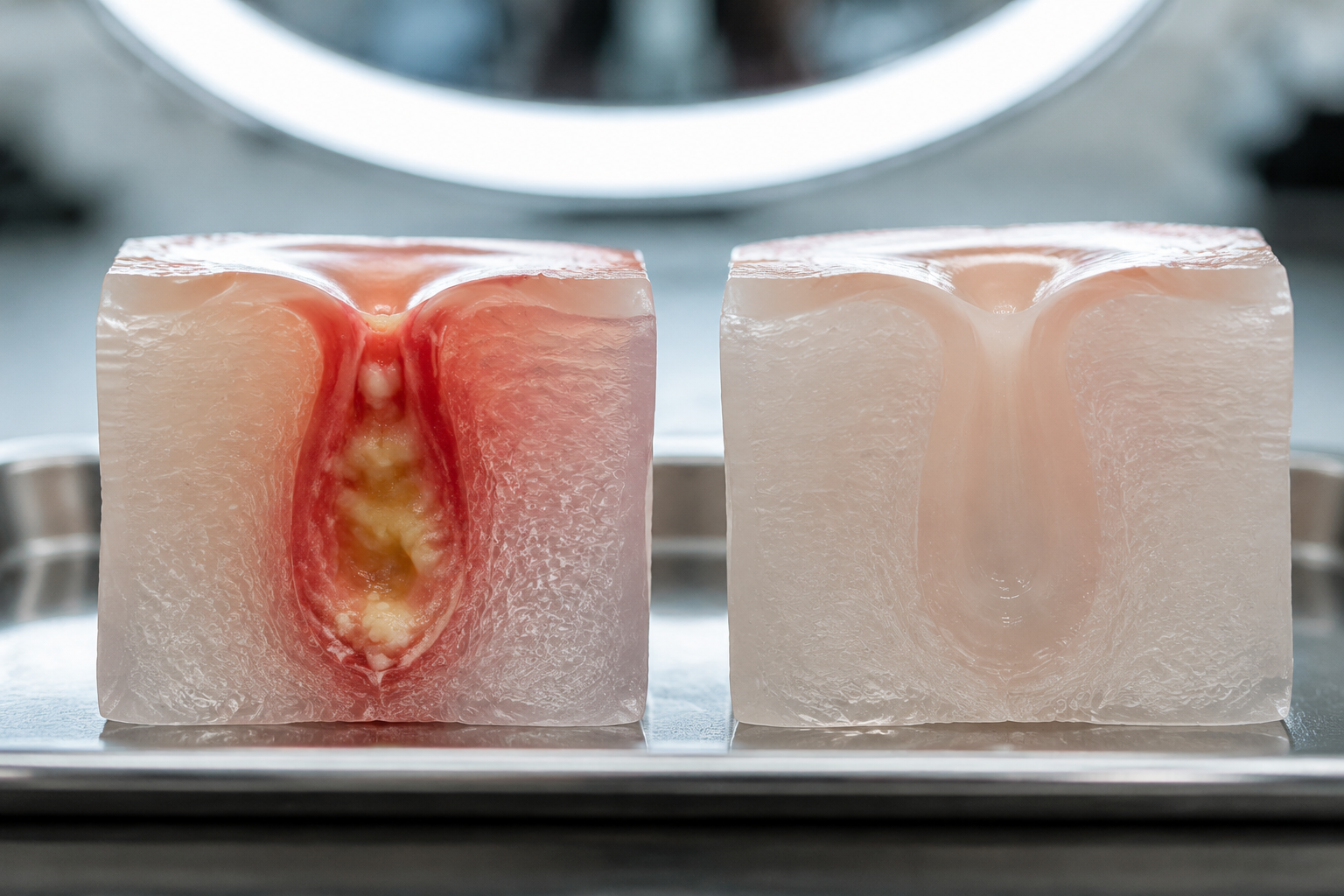
Doxycycline works on inflammatory acne through two separate mechanisms – and most people only know about one of them. According to PMC/NIH research, doxycycline and minocycline are the most commonly prescribed tetracyclines in dermatology, used primarily for acne vulgaris. Here’s what’s actually happening inside your skin when you take it.
-
It’s classified as a tetracycline antibiotic – Doxycycline belongs to the tetracycline class, a family of broad-spectrum antibiotics that work by blocking bacterial protein production rather than directly destroying the bacterial cell wall.
-
It kills C. acnes, the bacteria living inside your pores – Your pores harbor a bacterium called Cutibacterium acnes. It feeds on sebum, multiplies in the low-oxygen environment of a clogged follicle, and triggers the immune response that turns a blocked pore into a red, painful pimple.
-
It blocks protein synthesis inside bacterial cells – Doxycycline enters the bacterial cell and locks onto the 30S ribosomal subunit, stopping C. acnes from making the proteins it needs to reproduce. As MedlinePlus describes it, the drug works by “killing the bacteria that infects pores and by lowering the amount of oil on your skin that can cause acne.”
-
It suppresses inflammation independently of killing bacteria – This is the part that surprises most people. Doxycycline suppresses cytokines – the chemical signals your immune system uses to trigger redness and swelling. This anti-inflammatory effect kicks in even before bacterial populations decline, which is why some patients notice calmer, less red skin within the first 2 weeks.
-
It reaches deep inflammatory lesions that topicals can’t – Nodules and cysts form below the surface, where a topical cream simply cannot penetrate. An oral antibiotic circulates through your bloodstream and reaches those lesions directly.
-
It works on inflammatory acne, not comedones – If your main problem is blackheads and whiteheads, doxycycline will do very little. Those are physical blockages of dead skin and oil, not bacterial infections. Papules, pustules, and nodules – the red, raised, painful kind – are where doxycycline earns its place.
-
Topical pairings address what doxycycline can’t – Most dermatologists prescribe it alongside tretinoin or benzoyl peroxide specifically because doxycycline doesn’t clear comedones on its own. The combination covers both the inflammatory and non-inflammatory sides of acne at the same time.
Dosage, Duration, and What Your Prescription Actually Looks Like

Two main dosing strategies exist for doxycycline in acne, and they serve different purposes. Standard doses target active bacterial infection; sub-antimicrobial doses work primarily through anti-inflammatory pathways. If you’re weighing whether to escalate treatment, it’s also worth reading about doxycycline vs Accutane for severe acne before your next dermatologist visit.
The formulation your pharmacist hands you also matters more than most patients realize. Here’s how the main variables compare.
| Variable | Standard Dose | Sub-Antimicrobial Dose |
|---|---|---|
| Typical dosage | 50-100 mg once or twice daily | 20 mg twice daily |
| Primary mechanism | Antibacterial + anti-inflammatory | Anti-inflammatory only |
| Antibiotic resistance risk | Present with prolonged use | Minimal – below resistance threshold |
| Typical treatment length | 3-4 months, then reassess | Can be used longer as maintenance |
| Best suited for | Moderate-to-severe active breakouts | Maintenance after initial clearance |
| JAAD evidence | Standard of care | Shown effective in controlled trial |
Two formulations also show up at the pharmacy: doxycycline hyclate and doxycycline monohydrate. Hyclate is more acidic and more likely to cause nausea or esophageal irritation, especially if taken without food. Monohydrate is gentler on the stomach for most people.
Both deliver the same active drug – the difference is in the salt form and how your GI tract handles it.
GoodRx notes that dermatologists typically prescribe doxycycline for around 3 to 4 months to limit antibiotic resistance risk.
I’ve seen dermatologists push past that window when a patient is still responding, but the goal is always to transition to a topical-only regimen as quickly as results allow. Prolonged antibiotic use changes your skin’s bacterial environment in ways that make future treatment harder.
Timeline: What to Expect Week by Week
Patience is the hardest part of doxycycline treatment. Most patients who quit early do so between weeks 2 and 4 – precisely when the drug is building to therapeutic levels but visible improvement hasn’t arrived yet. For a deeper look at the data behind each phase, see how long doxycycline takes to work for acne.
Here’s what actually happens across a standard 3-to-4-month course.
-
Weeks 1-2: No visible change yet – The drug is reaching steady-state concentration in your bloodstream and skin tissue. You may notice your skin feels slightly less inflamed to the touch, but new lesions are still forming. This is completely normal – don’t stop.
-
Weeks 3-6: First signs of reduction in new breakouts – Active lesions start resolving faster than new ones form. You may still see a flare during week 3, especially if you’re also using tretinoin, which accelerates cell turnover and can push existing blockages to the surface. Existing cysts and nodules begin shrinking.
-
Weeks 6-12: Meaningful clearance for most patients – This is where the real shift happens. Most patients I’ve worked with report at least 50-60% fewer active lesions by week 8. Inflammation is down, and the skin texture starts improving. If you haven’t seen any change by week 8, that’s worth flagging to your dermatologist.
-
Month 3-4: Assessment point – At the 3-to-4-month mark, your dermatologist should reassess. For patients who’ve responded well, the plan usually involves stopping doxycycline and continuing on a topical retinoid alone. If response was partial, they may discuss alternatives – including isotretinoin.
-
After stopping: Maintenance matters – Acne can return after stopping doxycycline, sometimes within 4-6 weeks if no topical maintenance is in place. The tretinoin or benzoyl peroxide you were using alongside it becomes your long-term defense. That transition plan is not optional – it’s the whole point of the combination approach.
You can also browse honest before-and-after results from doxycycline if you want to see what real timelines look like across different skin types and acne severities.
Side Effects Worth Knowing Before You Fill the Prescription
Doxycycline has a solid safety record for short-course use, but it’s not side-effect-free. A 2025 PMC review confirmed its efficacy and safety profile across patient populations – but “generally safe” doesn’t mean you won’t feel some of these.
Knowing what’s coming helps you stick with treatment rather than stopping unnecessarily. For everything in detail, the full breakdown of doxycycline side effects goes deeper on frequency and management.
Pros
- Clears inflammatory acne (papules, pustules, nodules) significantly faster than topicals alone
- Anti-inflammatory effect visible within 2 weeks in many patients
- Inexpensive – generic doxycycline often costs under $20 for a 30-day supply
- Sub-antimicrobial dosing (20 mg) allows longer maintenance without resistance risk
- Well-studied safety record across 40+ years of dermatology use
Cons
- Nausea and GI upset are common, especially with hyclate formulation – take with a full meal
- Photosensitivity – skin burns faster in the sun, requiring SPF 30+ daily
- Esophageal irritation if taken lying down or without enough water – stay upright for 30 minutes after each dose
- Yeast infections in women on courses longer than 6-8 weeks
- Rare but serious: intracranial hypertension (pressure headaches, vision changes) – stop and call your doctor immediately if this occurs
Antibiotic resistance is the side effect no one talks about enough. Using doxycycline for longer than 4 months without a clear clinical reason changes the bacterial population on your skin and in your gut in ways that can make future infections harder to treat.
That’s why dermatologists pair it with benzoyl peroxide – BP actively reduces the chance of resistant strains developing.
My 12-Week Trial: Combining Doxycycline With Tretinoin
What Dermatologists Actually Ask Before Prescribing It
Is doxycycline safe for teenagers with acne?
Doxycycline is generally considered safe for patients 8 years and older. Dermatologists prescribe it to teenagers routinely – it’s one of the most common acne prescriptions in that age group. The main restriction is age under 8 and pregnancy, both due to the risk of permanent tooth discoloration and effects on developing bone.
Can you drink alcohol while taking doxycycline for acne?
Moderate alcohol isn’t strictly contraindicated, but it can worsen nausea – which is already the most common complaint with doxycycline hyclate. Heavy or frequent drinking may also reduce how effectively your body absorbs and uses the drug. For a full look at the interaction, I’d recommend reading drinking alcohol on doxycycline before making any assumptions.
Does doxycycline interfere with birth control pills?
Current evidence does not support a clinically meaningful interaction between doxycycline and hormonal contraceptives. The older warnings you may have heard were based on outdated case reports, and more rigorous studies haven’t confirmed a real effect on pill efficacy.
That said, always tell your prescriber every medication you’re taking – they should make the final call based on your full picture.
What should I do if doxycycline stops clearing my acne?
Reduced response after initial improvement often signals antibiotic resistance – the C. acnes population on your skin has adapted. Your dermatologist should reassess, possibly with a bacterial culture.
Options at that point include switching to a different antibiotic class, adding or adjusting topicals, or escalating to isotretinoin if inflammatory acne is severe and persistent. Stopping and restarting doxycycline on your own is not the answer.
As Mayo Clinic notes, doxycycline covers a range of skin conditions, but resistant cases need a different approach.
Is doxycycline or minocycline better for acne?
Both are tetracyclines with solid evidence behind them. Minocycline has slightly higher bioavailability and may penetrate skin tissue marginally better, but it carries a small risk of more serious rare side effects – including drug-induced lupus and a bluish skin discoloration with long-term use.
Doxycycline is generally preferred as first-line because its safety profile is better characterized, it’s cheaper (often $10-20 per month generic), and photosensitivity is more manageable than minocycline’s rare systemic effects.
Sources
-
MedlinePlus (NIH) – Doxycycline drug information – mechanism of action, dosing, and patient guidance.
-
PMC/NIH – Oral Doxycycline in the Management of Acne Vulgaris – clinical review establishing doxycycline as the most commonly prescribed tetracycline in dermatology.
-
PMC/NIH – Efficacy and Safety of Oral Doxycycline for Acne Vulgaris – recent study evaluating outcomes and safety across patient populations.
-
JAAD – Doxycycline 20-mg tablets as maintenance therapy for acne – controlled trial supporting sub-antimicrobial dosing for maintenance without resistance risk.
-
GoodRx – Doxycycline for Acne: How Long Do Side Effects Last – pharmacist-reviewed guidance on treatment duration and side effect timelines.
-
Mayo Clinic – Doxycycline oral route – comprehensive drug reference covering indications and precautions.
Related from The Goal Is Clear
- Doxycycline Before and After: Honest Results and Timelines
- Can You Drink Alcohol on Doxycycline?
- Doxycycline Vs Accutane: Which Is Right for Your Acne?
- Doxycycline Side Effects: Common, Rare, and Serious
- How Long Does Doxycycline Take to Work for Acne?
- Complete Guide to Accutane
- iPledge Program
- Spironolactone Guide
- Retinol & Tretinoin Guide
- Acne Treatment Comparison
- Living Well on Acne Treatment