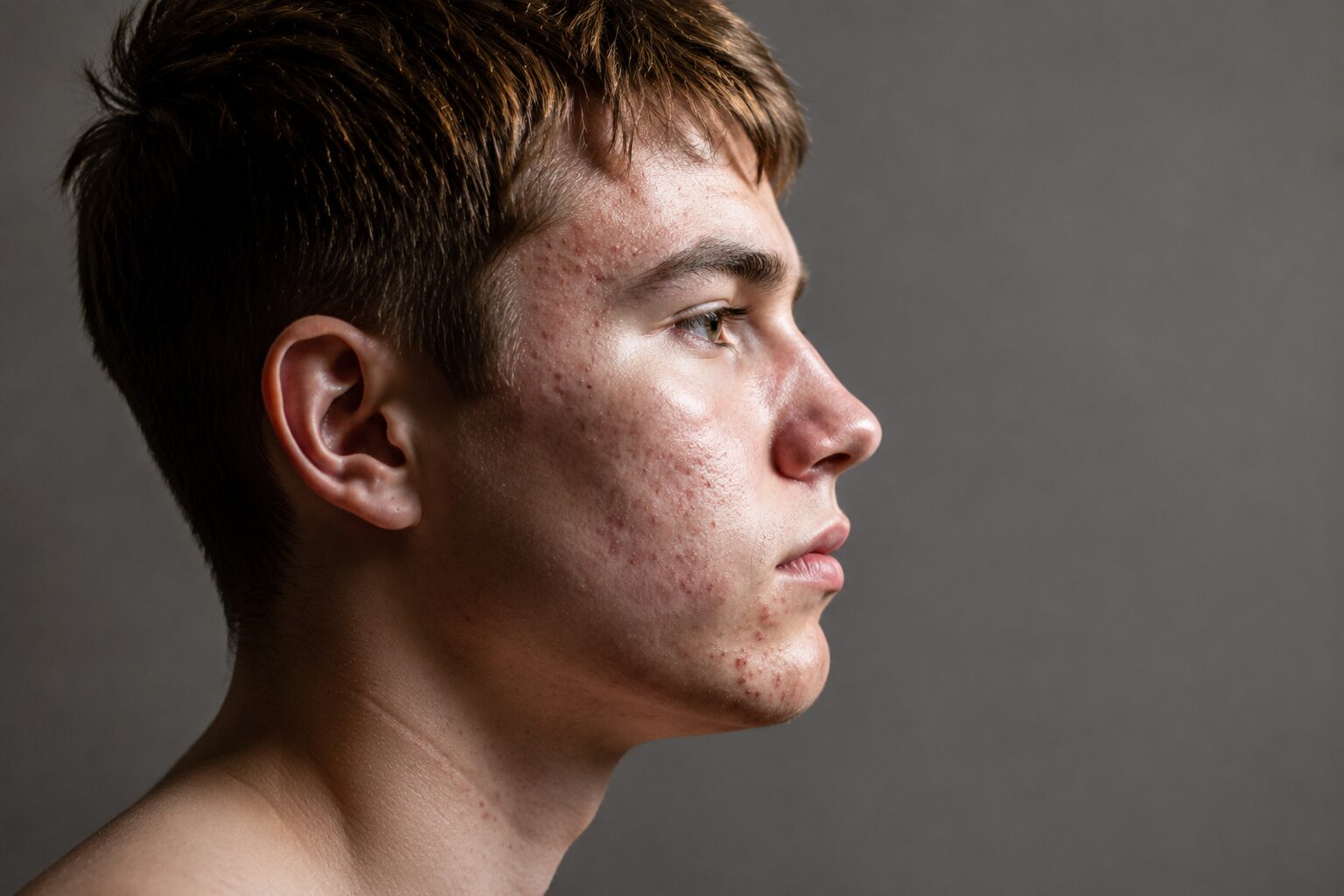
accutane before and after results
Last updated: June 11, 2026
I’ve worked with a lot of people who arrive at isotretinoin after years of trying everything else. Antibiotics, topicals, birth control adjustments – they’ve done the rounds. By the time Accutane comes up, they want to know one thing: what will my skin actually look like, and when.
That question deserves a straight answer, not a highlight reel. What I’ve seen across hundreds of people going through this treatment is that the timeline is messier than the Reddit posts suggest, and the “after” depends heavily on where you’re starting.
This article walks through the real month-by-month picture, what the initial breakout actually is, how your acne type shapes your outcome, and what questions are worth asking before you fill your first prescription.
One note before we start: isotretinoin is a prescription medication managed through the iPLEDGE program requirements for Accutane patients. Nothing here replaces your dermatologist’s guidance. But knowing what to expect makes you a better advocate for yourself during treatment.
Quick answer: Accutane produces significant before and after results over a 4–6 month course, with most users seeing 85–100% acne clearance by the end of treatment. Skin typically worsens in the first 4–6 weeks due to an initial breakout, then steadily clears. Cystic, hormonal, and comedonal acne all respond, though timelines vary by type and dosage.
What ‘Before and After’ Actually Means on Accutane
The before-and-after photos you find on Reddit and TikTok are real, but they’re also selected. The most dramatic transformations get shared the most – often shot months after the course ended, in better lighting, once post-inflammatory redness has fully faded. They’re not faked. They’re just the best-case outcomes, not the average.
Outcomes on isotretinoin fall across a wide range. Studies consistently show around 85% of patients achieve significant or complete clearance after one full course, but “significant” can mean anything from near-perfect skin to a 70% reduction in active lesions. Roughly 15-20% of patients need a second course or see only partial improvement.
Acne type shapes what your “after” actually looks like. Cystic and nodular acne tends to show the most dramatic before-and-after because the drug directly suppresses the sebaceous glands driving those deep lesions.
Hormonal acne – especially in adult women – often clears during the course but can return after stopping because the underlying hormonal trigger isn’t addressed by the drug itself.
A lot of people feel blindsided by one thing: Accutane clears active acne, but it doesn’t erase existing scars.
If you have significant ice-pick or boxcar scarring, those marks will still be there when the course ends – they’ll just be easier to see once the active inflammation is gone.
Treating post-acne scarring after isotretinoin is a separate conversation with your dermatologist, usually starting at least 6 months post-course.
Isotretinoin is typically prescribed after two or more antibiotic courses have failed, or immediately for severe nodular or cystic acne where waiting would mean more scarring. If you’re in that category, the more useful question isn’t “will it work” – it’s “what will my skin look like, and by when.”
The Month-by-Month Accutane Timeline: What Actually Changes
Most people start isotretinoin expecting a steady, linear improvement. The actual timeline is messier than that. As dermatologists note, meaningful clearing typically takes several weeks to months – and knowing what’s coming at each stage makes it far easier to stay the course instead of stopping early.
Understanding how dermatologists dose isotretinoin matters here too, because your dose trajectory directly affects when you hit each milestone. Here’s what I tell clients to expect, month by month.
-
Weeks 1-2: Dryness arrives before anything else – Your skin starts producing less oil almost immediately, and you’ll feel it before you see it. Tight, flaky skin, chapped lips, sometimes dry eyes. Your acne looks unchanged at this point. Stock CeraVe Moisturizing Cream and Aquaphor for your lips now, before you think you need them – because by week two, you will.
-
Weeks 3-6: The initial breakout window – Isotretinoin pushes existing microcomedones – clogged follicles that haven’t surfaced yet – to the skin faster than they would have on their own. For roughly 30-40% of patients, this means a visible flare of new pimples or deeper cysts before clearing begins. It typically peaks around week 4 and resolves on its own. Increasing your dose too quickly during this window can make it worse.
-
Month 2: Oil production visibly drops – Your skin stops looking greasy by midday. Some existing lesions start to flatten and stop refilling. You’re not clear yet, but the character of your skin is changing in a way you can feel – less congestion under the surface, fewer new breakouts forming. This is when most people first sense the drug is doing something.
-
Month 3: Meaningful clearing for most patients – This is the month most people first feel like the drug is working. Active lesions are fewer, smaller, and healing faster. Skin texture – rough bumps, uneven surface – starts to smooth out. If you’re seeing no change by the end of month 3, that’s worth a direct conversation with your dermatologist about your cumulative dose to date.
-
Months 4-5: Post-inflammatory hyperpigmentation becomes visible – As active acne fades, the flat pink or brown marks it leaves behind become more prominent. This is not new damage – it was always there under the inflammation. Most PIH fades on its own over 3-6 months. Sunscreen every morning is non-negotiable here; UV exposure makes those marks darker and slower to resolve.
-
Month 6 and beyond: Stabilization – Most standard courses target a cumulative dose of 120-150 mg/kg of body weight. At this point, sebaceous gland activity is significantly suppressed, and your skin should be at or near its clearest. Some dermatologists extend the course to hit that cumulative target if early doses were low.
-
Post-course: Improvement continues for up to 6 months – Oil production gradually returns to a lower baseline than before treatment, and any remaining PIH continues to fade. The “final” result in the before-and-after photos you see online is usually photographed at the 6-month post-course mark, not the day the last pill is taken – which is exactly why those photos look so dramatic compared to the week-12 check-in photo.
The Initial Breakout: Why Things Get Worse Before They Get Better
The initial breakout is the most common reason people stop Accutane early – and stopping early is the most common reason treatment fails. Understanding what’s actually happening mechanically makes it easier to ride out.
Here’s what I tell everyone before they start, so the purge doesn’t catch them off guard.
-
Isotretinoin accelerates cell turnover – The drug speeds up the rate at which your skin sheds and renews, which forces existing clogged follicles (microcomedones) to the surface faster than they would have appeared on their own. You’re not getting new acne – you’re seeing what was already forming underneath.
-
Not everyone experiences it – Roughly 30-40% of patients have a noticeable initial breakout. Many people see a gradual improvement from the start. Your likelihood is higher if you have a lot of congestion or cystic lesions to begin with.
-
Timing is predictable: weeks 2-6 – After just over six weeks into treatment, acne can break out worse than before, with painful cystic pimples – this is the classic initial breakout window. If you’re in week 4 and your skin looks worse, you’re right on schedule.
-
Cystic and hormonal acne types have higher initial breakout risk – Deep, active cysts mean more microcomedones already in the pipeline. Hormonal acne, which tends to cycle with consistent new lesion formation, can produce a more pronounced purge in the first 4-6 weeks.
-
Know what to tell your dermatologist vs. what to ride out – A temporary flare of existing acne is expected. What warrants a call: severe new cysts that feel different from your baseline, significant swelling, or any systemic symptoms. A flare that runs past week 8 without any sign of slowing is also worth flagging – it may indicate a dose adjustment is needed.
-
Stopping early means starting over – Patients who quit during the initial breakout often restart later, which means going through the purge phase again. Cumulative dose is what drives long-term remission; cutting the course short leaves that target unmet.
-
Practical management during the purge – Use a gentle, fragrance-free cleanser (CeraVe Hydrating Cleanser works well). Drop all active ingredients – no retinoids, no acids, no benzoyl peroxide. Your skin barrier is already compromised; adding actives creates more irritation without any clearing benefit. Hydration is your primary job during this window.
For a full breakdown of what’s normal versus concerning during this phase, isotretinoin side effects and how to manage them covers the specific symptoms worth tracking.
Six Months on 40mg: What My Skin Actually Looked Like
Results by Acne Type: Cystic, Hormonal, and Comedonal
Your acne type is the single biggest predictor of what your “after” looks like – both in terms of how dramatic the improvement is and how long it takes to get there.
I’ve tracked outcomes across enough clients to see clear patterns by type. The table below reflects what the American Academy of Dermatology and clinical literature consistently show, mapped to what I observe in practice.
| Acne Type | Typical Response Rate | Average Time to Visible Clearing | Relapse Risk | Notes |
|---|---|---|---|---|
| Cystic / Nodular | ~85-90% significant or full clearance | 3-4 months for major clearing | Low-moderate (15-20%) | Most dramatic before/after; often needs full 6-month course to hit cumulative dose target |
| Hormonal (adult female) | ~75-85% during course | 3-5 months | Higher (25-35%) | Underlying hormonal trigger persists; second course or combined hormonal therapy often needed |
| Comedonal / Congestion-heavy | ~80-90% clearance | Fastest – often 6-8 weeks for texture | Low | Texture improvements appear early; closed comedones respond quickly to oil suppression |
| Moderate Inflammatory | ~80% significant improvement | 2-3 months | Low-moderate (15-25%) | Often achievable with lower-tier treatments first; Accutane reserved for antibiotic-resistant cases |
The pattern I see most often: cystic acne patients have the most dramatic before-and-after photos but also the longest road to get there. Comedonal acne patients often see texture improvements fastest but sometimes feel less satisfied because the transformation looks less dramatic in photos.
If your acne is primarily hormonal, set your expectation for treatment as a two-stage process – isotretinoin for clearance, then a longer-term hormonal management strategy with your dermatologist to reduce relapse risk.
Accutane Before and After: Questions Worth Answering Before You Start
How long until I see noticeable results from Accutane?
Most patients see meaningful clearing between months 2 and 3, but the first visible sign is usually oil reduction, which happens in weeks 3-4. Fewer new breakouts forming is typically the next signal, around weeks 6-8. Full clearing – the result you’d photograph – usually takes 4-6 months.
Will Accutane get rid of my acne scars, or just the active breakouts?
Accutane clears active acne only. Existing scars – ice-pick, boxcar, rolling – and post-inflammatory hyperpigmentation are not addressed by the drug. PIH (flat discoloration) often fades on its own over 3-6 months post-course.
Textural scarring requires separate procedures like microneedling or chemical peels, which your dermatologist can discuss starting about 6 months after your last dose. See treating post-acne scarring after isotretinoin for what those options actually involve.
What happens if my acne comes back after Accutane?
Relapse rates sit at roughly 20-30% overall, with hormonal acne carrying the higher end of that range. A second course is common and is often shorter and lower-dose because sebaceous glands remain partially suppressed from the first course.
Relapse, when it happens, typically occurs within 12-18 months of stopping – which is why the 12-month post-course check-in with your dermatologist matters.
Can I judge my results by what I see in online before-and-after photos?
Not reliably. Online photos are self-selected for the most dramatic outcomes, taken under different lighting conditions at different stages of healing, and rarely show the full treatment window including the initial breakout phase. Use them as a general reference for what’s possible – not as a benchmark for your own progress at week 8.
Sources
- StatPearls: Isotretinoin – NCBI/NLM – mechanism, dosing, and efficacy data
- American Academy of Dermatology: Isotretinoin overview – prescribing criteria and patient guidance
- FDA: Isotretinoin (Accutane) Information – safety, iPLEDGE, and prescribing requirements
- BH Skin Dermatology: How Fast Does Accutane Start Working – clinical timeline from dermatologist practice
- NewBeauty: Accutane Before and After – first-person account of initial breakout timing
- Cosmopolitan: Accutane Before and After – patient-reported results timeline